Biography
Introduction: Architect of Independence
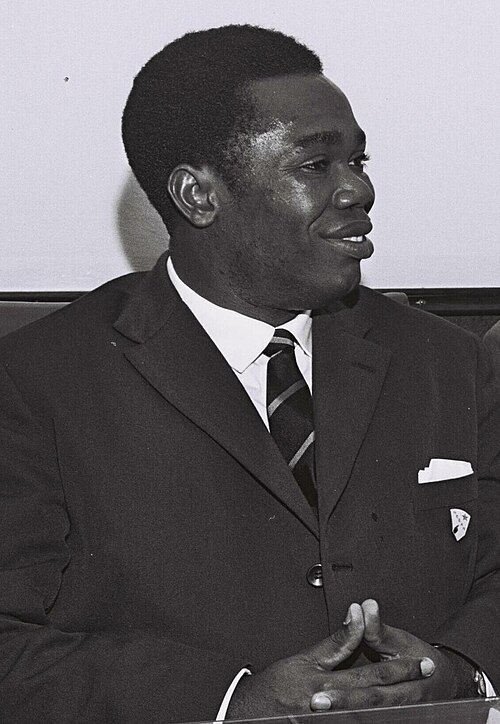
David Dacko† stands as a pivotal figure in the modern history of Central Africa. As the First President of the Central African Republic (CAR), he was the man who formally steered the nation to independence from French colonial rule on August 13, 1960. His tenure, spanning two non-consecutive periods (1960-1966 and 1979-1981), was marked by the immense challenges of post-colonial state-building, economic development, and navigating the turbulent waters of Cold War Politics & Government. The legacy of David Dacko† is complex, defined by his initial role as a symbol of hope and sovereignty, followed by political turmoil, his eventual overthrow, and a controversial return to power. Understanding his life is essential to understanding the foundational struggles of the CAR in the Independence Era.
Early Life & Education: Formative Years in Colonial Ubangi-Shari
David Dacko was born on March 24, 1930, in the village of Bouchia, near Mbaïki, in the then-French colony of Ubangi-Shari. He belonged to the same ethnic group, the Mbaka (Ngbaka), as his cousin and future political rival, Jean-Bédel Bokassa. His early life was shaped within the colonial system, but he demonstrated academic promise. Dacko pursued a career in education, which was a common path for the emerging African elite. He attended the École Normale (teacher training college) in Mouyondzi, Congo, and later at the prestigious École Normale William Ponty in Senegal, a breeding ground for many future Francophone African leaders.
Upon returning to Ubangi-Shari, David Dacko† worked as a schoolteacher and later as a school director. His entry into Politics & Government began through this professional sphere. He became involved with the Movement for the Social Evolution of Black Africa (MESAN), the leading pro-independence party founded by Barthélemy Boganda, who was a political mentor to Dacko. Boganda, a charismatic leader advocating for a "Central African Republic," recognized Dacko's administrative abilities. This connection proved fateful. When Boganda died in a mysterious plane crash in March 1959, David Dacko†, then a member of the territorial assembly, was positioned to succeed him. The French colonial administration viewed the young, seemingly moderate Dacko as a more manageable successor than other contenders, setting the stage for his rapid ascent.
Career & Major Achievements: Presidency, Overthrow, and Return
The First Presidency and the Path to Independence (1960-1966)
After Boganda's death, David Dacko† swiftly consolidated power. He became Prime Minister of the autonomous territory in May 1959 and then, upon formal independence on August 13, 1960, he was proclaimed the First President of the newly sovereign Central African Republic. His early presidency focused on establishing the institutions of a nation. Key achievements included:
- Formalizing international diplomacy, securing the CAR's membership in the United Nations.
- Maintaining a close, dependent economic relationship with France, a common feature among former French colonies.
- Consolidating MESAN as the single legal party by 1962, centralizing political control.
The Saint-Sylvestre Coup and Exile
On December 31, 1965 (the Saint-Sylvestre coup), Bokassa overthrew David Dacko† while the president was ill. Dacko was placed under house arrest and later forced into internal exile. Bokassa's brutal and extravagant rule (1966-1979) stood in stark contrast to Dacko's more subdued administration. During this period, Dacko was largely absent from the political scene, a symbol of a deposed, earlier era of Politics & Government.
The Controversial Second Presidency (1979-1981)
In a dramatic turn of events, David Dacko† returned to power in September 1979. With the support of French forces in Operation Barracuda, he was reinstated as president following the ouster of the now-emperor Bokassa. This second term was politically fragile from the start. Dacko attempted to liberalize the one-party system, authorizing multiple parties in 1981. However, the country remained unstable, plagued by economic woes and social unrest. His perceived reliance on French support and inability to stabilize the nation led to growing opposition. On September 1, 1981, he was overthrown in a bloodless coup by General André Kolingba, ending his active political career. Dacko subsequently led a small political party and even ran unsuccessfully in the 1993 presidential election, won by Ange-Félix Patassé.
Personal Life, Legacy, and Final Years
Outside the intense arena of Politics & Government, David Dacko† was known as a reserved and intellectual figure, a reflection of his background in education. His personal life was less flamboyant than that of his successor, Bokassa. He was married and had children. In his later years, despite his fraught history with the nation, he was sometimes viewed as an elder statesman, a living connection to the country's founding and its first Independence Era leader.
The legacy of David Dacko† is multifaceted. He is rightly honored as the First President who presided over the birth of the CAR, a significant symbolic achievement. However, historians often assess his administrations as periods of missed opportunity. His inability to achieve economic self-sufficiency, his establishment of a one-party state, and the circumstances of his return to power in 1979 complicate his standing. He is seen as a leader who struggled with the immense difficulties of post-colonial governance, ultimately unable to withstand the military pressures and instability that have plagued the Central African Republic throughout its history. David Dacko died on November 20, 2003, in Yaoundé, Cameroon, where he was receiving medical treatment. His passing marked the end of an era for the CAR.
Net Worth & Financial Context
Unlike many post-colonial leaders who amassed vast personal fortunes, David Dacko† was not widely known for extravagant wealth or significant personal business ventures. His financial context was deeply tied to the state of the nation's economy, which remained one of the poorest in the world throughout and after his tenure. The CAR's economy under Dacko was heavily dependent on French aid and the export of commodities like diamonds, cotton, and coffee. There is little public record or credible evidence to suggest Dacko engaged in major private business activities; his life was almost entirely dedicated to public service and Politics & Government. Any personal wealth was likely modest, especially compared to the legendary excesses of his successor, Bokassa. His financial legacy, much like his political one, is more associated with the broader economic challenges of the Central African Republic than with personal financial success or entrepreneurship.
For further reading on the history of the Central African Republic and its leaders, credible sources include the Encyclopædia Britannica and historical archives from the French colonial period.
Frequently Asked Questions
What is David Dacko†'s estimated net worth?
Net worth details for David Dacko† are currently being updated.
What is David Dacko†'s role and nationality?
David Dacko† is a First President from Central African Republic.
How did David Dacko† make their money?
David Dacko† built their fortune primarily through David Dacko was a political figure, not a businessperson, and served as President of the Central African Republic, a country with extreme poverty; he is not known to have accumulated significant personal wealth..
How old is David Dacko†?
David Dacko† was born in 1930 (96 years old).
Which category is David Dacko† listed under?
David Dacko† is featured under the Politics & Government category on NetWorth Africa.
How is David Dacko†'s net worth calculated?
NetWorth Africa estimates financial valuations using publicly available stock equity holdings, company ownership records, real estate assets, and verified market data.
Net Worth Analysis
David Dacko was a political figure, not a businessperson, and served as President of the Central African Republic, a country with extreme poverty; he is not known to have accumulated significant personal wealth.
Quick Stats
Related People
Aaron Motsoaledi
LP; Minister of Home Affairs • South Africa
Abane Ramdane†
FLN Leader & Strategist • Algeria
Abdalla Hamdok
Ex-Prime Minister • Sudan
Abdallah Kigoda
Ex-Minister of Natural Resources • Tanzania