$100M
Estimated Net Worth
As of 2024 • medium confidence
Financial Breakdown
Asset Distribution
Assets vs Liabilities
Assets
Disclaimer: These financial estimates are based on publicly available information and should be considered approximate. Last updated: 1/21/2026
Biography
Introduction: The Enduring Statesman of Central Africa
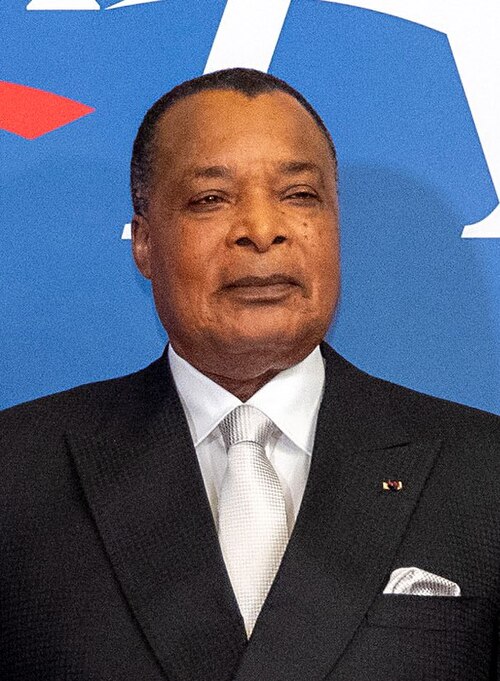
Denis Sassou Nguesso stands as one of Africa's most enduring and influential political figures, having served as the President of the Republic of the Congo for a combined total of over four decades. First rising to power in 1979, his tenure has been marked by profound political transformation, periods of conflict, and a complex journey toward economic development and regional diplomacy. A central figure in the continent's Politics & Government landscape, Sassou Nguesso's rule has defined modern Congolese history. His key achievement lies in his remarkable political resilience, navigating the shift from a single-party Marxist-Leninist state to a multi-party system while maintaining a firm grip on power. As a senior statesman, he has also played significant roles in African Union peace initiatives, positioning the Republic of the Congo as a key player in Central African affairs.
Early Life & Education: Formative Years in French Equatorial Africa
Denis Sassou Nguesso was born in 1943 in the small village of Edou, in the Oyo district of northern Congo, then part of French Equatorial Africa. He was born into the Mbochi ethnic group. His early education began at a primary school in Owando before he attended the École Générale Leclerc in Brazzaville. Demonstrating early ambition, his path took a decisive turn when he enrolled in military training.
Sassou Nguesso's formative experiences were shaped by the wave of decolonization sweeping across Africa. He joined the army and was selected for officer training at the prestigious École Spéciale Militaire de Saint-Cyr in France, alma mater to many French military leaders. This elite education provided him with not only military discipline but also a network of contacts and a worldview that would prove crucial in his political ascent. Upon returning to the newly independent Republic of the Congo, he quickly rose through the ranks of the military, a common pathway to political power in the post-colonial era. His military background during a time of political instability and ideological fervor laid the groundwork for his future role in the nation's leadership.
Career & Major Achievements: Decades of Power and Transformation
The political career of Denis Sassou Nguesso is a chronicle of Congo's turbulent modern history. His rise to the apex of power began in earnest after the 1968 coup that brought Marien Ngouabi to power. Sassou Nguesso held several key ministerial posts and became a leading figure in the Congolese Labour Party (PCT), the country's Marxist-Leninist vanguard party.
First Presidency and Socialist Rule (1979-1992)
Following the assassination of President Ngouabi and a brief interim period, Denis Sassou Nguesso was elected President of the PCT and Head of State in 1979. His first period in power was characterized by a continuation of socialist policies, close alignment with the Soviet Union, and the management of a state-controlled economy buoyed by oil discoveries. A significant diplomatic achievement during this era was his role as Chairman of the Organization of African Unity (OAU) from 1986-1987. However, mounting economic pressures and the global wave of democratization in the early 1990s forced a historic change.
The Democratic Experiment and Civil War
In a landmark move, Sassou Nguesso presided over the National Conference of 1991, which stripped him of executive powers and led to Congo's first multi-party presidential election in 1992. He lost this election to Pascal Lissouba and left office, a rare peaceful transfer of power in the region. However, political tensions erupted into a devastating civil war in 1997. Backed by Angolan military forces, Sassou Nguesso's militia faction emerged victorious in the conflict, ousting Lissouba and returning him to the presidency in October 1997.
Return to Power and Constitutional Consolidation
Since his return, Denis Sassou Nguesso has solidified his control over the Republic of the Congo. A new constitution was adopted in 2002, and he won elections in 2002, 2009, 2016, and 2021. The 2015 constitutional referendum, which removed age and term limits, was particularly controversial but allowed him to run again. His major achievements in this period include:
- Overseeing a period of relative stability after the civil wars, though often criticized for authoritarian governance.
- Managing an economy heavily reliant on oil, initiating infrastructure projects like the Kinkala-Boko road and the Maya-Maya Airport renovation in Brazzaville.
- Acting as a mediator in regional conflicts, including roles in peace processes for the Central African Republic and Libya under the African Union.
- Positioning Congo as a leader in environmental conservation, notably by securing significant international funding for the protection of the Congo Basin rainforests.
Personal Life & Legacy
Denis Sassou Nguesso is married to Antoinette Sassou Nguesso, a prominent advocate for environmental and social causes. He is a father to several children, some of whom, like his son Denis-Christel Sassou Nguesso, have held significant government and diplomatic posts. Known for his calm and measured demeanor, often marked by his signature beret and pipe, he cultivates an image of a wise, elder statesman. His personal interests are reported to include reading and the arts.
His legacy is deeply complex and subject to polarized interpretation. To his supporters, he is the "Peacemaker" who brought stability, developed infrastructure, and gave Congo a voice on the world stage. To his critics, he is an autocrat who has clung to power through constitutional manipulation, suppressed dissent, and failed to diversify the economy away from oil for the benefit of the broader population. His lasting impact is undeniable: he has shaped the Politics & Government of his country for generations, embedding his influence deeply into the fabric of Congolese society and institutions. The future stability of the Republic of the Congo will be inextricably linked to the eventual transition from his long era of rule.
Net Worth & Business Interests
While the precise net worth of Denis Sassou Nguesso is not publicly verifiable, he is widely believed by international observers and NGOs to be among the wealthiest heads of state in Africa. This perception stems from the country's significant oil wealth, the opacity of its state finances, and the extensive business interests linked to his family. Reports from organizations like Global Witness have detailed concerns over the lack of transparency in Congo's oil sector, suggesting potential for personal enrichment by those in power.
The Sassou Nguesso family is reported to have substantial assets, including high-value real estate in France and other countries. His children have been linked to various business ventures in sectors such as oil, mining, and telecommunications. These alleged holdings stand in stark contrast to the widespread poverty in Congo, where a large portion of the population lives on less than $2 a day. The management of national resources and the blurring of lines between state and personal wealth remain central points of criticism and scrutiny in discussions about his presidency.
Net Worth Analysis
As a long-serving head of state with allegations of corruption and family control over key sectors, his wealth is substantial but not formally documented on international rich lists like Forbes.
Quick Stats
Related People

Aaron Motsoaledi
LP; Minister of Home Affairs

Abane Ramdane†
FLN Leader & Strategist

Abdalla Hamdok
Ex-Prime Minister

Abdallah Kigoda
Ex-Minister of Natural Resources