Biography
Introduction: The Voice of a Revolution
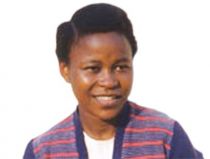
Deolinda Rodrigues de Almeida, known to history as Deolinda Rodrigues†, stands as one of the most revered and symbolic figures in Angola's struggle for independence from Portuguese colonial rule. More than a militant, she was a poet, a teacher, a theologian, and a founding member of the MPLA (People's Movement for the Liberation of Angola) Women's Wing, earning her the eternal title of MPLA Heroine. Her notable life, marked by profound intellect and unwavering courage, was tragically cut short, cementing her status as a martyr for the Angolan nation. Her key achievement lies not in a single act, but in her multifaceted role as an organizer, diplomat, and inspirational voice who articulated the dreams of a free Angola while demonstrating the indispensable role of women in armed liberation movements. The story of Deolinda Rodrigues† is the story of Angola's painful birth, and her legacy continues to inspire generations in the realms of Politics & Government and beyond.
Early Life & Education: Forging a Conscious Mind
Deolinda Rodrigues was born on February 10, 1939, in the capital city of Luanda, Angola. She was raised in a Methodist family, a background that would deeply influence her moral framework and commitment to social justice. From a young age, she demonstrated exceptional academic promise. Her early education was received at the Methodist Mission in Luanda, where she excelled.
Her formative years coincided with a period of rising nationalist sentiment and harsh colonial repression. Witnessing the inequalities and brutalities of the Portuguese administration ignited a political consciousness in her. In 1956, the same year the MPLA was founded, Rodrigues began writing poetry and texts that expressed her growing nationalist feelings. Seeking higher education and a platform for her activism, she seized a rare opportunity. In 1959, with a scholarship from the Methodist Church, she traveled to São Paulo, Brazil, to study Sociology. This experience was transformative, exposing her to broader Pan-African and anti-colonial ideologies and connecting her with other African liberation intellectuals. Her time abroad solidified her resolve to dedicate her life to her country's freedom.
Career & Major Achievements: Militant, Diplomat, and Martyr
Upon returning to Angola in the early 1960s, Deolinda Rodrigues† plunged into clandestine political work. The MPLA, recognizing her education and fervor, entrusted her with critical roles that extended far beyond the battlefield.
Founding the MPLA Women's Wing
One of her most significant and lasting contributions was the founding of the MPLA's Women's Wing, the Organização da Mulher de Angola (OMA), in 1962. Rodrigues understood that the liberation struggle required the full participation of all Angolans. She tirelessly organized and mobilized women, both within Angola and in refugee camps abroad, transforming OMA into a crucial pillar of the movement. Under her influence, women served not only as nurses and support staff but also as political educators and guerrillas, challenging traditional gender roles within a revolutionary context.
International Diplomacy and Training
Deolinda Rodrigues† also served as a key diplomat for the MPLA. She represented the movement in international forums, arguing the case for Angolan independence. In 1962, she was among the first group of MPLA militants sent to receive military training in Algeria, a landmark moment that prepared a core leadership for the armed struggle. Her intellectual prowess led her to further studies in the United States at Drew University in 1966, where she continued to build international solidarity networks for the Angolan cause.
The Capture and Immortal Legacy
In 1967, while performing a vital mission to establish a connection with nationalist forces in the interior of Angola, her group was betrayed and captured by militants of the National Liberation Front of Angola (FNLA), a rival liberation movement. The events that followed sealed her martyrdom. After enduring months of imprisonment and torture in a FNLA camp in the Democratic Republic of Congo (then Zaire), Deolinda Rodrigues† and four other female MPLA comrades—Engrácia dos Santos, Irene Cohen, Lucrecia Paim, and Teresa Afonso—were executed on March 2, 1968. They became known as the "Deolinda Rodrigues Quintet" or the "Angolan Martyrs."
Her major achievements are encapsulated in:
- Founding OMA (1962): Institutionalizing women's role in the liberation war.
- Military Training in Algeria (1962): Breaking barriers as a female combatant trainee.
- International Advocacy: Serving as a cultured, articulate face of the MPLA abroad.
- Literary Contribution: Leaving behind a powerful collection of diaries and poems that provide an intimate record of the struggle.
Personal Life & Legacy: The Heart Behind the Heroine
Beyond the political militant, Deolinda Rodrigues was a woman of deep faith, intellect, and emotion. Her personal writings, particularly her diaries published posthumously as "Diário de um Exílio sem Regresso" (Diary of an Exile Without Return), reveal a reflective, sometimes lonely, individual grappling with the immense weight of her chosen path. Her poetry blends nationalist passion with personal yearning, showcasing her talent as a writer. Her Methodist faith provided a foundation for her belief in justice and human dignity, which she seamlessly integrated with her Marxist-inspired political ideology.
Her lasting impact is profound. In Angola today, Deolinda Rodrigues† is a national icon. Streets, schools, and institutions bear her name. She is celebrated annually on March 2, the day of her martyrdom, which is commemorated as Angolan Women's Day. Her life is a cornerstone of the narrative of national liberation taught in schools. More broadly, her story resonates across Africa and the diaspora as a powerful example of women's agency in liberation wars. She represents the intellectual, the organizer, and the ultimate sacrifice, ensuring that the contribution of women to Angola's independence is never forgotten. Her legacy continues to be invoked in discussions about gender equality, nationalism, and the cost of freedom in Angola.
Net Worth & Historical Context
It is crucial to contextualize the concept of "net worth" for a figure like Deolinda Rodrigues†. She was not a person driven by financial gain or business ventures. As a dedicated revolutionary living in exile, undergoing military training, and working clandestinely, her life was one of material sacrifice. Her "wealth" was measured in ideological commitment, educational attainment, and the respect she commanded within the MPLA. Any discussion of assets or financial success is irrelevant to her historical stature.
Her value to the movement was immeasurable. The scholarship that funded her education in Brazil and the USA was an investment in her potential as a leader. The resources expended by the MPLA for her training and diplomatic missions were investments in the intellectual and strategic capital she brought to the struggle. Therefore, while she left no monetary estate, the legacy she bequeathed to Angola—a model of courage, intelligence, and sacrifice—is considered a priceless part of the nation's heritage in Politics & Government. Her life underscores that the most enduring contributions to a nation's history often transcend any material valuation.
Sources and further reading on the life of Deolinda Rodrigues† can be found in academic works on the Angolan liberation struggle, her published diaries, and historical archives of the MPLA. Key references include her own "Diário de um Exílio sem Regresso" and scholarly analyses of women in the Luso-African liberation movements.
Frequently Asked Questions
What is Deolinda Rodrigues†'s estimated net worth?
Net worth details for Deolinda Rodrigues† are currently being updated.
What is Deolinda Rodrigues†'s role and nationality?
Deolinda Rodrigues† is a MPLA Heroine from Angola.
How did Deolinda Rodrigues† make their money?
Deolinda Rodrigues† built their fortune primarily through Deolinda Rodrigues was an anti-colonial activist and national heroine of Angola who was killed in 1967; she was not a business figure and had no personal wealth..
How old is Deolinda Rodrigues†?
Deolinda Rodrigues† was born in 1939 (87 years old).
Which category is Deolinda Rodrigues† listed under?
Deolinda Rodrigues† is featured under the Politics & Government category on NetWorth Africa.
How is Deolinda Rodrigues†'s net worth calculated?
NetWorth Africa estimates financial valuations using publicly available stock equity holdings, company ownership records, real estate assets, and verified market data.
Net Worth Analysis
Deolinda Rodrigues was an anti-colonial activist and national heroine of Angola who was killed in 1967; she was not a business figure and had no personal wealth.
Quick Stats
Related People
Aaron Motsoaledi
LP; Minister of Home Affairs • South Africa
Abane Ramdane†
FLN Leader & Strategist • Algeria
Abdalla Hamdok
Ex-Prime Minister • Sudan
Abdallah Kigoda
Ex-Minister of Natural Resources • Tanzania