Biography
Introduction: The Steward of Transition
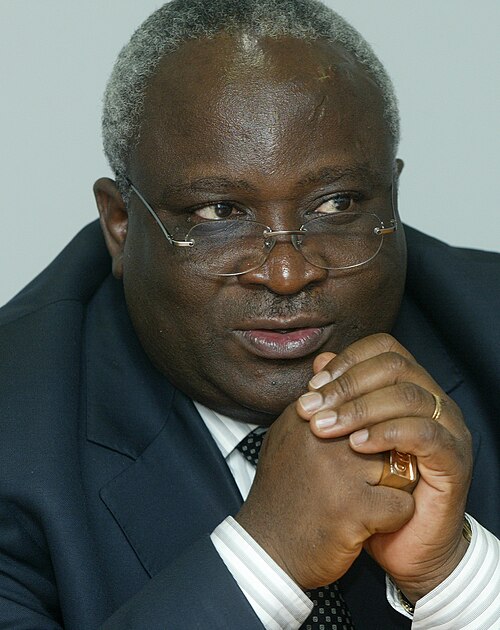
Domitien Ndayizeye is a significant figure in modern Burundian history, having served as the President of Burundi from April 30, 2003, to August 26, 2005. His tenure is primarily defined by his role as a transitional leader during one of the nation's most fragile periods. Ascending to the executive presidency as part of a complex power-sharing agreement, Domitien Ndayizeye was tasked with steering the country toward the implementation of the historic Arusha Peace and Reconciliation Agreement. This accord aimed to end a devastating civil war that had plagued Burundi since 1993, claiming hundreds of thousands of lives. His key achievement lies in navigating this precarious transition, overseeing a critical phase of the peace process, and ultimately paving the way for the landmark 2005 elections that marked a return to constitutional order.
Early Life and Education: Formative Years in a Divided Nation
Domitien Ndayizeye was born in 1953 in the Murango zone of Kayanza province, in northern Burundi. His early life unfolded against the backdrop of a nation grappling with deep-seated ethnic tensions between the Hutu majority and the Tutsi minority, which were exacerbated by colonial rule. Details of his very early childhood are sparse in public records, but his educational and professional path reflects a commitment to technical and administrative fields.
He pursued higher education at the University of Burundi, where he studied and obtained a degree in Civil Engineering. This technical background set him apart from many of his political contemporaries, providing him with a pragmatic, problem-solving orientation. Before entering the political arena full-time, Domitien Ndayizeye worked as a civil servant and technical expert. These formative experiences in administration and public works likely influenced his later approach to governance, emphasizing structure and process. His entry into politics was shaped by the tumultuous events of the early 1990s, including the assassination of the first democratically elected Hutu president, Melchior Ndadaye, in 1993, which plunged Burundi into full-scale civil war.
Career and Major Achievements: Navigating the Path to Peace
The political career of Domitien Ndayizeye is inextricably linked to the Arusha Peace Process. He was a prominent member of the Front for Democracy in Burundi (FRODEBU), the predominantly Hutu party that won the 1993 elections. Following the Arusha Agreement signed in 2000, a three-year transitional government was established. The agreement mandated a carefully orchestrated rotation of power: the first 18 months under a Tutsi president (Pierre Buyoya) and a Hutu vice-president, followed by 18 months under a Hutu president and a Tutsi vice-president.
Ascension to the Presidency
On April 30, 2003, Domitien Ndayizeye was sworn in as President, succeeding Pierre Buyoya as per the Arusha timetable. His vice-president was Alphonse Marie Kadege from the predominantly Tutsi UPRONA party. This seamless transition itself was a minor victory for the peace accord. Ndayizeye's administration inherited immense challenges: a fragile ceasefire with multiple armed factions, a devastated economy, and a population deeply traumatized by war.
Key Accomplishments and Challenges
President Ndayizeye's term was focused on consolidating the peace process. His major achievements include:
- Negotiating the Pretoria Protocol: In 2003, his government successfully negotiated a crucial agreement with the largest Hutu rebel group, the National Council for the Defense of Democracy–Forces for the Defense of Democracy (CNDD-FDD), led by Pierre Nkurunziza. This protocol was a breakthrough, bringing the most significant military force into the political process.
- Overseeing Constitutional Development: His administration worked on drafting a new post-transition constitution that would enshrine power-sharing principles, leading to a referendum in 2005.
- Managing a Fragile Coalition: Governing within the constraints of the Arusha power-sharing model required constant negotiation and compromise between historically antagonistic parties, a difficult task he managed to sustain.
However, his presidency also faced severe setbacks. Violence continued in parts of the country, particularly from the Palipehutu-FNL rebel group, which remained outside the peace process. Furthermore, his relationship with the still-influential Tutsi-dominated army was often tense. In 2004, he survived an alleged coup attempt, highlighting the persistent instability.
The 2005 Elections and End of Term
The culmination of Domitien Ndayizeye's transitional mandate was the organization of national elections in 2005. His own party, FRODEBU, was defeated by the former rebel group CNDD-FDD in both parliamentary and presidential polls. Pierre Nkurunziza was elected as the new president, marking the end of the transitional period. Ndayizeye handed over power peacefully on August 26, 2005, a significant step for Burundian democracy.
Personal Life, Legacy, and Later Years
Domitien Ndayizeye is known to be a private individual regarding his family life. He is married and has children. Unlike some of his successors, he has maintained a relatively low public profile in the years following his presidency, focusing on personal and family matters. His legacy is that of a transitional figure who held the line during an exceptionally delicate phase.
Historians and political analysts often assess his tenure as a necessary bridge between war and a tentative peace. While he may not have been the principal architect of the Arusha Agreement, his role in implementing its critical second phase was vital. The peaceful transfer of power in 2005 stands as a testament to the process he helped steward. However, his legacy is also shadowed by the subsequent political trajectory of Burundi, which under Pierre Nkurunziza saw a gradual erosion of the very power-sharing principles Ndayizeye's presidency embodied. In later years, he has occasionally commented on national politics, often expressing concern about deviations from the Arusha spirit, but he has not sought a return to high executive office.
Net Worth and Business Ventures
As a former civil engineer and public servant, Domitien Ndayizeye's career has been largely in the public sector. There is no verifiable or detailed public information regarding his personal net worth or specific business ventures. Like many former heads of state, he is entitled to a state pension and security provisions. His financial profile appears modest compared to leaders known for significant private sector involvement. The focus of his professional life remains his political service during Burundi's transition, rather than notable commercial or financial entrepreneurship. Any wealth accumulated is presumed to be derived from his salary as a public official, both as president and in prior governmental roles, and not from high-profile business dealings.
This biography of former President Domitien Ndayizeye is compiled from historical records of Burundi's political transition, including reports on the Arusha Agreement, UN documentation on the peace process, and biographical summaries from reputable archives focusing on African politics and government.
Frequently Asked Questions
What is Domitien Ndayizeye's estimated net worth?
Domitien Ndayizeye has an estimated net worth of $500,000.
What is Domitien Ndayizeye's role and nationality?
Domitien Ndayizeye is a Ex-President (2003-2005) from Burundi.
How did Domitien Ndayizeye make their money?
Domitien Ndayizeye built their fortune primarily through As a former president of Burundi, a low-income country with a history of conflict, his wealth is not publicly documented and is not on any billionaire list, suggesting modest post-political assets..
How old is Domitien Ndayizeye?
Domitien Ndayizeye was born in 1953 (73 years old).
Which category is Domitien Ndayizeye listed under?
Domitien Ndayizeye is featured under the Politics & Government category on NetWorth Africa.
How is Domitien Ndayizeye's net worth calculated?
NetWorth Africa estimates financial valuations using publicly available stock equity holdings, company ownership records, real estate assets, and verified market data.
Net Worth Analysis
As a former president of Burundi, a low-income country with a history of conflict, his wealth is not publicly documented and is not on any billionaire list, suggesting modest post-political assets.
Quick Stats
Related People
Aaron Motsoaledi
LP; Minister of Home Affairs • South Africa
Abane Ramdane†
FLN Leader & Strategist • Algeria
Abdalla Hamdok
Ex-Prime Minister • Sudan
Abdallah Kigoda
Ex-Minister of Natural Resources • Tanzania