$5M
Estimated Net Worth
As of 2024 • medium confidence
Financial Breakdown
Asset Distribution
Assets vs Liabilities
Assets
Disclaimer: These financial estimates are based on publicly available information and should be considered approximate. Last updated: 12/31/2025
Biography
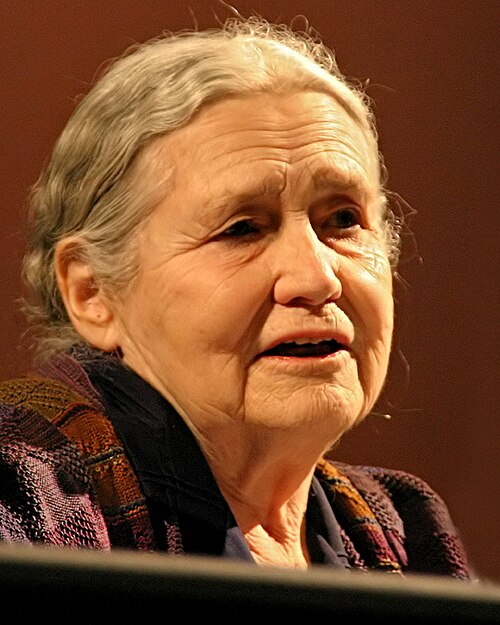
Doris Lessing† stands as one of the most influential and prolific writers of the modern era, a fearless chronicler of the human condition whose work spanned continents, ideologies, and literary forms. Born in Persia, raised in Southern Rhodesia (now Zimbabwe), and later living in Britain, her life was a tapestry of the twentieth century's most defining experiences. A writer of relentless intellectual curiosity, Doris Lessing† fearlessly tackled themes of racism, gender politics, communism, mental breakdown, and the fate of the planet across more than fifty novels, short story collections, and works of non-fiction. Her crowning achievement came in 2007 when she was awarded the Nobel Prize in Literature, at the age of 88, making her the oldest person ever to receive the award and the eleventh woman to do so. The Swedish Academy hailed her as "that epicist of the female experience, who with scepticism, fire and visionary power has subjected a divided civilisation to scrutiny." This biography delves into the life and legacy of this monumental figure in Arts & Culture.
Early Life & Education: The Formative Years in Africa
Doris May Tayler was born on October 22, 1919, in Kermanshah, Persia (now Iran), to British parents. Her father, Alfred Tayler, was a bank clerk who had lost a leg in World War I, and her mother, Emily Maude, was a nurse. In 1925, lured by the promise of wealth from maize farming, the family moved to the British colony of Southern Rhodesia (now Zimbabwe). This move proved pivotal, shaping Lessing's worldview and providing the raw material for much of her early fiction. Life on the impoverished farm was isolating and harsh, a contrast to the romantic colonial dream her parents had pursued.
A Self-Directed Intellectual Awakening
Formal education for Doris Lessing† was limited. She attended a convent school in Salisbury (now Harare) and later a girls' high school, both of which she found stifling. She left school at age 14, marking the end of her conventional education. However, this departure ignited a voracious, self-directed intellectual journey. She immersed herself in the great novels of 19th and 20th-century literature and began writing stories from a young age. The stark racial injustices of the segregated colonial society and the vast, imposing African landscape became indelible impressions. At age 15, she left home to work as a nursemaid, and soon began reading widely on politics and sociology. By her early twenties, she was involved with a left-wing book club in Salisbury, marrying her first husband, Frank Wisdom, with whom she had two children. This period of immersion in the social and political tensions of Southern Africa provided the foundational crucible for her literary voice.
Career & Major Achievements: From Africa to Literary Stardom
Dissatisfied with the confines of her life as a colonial wife and mother, Doris Lessing† made a series of radical decisions that would define her career. She left her first family, joined a communist group, and married Gottfried Lessing, a central member of the group. After World War II, with her young son from her second marriage, she moved to London in 1949, carrying the manuscript of her first novel. This bold move launched her into the heart of the literary world.
The Breakthrough and The "Children of Violence" Series
Her debut novel, The Grass Is Singing (1950), was an immediate critical success. A devastating portrayal of the psychological and social decay underpinning a failing white farm in Africa, it established her as a formidable new talent unafraid of confronting taboo subjects. This was followed by her monumental five-novel sequence, Children of Violence (1952-1969), a Bildungsroman following the life of Martha Quest from her youth in Africa to a dystopian future in England. The series is a profound exploration of the individual's search for meaning amidst the political and social upheavals of the era.
The Golden Notebook and Feminist Iconography
In 1962, Lessing published her most celebrated and experimental work, The Golden Notebook. A groundbreaking novel in its structure, it fragments the life of writer Anna Wulf into four colored notebooks (black for her African experiences, red for political life, yellow for a fictionalized version, blue for a personal diary) before synthesizing them in a golden notebook. It became a seminal text of the feminist movement for its unflinching examination of female creativity, mental health, and political disillusionment. Although Lessing later expressed ambivalence about being labeled solely a feminist writer, the book's impact on Arts & Culture was irreversible.
Ventures into Science Fiction and Later Work
Demonstrating her relentless innovation, Doris Lessing† shocked the literary establishment in the 1970s and 80s by turning to science fiction with her Canopus in Argos: Archives series. These novels used space fiction and Sufi mysticism to critique earthly empires and explore cosmic evolution. In her later decades, she returned to more realistic fiction, including two novels published under the pseudonym "Jane Somers" as a literary experiment. Works like The Good Terrorist (1985) and Alfred and Emily (2008) continued to showcase her sharp social critique and narrative power.
Personal Life & Legacy: The Private Intellectual
Doris Lessing† was known for her fierce independence, sharp intellect, and sometimes contrarian public persona. She was twice divorced and had three children. Her decision to leave her first two children in Southern Africa when she moved to London was a source of lifelong controversy and personal pain, a subject she addressed with characteristic honesty in her writing. Politically, she moved from passionate communism in her youth to disillusionment after the revelations of Stalin's crimes, though a concern for social justice always underpinned her work. She was an early advocate for environmental causes and remained a prolific writer and commentator well into her old age.
Her legacy is immense. Doris Lessing† expanded the scope of what literature could address, from the intimate details of a woman's psyche to the fate of galactic empires. She received numerous awards besides the Nobel, including the Somerset Maugham Award, the David Cohen Prize for a lifetime's achievement in British literature, and was made a Companion of Honour by the British Royal Family. She passed away on November 17, 2013, in London, at the age of 94. Her work remains a vital, challenging, and essential part of the global literary canon, studied worldwide for its formal innovation, psychological depth, and unwavering moral gaze.
Literary Estate & Financial Context
While Doris Lessing† was not primarily known as a business figure, her prolific output and critical acclaim translated into significant, though not extravagant, financial success. The sales of her books, particularly after winning the Nobel Prize, saw a substantial global increase. The Nobel Prize itself came with a monetary award of 10 million Swedish kronor (approximately $1.6 million USD at the time). Her literary estate, managing the copyrights and royalties from her vast body of work—including novels, short stories, essays, and adaptations—constitutes her primary financial legacy. This estate ensures the continued publication, translation, and academic study of her work, contributing to the ongoing cultural and commercial value of her contributions to Literature. Unlike many contemporary authors, Lessing avoided commercial endorsements or ventures, maintaining her focus solely on her writing and its intellectual impact. Her wealth was thus a byproduct of her artistic integrity, allowing her the independence to write precisely what she wished throughout her long career.
Key Works at a Glance
- The Grass Is Singing (1950) - Debut novel set in Southern Africa.
- Children of Violence (1952-1969) - Five-novel epic series.
- The Golden Notebook (1962) - Landmark experimental novel.
- Briefing for a Descent into Hell (1971) - Inner-space fiction.
- The Good Terrorist (1985) - Booker Prize-shortlisted novel.
- Alfred and Emily (2008) - Final work, a novel and memoir.
For further reading on the life and work of Doris Lessing†, consult authoritative sources such as the Nobel Prize biography, the British Library, and her published autobiographies, Under My Skin (1994) and Walking in the Shade (1997).
Net Worth Analysis
Doris Lessing was a literary author, not a business figure; her wealth derived from book sales and prizes, not corporate holdings. She was not on any billionaire list.
Quick Stats
Related People
Abasse Ndione
Novelist & Playwright
Abdel Rahman al-Abnudi†
Poet (Egypt-Sudan)
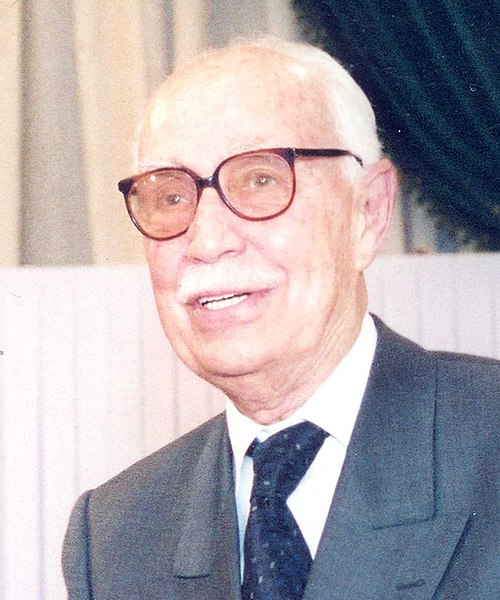
Abdelkrim Ghallab†
Novelist & Journalist
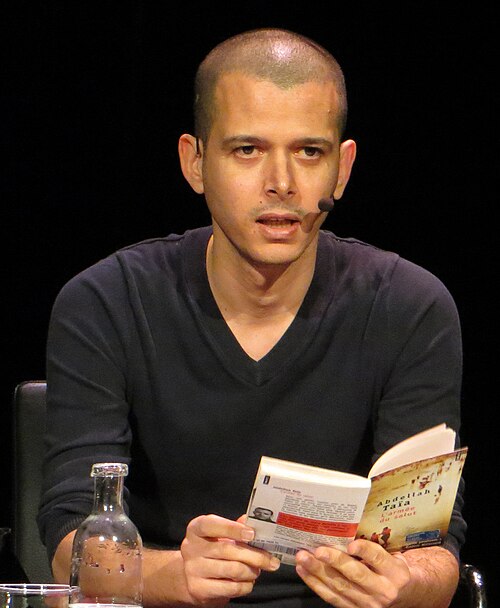
Abdellah Taïa
Novelist & Filmmaker