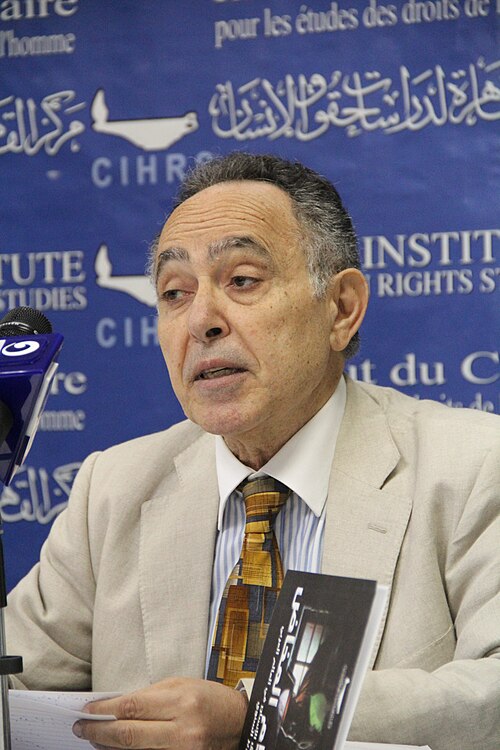
Biography
Introduction: The Unwavering Defender
In the challenging landscape of the Middle East and North Africa, few figures stand as prominently and resolutely for the cause of human rights as Dr. Bahey eldin Hassan. Born in Egypt in 1955, Dr. Hassan has dedicated his life to the relentless pursuit of justice, democracy, and fundamental freedoms. He is best known as the visionary Founder and director of the Cairo Institute for Human Rights Studies (CIHRS), one of the Arab world's most influential and respected independent human rights organizations. His key achievement lies in building CIHRS into a pivotal bridge between local human rights movements in the Arab region and international advocacy forums in Geneva, New York, and beyond. Despite facing immense personal risk, including imprisonment and exile, Dr. Bahey eldin Hassan remains a seminal voice, shaping the discourse on human rights and holding both regional governments and the international community accountable.
Early Life & Education: Forging a Conscience
Dr. Bahey eldin Hassan was born in 1955, a period of significant political transformation in Egypt. Growing up in an environment marked by pan-Arab nationalism under Gamal Abdel Nasser and later the socio-political shifts of the Sadat era, he developed an acute awareness of the tensions between state power and individual liberties from a young age. His formative years were influenced by the broader Arab intellectual and political movements of the 1960s and 1970s, which grappled with questions of freedom, social justice, and post-colonial identity.
His academic path was rooted in the social sciences, providing him with a critical framework to analyze power structures. He earned a Bachelor's degree in Sociology, followed by a Master's degree in Criminology. Dr. Hassan later completed his doctorate, solidifying his expertise in the systemic study of society, deviance, and state control. This unique educational background in sociology and criminology did not lead him to a conventional academic career. Instead, it equipped him with the analytical tools to deconstruct authoritarian practices and advocate for a rights-based framework as the foundation for just societies in the Egyptian and Arab context. The 1970s and 1980s, a time of limited political pluralism and growing human rights concerns, were instrumental in steering him from theory to activism.
Career & Major Achievements: Architect of a Movement
The career of Dr. Bahey eldin Hassan is synonymous with the institutional growth of the human rights movement in the Arab region. His journey began with involvement in early human rights initiatives within Egypt. Recognizing the need for a specialized, professional, and strategic organization, he took the monumental step of founding the Cairo Institute for Human Rights Studies (CIHRS) in 1993. Under his leadership, CIHRS adopted a dual mission: strengthening local human rights capacity and conducting rigorous international advocacy.
Building CIHRS into a Regional Powerhouse
As the CIHRS Founder and director, Dr. Hassan built an organization renowned for its rigorous research, credible documentation, and strategic litigation. CIHRS became a vital hub, training hundreds of activists from across the Arab world and producing seminal reports on torture, freedom of expression, women's rights, and the rights of minorities. A key strategic innovation was establishing a permanent presence in Geneva and engaging with the United Nations human rights system, ensuring that voices from the region were heard directly in international policy debates.
Navigating Repression and Exile
The work of Dr. Bahey eldin Hassan and CIHRS inevitably drew the ire of repressive governments. Following the 2013 military takeover in Egypt, the space for civil society shrunk dramatically. In 2016, the Egyptian government famously prosecuted staff from several NGOs in the "Case 173" foreign funding case, effectively criminalizing human rights work. Facing imminent arrest and a prejudiced judicial system, Dr. Hassan was forced into exile to continue his work safely. Undeterred, he relocated CIHRS's operational headquarters to Tunis and Geneva, proving that the pursuit of justice knows no borders. In 2021, an Egyptian court sentenced him in absentia to 15 years in prison on unfounded charges, a stark testament to the price of his dedication.
Impact and Recognition
Despite these challenges, his impact is globally recognized. Major achievements under his leadership include:
- Pioneering the use of UN mechanisms by Arab human rights defenders.
- Playing a crucial role in establishing the UN Human Rights Council and advocating for special procedures on the region.
- Receiving prestigious awards like the French Republic’s Human Rights Prize (2007) on behalf of CIHRS.
- Consistently providing expert testimony before the European Parliament and other international bodies.
Personal Life & Legacy: The Man Behind the Mission
While much of his life is defined by public advocacy, Dr. Bahey eldin Hassan is also a man of deep intellectual curiosity and cultural engagement. His work, though serious in nature, intersects with the Entertainment and cultural sphere, as he consistently defends the rights of artists, writers, filmmakers, and musicians against censorship and persecution. He understands that cultural expression is a fundamental human right and a barometer for societal freedom. This aligns his personal interests with his professional mission—viewing art and culture as essential components of a vibrant, open society.
His legacy is not one of personal wealth or corporate empire, but of institutional and intellectual capital. He has mentored generations of activists who now lead human rights initiatives across the globe. The legacy of Dr. Bahey eldin Hassan is the enduring framework of CIHRS itself—an organization that continues to operate with professionalism and courage. It is also a legacy of principled stance, demonstrating that even in the face of extreme adversity, the defense of human dignity is non-negotiable. He has set a standard for what it means to be a human rights defender in the 21st century.
Net Worth & Business: Capital of a Different Kind
It is crucial to contextualize the concept of "net worth" for a figure like Dr. Bahey eldin Hassan. His life's work is the antithesis of wealth accumulation through business ventures. As the Founder of a non-profit, non-governmental organization, his path has been one of sacrifice, not financial gain. The resources he has cultivated are those of influence, credibility, and moral authority within the global human rights community. Any financial discussion surrounding him would relate to the funding necessary to sustain CIHRS's operations—grants from international foundations and governments that support democracy and human rights—all of which are directed transparently toward the organization's programs.
Therefore, the "worth" of Dr. Bahey eldin Hassan is measured in impact: in laws challenged, in activists trained, in victims' stories amplified, and in the persistent, unwavering pressure placed on authoritarian regimes. His "business" is advocacy, and his "currency" is justice. In a region where dissent is often met with severe reprisal, his continued leadership from exile represents an invaluable asset to the global movement for human rights, far surpassing any traditional monetary valuation.
Sources: Information sourced from the official website and publications of the Cairo Institute for Human Rights Studies (CIHRS), reputable international human rights news outlets (e.g., Human Rights Watch, Amnesty International reports referencing his work), and major media profiles on Egyptian civil society.
Frequently Asked Questions
What is Dr. Bahey eldin Hassan's estimated net worth?
Dr. Bahey eldin Hassan has an estimated net worth of $1.0 Million.
What is Dr. Bahey eldin Hassan's role and nationality?
Dr. Bahey eldin Hassan is a CIHRS; CIHRS Founder; Founder from Egypt.
How did Dr. Bahey eldin Hassan make their money?
Dr. Bahey eldin Hassan built their fortune primarily through Dr. Bahey eldin Hassan is a prominent human rights activist and founder/director of the Cairo Institute for Human Rights Studies (CIHRS), not a business figure, so his wealth is not comparable to corporate billionaires..
How old is Dr. Bahey eldin Hassan?
Dr. Bahey eldin Hassan was born in 1955 (71 years old).
Which category is Dr. Bahey eldin Hassan listed under?
Dr. Bahey eldin Hassan is featured under the Entertainment category on NetWorth Africa.
How is Dr. Bahey eldin Hassan's net worth calculated?
NetWorth Africa estimates financial valuations using publicly available stock equity holdings, company ownership records, real estate assets, and verified market data.
Net Worth Analysis
Dr. Bahey eldin Hassan is a prominent human rights activist and founder/director of the Cairo Institute for Human Rights Studies (CIHRS), not a business figure, so his wealth is not comparable to corporate billionaires.
Quick Stats

Related People

2Baba (Innocent Idibia)
Veteran Artist & Activist • Nigeria
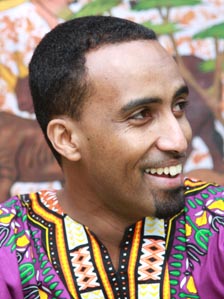
Aar Maanta
Singer & Composer • Somalia

Abdel Aziz al-Mubarak
Oud Master • Sudan
Abdel Halim Hafez†
Legend; “Nightingale”; “The Dark-Skinned Nightingale” • Egypt