Biography
Introduction: A Multifaceted Revolutionary Icon
In the annals of Angolan history and the broader struggle for African liberation, few figures embody the confluence of Arts & Culture and Politics & Government as profoundly as Dr. Deolinda Rodrigues†. Recognized as a national heroine in Angola, her life was a testament to intellectual rigor, compassionate service, and unwavering revolutionary commitment. As an Author & Nurse; MB; MPLA Heroine & Nurse, Rodrigues was a foundational member of the MPLA (People's Movement for the Liberation of Angola) and a pioneering voice for women's emancipation within the liberation movement. Her most enduring contributions lie in her poignant literary work, particularly her intimate war diary, and her role as a nurse and political educator. Dr. Deolinda Rodrigues† was not just a fighter; she was a chronicler of the human spirit amidst conflict, making her an indispensable figure of the Liberation Era and a true Liberation Heroine whose legacy continues to inspire.
Early Life & Education: Forging a Conscience
Deolinda Rodrigues de Almeida was born on February 10, 1939, in the capital of what was then Portuguese Angola, Luanda. She was raised in a Methodist family, a background that instilled in her strong values of community service and education. Her intellectual and political awakening began early. She attended the Methodist Mission School in Luanda, where she excelled academically. A pivotal moment came in 1956, when she was awarded a scholarship by the Methodist Church to study in Brazil. This opportunity placed her at the Escola de Enfermagem Anna Nery in Rio de Janeiro, where she earned her nursing degree.
Her time in Brazil (1959-1961) was transformative. Living in a country with its own complex history of colonialism and racial dynamics, Rodrigues engaged with Pan-Africanist ideas and connected with other African students and intellectuals. She furthered her studies in Sociology at the University of São Paulo. It was during this period that she began writing political essays and poetry, honing the skills that would define her later work. The escalating repression in Angola and the outbreak of the armed struggle in 1961 solidified her resolve. Upon completing her studies, instead of pursuing a comfortable career, Dr. Deolinda Rodrigues† made the conscious decision to return to a war-torn homeland and join the liberation effort, merging her medical skills with her political convictions.
Career & Major Achievements: The Militant Nurse and Author
The career of Dr. Deolinda Rodrigues† is a seamless blend of revolutionary action, healthcare, and literary expression. Upon joining the MPLA in the early 1960s, she quickly became one of its most influential female members.
Pioneering Leadership and the Women's Detachment
Rodrigues was instrumental in mobilizing women for the cause. She co-founded and helped lead the Women's Detachment of the MPLA, a groundbreaking initiative that formally integrated women into the military and political structures of the movement. She traveled extensively for the MPLA, representing the party in international forums and seeking support for the Angolan struggle. In 1962, she was a delegate at the founding conference of the Organização da Mulher de Angola (OMA) – the Organization of Angolan Women – cementing her role as a leader in the fight for both national and women's liberation.
The Literary Legacy: "Diário de um Exílio sem Regresso"
While her political and nursing work was vital, it is through her writing that Dr. Deolinda Rodrigues† achieved a unique immortality. Throughout her involvement in the struggle, she meticulously kept a diary. This document, posthumously published as "Diário de um Exílio sem Regresso" (Diary of an Exile Without Return), is a literary and historical treasure. It provides an unparalleled, first-person account of the daily realities, hopes, fears, and ideological reflections of a female guerrilla. More than a war log, it is a deeply human narrative that explores themes of love, sacrifice, loneliness, and unwavering belief in freedom. This work firmly establishes her in the category of Writing as a tool of resistance and memory.
Final Sacrifice and National Recognition
In 1967, while on a mission in the eastern front of Angola, Dr. Deolinda Rodrigues† was captured, along with four other OMA militants (Engrácia dos Santos, Irene Cohen, Lucrecia Paim, and Teresa Afonso), by the rival FNLA (National Liberation Front of Angola) with the collaboration of the CIA. After enduring months of torture and imprisonment in a Zairian (now DRC) prison camp, she was executed on March 2, 1968. Her death was a devastating blow to the MPLA and the nation. In recognition of her supreme sacrifice and contributions, independent Angola bestowed upon her the title of National Heroine. Her image and story are taught in schools, and numerous institutions, including schools and hospitals, bear her name.
Personal Life & Legacy: The Enduring Symbol
While her revolutionary life consumed much of her adulthood, the personal writings of Dr. Deolinda Rodrigues† reveal a woman of deep emotion, faith, and introspection. Her Methodist upbringing remained a moral compass, intertwining with her Marxist political views. She never married or had children, dedicating her entire being to the cause of Angolan independence. Her personal interests in sociology, theology, and literature directly fueled her revolutionary praxis, making her a uniquely intellectual combatant.
The legacy of Dr. Deolinda Rodrigues† is multifaceted. She is remembered as:
- A Martyr of the Nation: A symbol of the ultimate price paid for Angola's sovereignty.
- A Feminist Pioneer: A visionary who fought for the meaningful inclusion of women in the nation-building project, both during and after the war.
- A Literary Figure: Her diary is a cornerstone of Angolan and Lusophone African literature, offering a powerful female perspective on war and liberation.
- A Model of Integrated Activism: She demonstrated how skills in healthcare, education, diplomacy, and writing could all be harnessed in the service of liberation.
Her life continues to be a reference point for discussions on gender, nationalism, and the power of personal testimony in history.
Historical Significance & Commemoration
Discussing net worth in the traditional, financial sense is not applicable to a revolutionary martyr like Dr. Deolinda Rodrigues†. Her "value" was not measured in currency but in her immense contribution to the social and political capital of her nation. She did not pursue business ventures or personal wealth; instead, she invested her life in the "business" of building a free Angola.
Her wealth lies in her enduring symbolic capital. Streets, universities, and cultural centers across Angola bear her name, a testament to her priceless role in the national consciousness. The publication and study of her diary generate academic and cultural value, enriching Angola's literary heritage. The ideals she fought for—a just, independent, and equitable society—represent the intangible but profound inheritance she left for the Angolan people. In this light, the legacy of Dr. Deolinda Rodrigues† is among the most valuable assets of modern Angolan history, a perpetual reminder that the pen, the scalpel, and the rifle can all be instruments of liberation when wielded by a courageous and principled heart.
For further reading on her life and works, consult academic resources on Angolan history and Lusophone African literature, such as the BUALA Cultural Portal or scholarly analyses of MPLA history and women's roles in liberation movements.
Net Worth Analysis
Dr. Deolinda Rodrigues was a political activist, nurse, and martyr who died in 1967, not a business figure with a quantifiable personal fortune.
Quick Stats
Related People
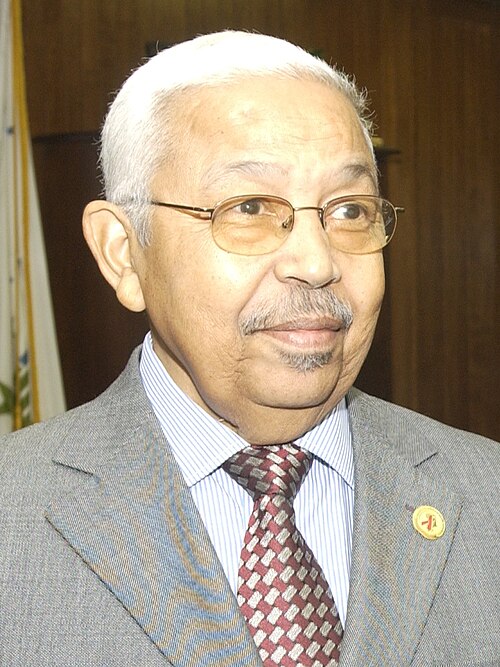
Pedro Pires
Documentary Filmmaker; Ex-President (2001-2011)