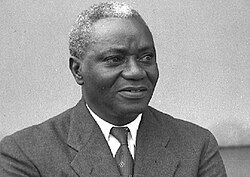
Biography
Introduction: The Pillar of Ghanaian Independence
In the annals of African history, few figures embody the fusion of profound intellectual scholarship and relentless political activism as Dr. J.B. Danquah†. Recognized as a principal Founding Father of the modern nation of Ghana, his life's work laid the indispensable ideological and organizational groundwork for the country's liberation from British colonial rule. A man of towering intellect, Dr. J.B. Danquah† was not only a barrister and political leader but also a pioneering historian, philosopher, and publisher whose research into Akan culture and history provided a powerful sense of identity and nationhood. His most enduring contribution was co-founding the United Gold Coast Convention (UGCC) in 1947, the first significant political party aimed at self-government, earning him the honorific "the doyen of Gold Coast politics." It was he who famously invited the young Kwame Nkrumah to serve as the UGCC's General Secretary, setting in motion the final, decisive push for independence. The story of Ghana's birth is inextricably linked to the vision, sacrifices, and scholarly rigor of Dr. J.B. Danquah†.
Early Life & Education: The Making of a Scholar-Activist
Joseph Kwame Kyeretwie Boakye Danquah was born on December 18, 1895, in the town of Bepong, in the Eastern Region of the Gold Coast (now Ghana). Hailing from the royal family of Ofori Panyin, his early life was steeped in the traditions and governance structures of the Akan people, an experience that would deeply influence his later work. His elder brother was Nana Sir Ofori Atta I, the influential King of Akyem Abuakwa, highlighting the family's central role in the region's Politics & Government.
Danquah's intellectual journey began at the Basel Mission School in Kyebi and continued at the prestigious Presbyterian Training College in Akropong. His exceptional abilities were soon recognized, leading him to become a clerk for his brother's court and later, in 1914, a clerk at the Supreme Court of the Gold Coast. Determined to further his education, he traveled to the United Kingdom in 1921, where he embarked on a remarkable academic odyssey. He earned a Bachelor of Arts degree in Philosophy from the University of London in 1925, followed by a Doctor of Philosophy (Ph.D.) in Ethics in 1928—becoming one of the first Africans to receive a Ph.D. from a British university. Not stopping there, he studied law at the Inner Temple and was called to the Bar in 1926. This formidable combination of degrees in philosophy, ethics, and law equipped Dr. J.B. Danquah† with the unique tools to deconstruct colonial arguments and articulate a philosophical case for African self-rule.
Career & Major Achievements: Architect of a Nation
The career of Dr. J.B. Danquah† was a multifaceted campaign for national dignity, waged through the press, the courts, and the political arena. Upon returning to the Gold Coast in 1928, he immediately began challenging the colonial status quo. He founded The Times of West Africa (1931-1935), the first daily newspaper owned and operated by an African, using it as a platform to advocate for social and political reform.
Intellectual Foundations and the Name "Ghana"
His scholarly work was directly tied to his political vision. In the 1920s and 30s, he conducted extensive research into Akan history, law, and religion. His seminal books, Akan Laws and Customs (1928) and The Akan Doctrine of God (1944), argued for the sophistication and richness of indigenous African civilization. This scholarship was pivotal when, in the 1940s, he led the fight for the colony's name change. He proposed "Ghana" as the name for the future independent nation, linking it to the ancient and powerful West African empire, thus replacing the colonial "Gold Coast" with a name that evoked a proud, pre-colonial heritage. This was a masterstroke in nation-building.
Political Leadership and the Path to Independence
Danquah's political activism reached its zenith in the post-World War II era. In August 1947, he was the chief architect and financier behind the formation of the United Gold Coast Convention (UGCC) with the explicit aim of achieving self-government "in the shortest possible time." As its Vice-President and de facto leader, he penned the invitation to Kwame Nkrumah to return from abroad and lead the party as General Secretary. The partnership, though later fractious, electrified the colony. Following the 1948 Accra riots and the arrest of the "Big Six" (which included both Danquah and Nkrumah), his stature grew. He served as a member of the Coussey Committee that drafted the 1951 constitution, a critical step toward internal autonomy.
In the 1950s, as Nkrumah's more radical Convention People's Party (CPP) gained mass appeal, Dr. J.B. Danquah† remained a stalwart of the opposition, advocating for federalism and checks on executive power. He was elected to Parliament in 1951 and 1954. Despite losing the 1960 presidential election to Nkrumah, he continued to be a vocal critic of the CPP government's increasingly authoritarian tendencies, championing democracy and human rights until his final days.
Personal Life & Legacy: The Enduring Doyen
Beyond politics, Dr. J.B. Danquah† was a family man, married to Mabel Dove Danquah, a pioneering journalist and writer in her own right. His personal life was marked by a deep commitment to family and tradition, balanced with a modern, cosmopolitan outlook. His legacy is multifaceted and profound. As a scholar, he pioneered the academic study of Akan culture and provided the historical rationale for the nation's identity. As a politician, he founded the first major nationalist movement and mentored a generation of leaders.
His most poignant legacy, however, may be his steadfast commitment to democratic principles. His opposition to one-party rule under Nkrumah led to his detention under the Preventive Detention Act in 1961. After a brief release, he was arrested again in 1964 and died in detention at Nsawam Medium Security Prison on February 4, 1965. This tragic end cemented his status as a martyr for democracy in Ghana. Today, his face adorns Ghana's 200 cedi banknote, and numerous institutions, including the J.B. Danquah Memorial Lecture Series and the Danquah Institute, bear his name, ensuring that his contributions as a Founding Father & Scholar continue to inspire generations.
Net Worth & Business Ventures
While precise figures of his personal wealth are not recorded in modern terms, Dr. J.B. Danquah† was known to be a man of considerable means for his time, deriving his financial resources from a combination of his legal practice, family assets, and entrepreneurial ventures. His legal career as a barrister and solicitor was successful and provided a steady income. More significantly, he came from a prominent royal family with interests in land and local governance. He also channeled his capital into ventures that supported his nationalist goals. His founding and funding of The Times of West Africa newspaper was a significant business undertaking aimed at shaping public opinion. Furthermore, his role in establishing the United Gold Coast Convention (UGCC) required substantial personal financial investment to organize, travel, and maintain the party's operations in its early years. His resources were, in essence, mobilized in service of his political and intellectual mission to build a free Ghana.
Key Facts & Timeline
- Birth: December 18, 1895, Bepong, Gold Coast.
- Education: BA (Philosophy), PhD (Ethics) University of London; Law degree, Inner Temple.
- Key Achievement: Co-founded the United Gold Coast Convention (UGCC) in 1947.
- Scholarly Work: Authored Akan Laws and Customs (1928) and The Akan Doctrine of God (1944).
- Historic Role: Proposed the name "Ghana" for the independent nation.
- Political Role: Member of the "Big Six"; key figure in the Coussey Committee (1949).
- Death: February 4, 1965, in detention at Nsawam Prison, Ghana.
- Honor: Featured on the Ghana 200 cedi banknote.
Frequently Asked Questions
What is Dr. J.B. Danquah†'s estimated net worth?
Net worth details for Dr. J.B. Danquah† are currently being updated.
What is Dr. J.B. Danquah†'s role and nationality?
Dr. J.B. Danquah† is a ER; Founding Father & Scholar from Ghana.
How did Dr. J.B. Danquah† make their money?
Dr. J.B. Danquah† built their fortune primarily through Dr. J.B. Danquah was a Ghanaian statesman and scholar who died in 1965, therefore he has no net worth in 2024..
How old is Dr. J.B. Danquah†?
Dr. J.B. Danquah† was born in 1895 (131 years old).
Which category is Dr. J.B. Danquah† listed under?
Dr. J.B. Danquah† is featured under the Politics & Government category on NetWorth Africa.
How is Dr. J.B. Danquah†'s net worth calculated?
NetWorth Africa estimates financial valuations using publicly available stock equity holdings, company ownership records, real estate assets, and verified market data.
Net Worth Analysis
Dr. J.B. Danquah was a Ghanaian statesman and scholar who died in 1965, therefore he has no net worth in 2024.
Quick Stats

Related People
Aaron Motsoaledi
LP; Minister of Home Affairs • South Africa
Abane Ramdane†
FLN Leader & Strategist • Algeria
Abdalla Hamdok
Ex-Prime Minister • Sudan
Abdallah Kigoda
Ex-Minister of Natural Resources • Tanzania