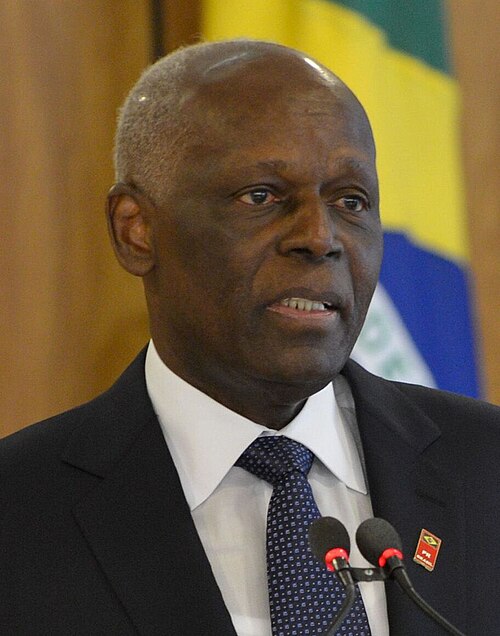
$2B
Estimated Net Worth
As of 2024 • medium confidence
Financial Breakdown
Asset Distribution
Assets vs Liabilities
Assets
Liabilities
Disclaimer: These financial estimates are based on publicly available information and should be considered approximate. Last updated: 12/29/2025
Biography
Introduction: The Architect of Modern Angola
Dr. José Eduardo dos Santos† stands as one of the most pivotal and enduring figures in modern African history. Serving as the second President of the Republic of Angola from 1979 to 2017, his 38-year tenure was one of the longest presidencies in the world, defining the nation's trajectory from a war-torn state to a regional powerhouse. Beyond his political role, he is also recognized as an Author & President, having documented his experiences and perspectives, contributing to the genre of political memoirs from the African continent. His rule was marked by the conclusion of a devastating civil war, significant economic growth fueled by oil and diamonds, and profound challenges of corruption and inequality. This biography delves into the life, career, and multifaceted legacy of the man who was synonymous with Angolan Politics & Government for nearly four decades.
Early Life & Education: The Making of a Revolutionary
José Eduardo dos Santos was born on August 28, 1942, in the Sambizanga district of Luanda, then part of Portuguese Angola. His early life was shaped by the realities of colonial rule. Demonstrating academic promise, he attended primary and secondary school in his neighborhood. His political consciousness awakened early; by the age of 19, he was already engaged with nationalist movements seeking Angola's independence from Portugal.
In 1961, following the outbreak of the Angolan War of Independence, dos Santos joined the Popular Movement for the Liberation of Angola (MPLA). Recognizing his potential, the MPLA sent him abroad for education—a common path for promising young revolutionaries. He studied petroleum engineering in Baku, Azerbaijan (then part of the Soviet Union), earning a degree. More importantly, he received military training, preparing him for the conflict back home. This formative period in the Soviet Union deeply influenced his political ideology and future governance style, grounding him in Marxist-Leninist principles and cementing alliances that would last decades. He returned to Angola in 1970, serving in the MPLA's radio communications division and rising steadily through the party ranks as a skilled and discreet operator.
Career & Major Achievements: From Succession to State-Building
Dos Santos's ascent to the pinnacle of power was unexpected. Upon Angola's independence in 1975, he served as the MPLA's Foreign Minister and First Deputy Prime Minister. The sudden death of Angola's first president, Agostinho Neto, in September 1979 propelled the 37-year-old dos Santos into the presidency. He inherited a nation already engulfed in a brutal civil war against the UNITA rebels, backed by the United States and South Africa, while his MPLA government was supported by the Soviet Union and Cuba.
Ending the Civil War and Political Consolidation
His most significant achievement was navigating Angola toward peace. After decades of conflict, he oversaw the landmark Luanda Protocol in 2002, which followed the death of UNITA leader Jonas Savimbi and finally ended the 27-year civil war. This monumental feat allowed for national reconstruction. Domestically, he transitioned Angola from a one-party Marxist state to a nominal multi-party democracy in 1992, though his regime retained firm control. The MPLA, under his leadership, won every election from 1992 onward, solidifying his and the party's dominance.
Economic Transformation and the "Oil Miracle"
Dr. José Eduardo dos Santos† presided over an era of spectacular, if uneven, economic growth. Leveraging Angola's vast natural resources, he opened the oil sector to foreign investment. By the mid-2000s, Angola became one of Africa's top oil producers and fastest-growing economies, with GDP growth often exceeding 10% annually. This "oil boom" funded massive infrastructure projects, including new railways, universities, and a complete overhaul of the nation's capital, Luanda. He also played a key role in regional diplomacy, contributing to stability in the Democratic Republic of Congo and other neighboring states.
The Authorial Voice: Memoirs and Political Thought
In his later years and after leaving office, the narrative of Dr. José Eduardo dos Santos† as an Author & President took shape. His memoirs and writings, primarily in Portuguese, offer an insider's perspective on the liberation struggle, the Cold War dynamics in Southern Africa, and the challenges of governing a post-conflict nation. These works serve as crucial primary sources for understanding the complexities of Angolan Politics & Government from the man at its center for so long.
Personal Life, Legacy, and Controversies
José Eduardo dos Santos was a famously private and reserved figure, earning the nickname "the silent one." He was married multiple times and had several children. His later legacy became intensely intertwined with his family's business activities. While he cultivated an image of a detached patriarch of the nation, his children, especially his daughter Isabel dos Santos, became billionaires with extensive holdings in Angola and Portugal, leading to widespread allegations of nepotism and state capture.
His legacy is profoundly dualistic. On one hand, he is credited with:
- Ending one of Africa's longest civil wars.
- Presiding over a period of massive economic growth and infrastructure development.
- Maintaining Angola's sovereignty and unity.
- Establishing Angola as a major regional player.
- Systemic corruption and the enrichment of a small elite.
- Severe human rights abuses, suppression of press freedom, and political dissent.
- Failing to diversify the economy away from oil, leaving it vulnerable.
- Perpetuating vast social inequality despite national wealth.
Net Worth & Business Ventures
The personal net worth of Dr. José Eduardo dos Santos† was a subject of intense speculation but never officially verified. While his presidential salary was modest, the vast business empire built by his immediate family suggested access to immense wealth derived from state connections. Under his presidency, Angola's strategic sectors—oil, diamonds, telecommunications, banking, and media—saw significant involvement from entities linked to his family. His daughter, Isabel dos Santos, was labeled Africa's richest woman at her peak, with investments across continents. His son, José Filomeno dos Santos, was placed in charge of Angola's sovereign wealth fund. These arrangements led to allegations that the Angolan state had been used as a vehicle for personal and familial enrichment. Following his departure from power, these assets became targets of freezing orders and legal investigations by the successor government, cementing the controversial financial narrative of his era.
In conclusion, Dr. José Eduardo dos Santos† was the defining political architect of post-independence Angola. His life, from revolutionary to long-serving president and author, mirrors the tumultuous journey of the nation itself—marked by war, peace, immense wealth, deep poverty, and an ongoing struggle to define its future. His memoirs and his nearly four-decade rule provide an indispensable, if contested, chapter in the history of African Politics & Government.
Net Worth Analysis
Estimates of his wealth, largely tied to his family's control of Angolan state assets and Isabel dos Santos's fortune, have been reported around $2 billion, though exact figures are unverified and contested.
Quick Stats
Related People
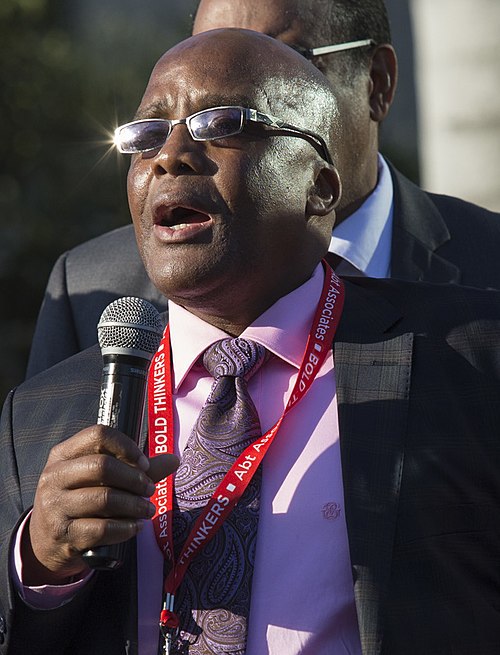
Aaron Motsoaledi
LP; Minister of Home Affairs
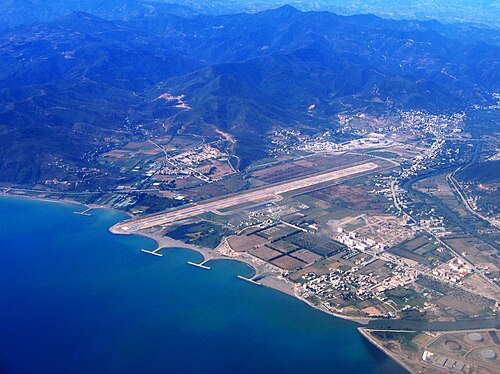
Abane Ramdane†
FLN Leader & Strategist
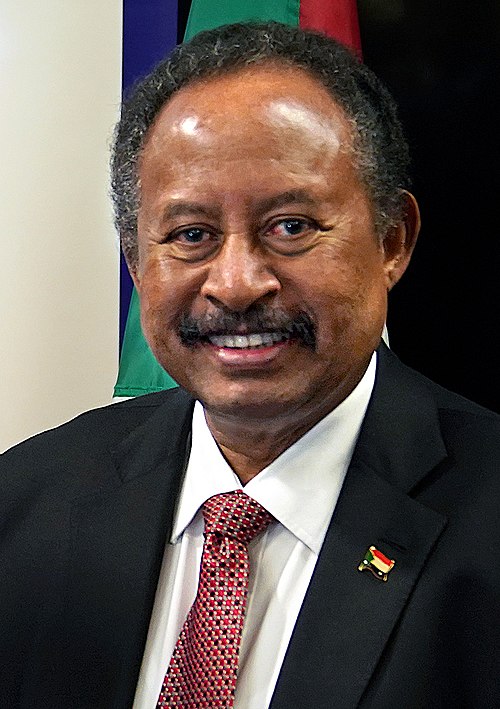
Abdalla Hamdok
Ex-Prime Minister
Abdallah Kigoda
Ex-Minister of Natural Resources