Biography
Introduction: The Scholar-Prime Minister
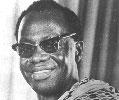
Dr. Kofi Abrefa Busia† stands as one of the most intellectually formidable and pivotal figures in Ghana's political history. Renowned as a distinguished sociologist, an academic of global repute, and a statesman, he served as the Prime Minister of Ghana from 1969 to 1972. His tenure marked the brief return to democratic, parliamentary rule after the overthrow of the first republic and Kwame Nkrumah's regime. As a leader of the Liberation Era, Dr. Kofi Abrefa Busia championed a philosophy of liberal democracy, decentralization, and rural development, offering a stark ideological contrast to the socialist centralism of his predecessor. His life's journey—from a royal household in the Ashanti Region to the halls of Oxford and finally to the pinnacle of Politics & Government—embodies a unique blend of traditional authority, scholarly rigor, and democratic conviction that left an indelible mark on the nation.
Early Life & Education: From Wenchi to Oxford
Kofi Abrefa Busia was born on July 11, 1913, in Wenchi, a town in the then Gold Coast's Ashanti Region. He was born into the royal family of Wenchi, a background that deeply informed his understanding of traditional African social systems and governance—a theme he would later explore academically. His early education began at Wesleyan Methodist schools in Wenchi and Kumasi, followed by teacher training at Wesley College. His intellectual prowess was evident early on, leading him to pursue further studies in the United Kingdom.
In 1939, Busia earned a BA (Hons) in Medieval History from the University of London, followed by a BA (Hons) in Philosophy, Politics, and Economics (PPE) from University College, Oxford, in 1941. He made history in 1947 by becoming the first African to be appointed a District Commissioner in the colonial administration. However, his academic calling was stronger. He returned to Oxford, where he completed his doctorate (D.Phil) in Social Anthropology in 1947. His groundbreaking thesis, later published as The Position of the Chief in the Modern Political System of Ashanti, established him as a leading scholar on African societies. This formative period, blending royal heritage, colonial service, and elite scholarship, equipped Dr. Kofi Abrefa Busia with a unique lens through which he would later view and shape Ghanaian politics.
Career & Major Achievements: Academia to the Prime Minister's Office
Academic Pioneer and Political Opponent
Before his full entry into politics, Dr. Busia built an illustrious academic career. He served as a Professor of African Studies at the University College of the Gold Coast (now University of Ghana), influencing a generation of thinkers. His scholarly work consistently argued for the relevance of indigenous institutions in modern governance. As Ghana moved toward independence, Busia entered the political fray. He was elected to the Legislative Assembly in 1951 and 1954. He became a leading figure in the opposition against Kwame Nkrumah's Convention People's Party (CPP), founding the United Party (UP). Following increasing authoritarianism under Nkrumah, Busia went into exile in 1959, holding prestigious academic positions at universities in the Netherlands, Mexico, and the UK, including a Fellowship at St. Antony's College, Oxford.
Prime Minister of the Second Republic
The military coup of 1966 that ousted Nkrumah created an opportunity for a return to civilian rule. Dr. Kofi Abrefa Busia returned to Ghana and led the newly formed Progress Party (PP). In the democratic elections of 1969, his party won a decisive victory, and he was sworn in as Prime Minister on October 1, 1969, with Edward Akufo-Addo as Ceremonial President.
His government's major achievements and policies included:
- Economic Liberalization: His government pursued a "Ghanaian First" economic policy but within a capitalist framework, dismantling state controls and seeking debt renegotiation with international creditors.
- The Aliens Compliance Order (1969): A controversial decree requiring undocumented immigrants, mostly from West African neighbors, to regularize their status or leave. This had significant social and economic repercussions.
- Decentralization Efforts: True to his academic work, he initiated steps to decentralize administration and empower local government structures.
- Diplomatic Outreach: He sought to rebuild Ghana's international relationships, particularly with Western nations and apart from the Eastern Bloc focus of the Nkrumah era.
However, his tenure was plagued by severe economic challenges, including high inflation, unemployment, and a crippling national debt inherited from the previous regime. Austerity measures, like the devaluation of the cedi in 1971, proved highly unpopular. On January 13, 1972, while Busia was abroad for medical treatment, his government was overthrown in a bloodless coup led by Colonel Ignatius Kutu Acheampong, ending the Second Republic.
Personal Life & Legacy
Dr. Kofi Abrefa Busia was known as a man of quiet dignity, deep religious faith (a devout Methodist), and intellectual depth. He was married to Naa Morkor Busia, and together they had children, continuing a family legacy deeply involved in Ghana's public and academic life. His personal interests were inextricably linked to his profession; he was a lifelong scholar and writer.
The legacy of Dr. Kofi Abrefa Busia† is multifaceted. As a sociologist, his anthropological work remains a critical reference point for understanding Akan political systems. In Politics & Government, he is remembered as the leader who restored multi-party democracy, however briefly, and as the symbolic head of a liberal democratic tradition in Ghana that contrasted with Nkrumah's statism. His ideas on decentralization and rural development continue to resonate in Ghanaian political discourse. The Busia-Dombo-Liman tradition forms a core strand of Ghana's political heritage, notably within the New Patriotic Party (NPP), which views him as a foundational ideological figure. He passed away on August 28, 1978, in Oxford, England, but his principles of democratic accountability, scholarly-informed governance, and civic liberalism continue to influence Ghana's democratic journey.
Net Worth & Business Ventures
Unlike many political figures, Dr. Kofi Abrefa Busia was not known for significant personal wealth or commercial business ventures. His primary sources of income throughout his life were derived from his academic career—his salaries as a professor and scholar at various international institutions—and later, his salary as a public servant and Prime Minister. His years in exile were sustained by academic appointments. There are no records or indications of substantial private business holdings or accumulation of wealth during or after his premiership. His estate was likely modest, centered around academic royalties and personal property. His true "wealth" lay in his intellectual contributions, his published works, and the enduring political ideology he bequeathed to Ghana. His life reflected that of a scholar-statesman whose capital was intellectual and ideological rather than material.
Sources & Further Reading: The life and work of Dr. Kofi Abrefa Busia are documented in historical archives, his own publications (e.g., "Africa in Search of Democracy"), and scholarly analyses of Ghana's political history. Credible biographical information can be sourced from the Encyclopædia Britannica, academic journals on African studies, and official Ghanaian government historical portals.
Frequently Asked Questions
What is Dr. Kofi Abrefa Busia†'s estimated net worth?
Net worth details for Dr. Kofi Abrefa Busia† are currently being updated.
What is Dr. Kofi Abrefa Busia†'s role and nationality?
Dr. Kofi Abrefa Busia† is a BA; Ex-PM; Ex-Prime Minister & Sociologist from Ghana.
How did Dr. Kofi Abrefa Busia† make their money?
Dr. Kofi Abrefa Busia† built their fortune primarily through Dr. Kofi Abrefa Busia was a former Prime Minister of Ghana who passed away in 1978; he is not a living business figure and has no contemporary net worth..
How old is Dr. Kofi Abrefa Busia†?
Dr. Kofi Abrefa Busia† was born in 1913 (113 years old).
Which category is Dr. Kofi Abrefa Busia† listed under?
Dr. Kofi Abrefa Busia† is featured under the Politics & Government category on NetWorth Africa.
How is Dr. Kofi Abrefa Busia†'s net worth calculated?
NetWorth Africa estimates financial valuations using publicly available stock equity holdings, company ownership records, real estate assets, and verified market data.
Net Worth Analysis
Dr. Kofi Abrefa Busia was a former Prime Minister of Ghana who passed away in 1978; he is not a living business figure and has no contemporary net worth.
Quick Stats

Related People

Aaron Motsoaledi
LP; Minister of Home Affairs • South Africa

Abane Ramdane†
FLN Leader & Strategist • Algeria

Abdalla Hamdok
Ex-Prime Minister • Sudan

Abdallah Kigoda
Ex-Minister of Natural Resources • Tanzania