Financial Breakdown
Asset Distribution
Assets vs Liabilities
Assets
Disclaimer: These financial estimates are based on publicly available information and should be considered approximate. Last updated: 12/31/2025
Biography
Introduction: The Voice of a Generation
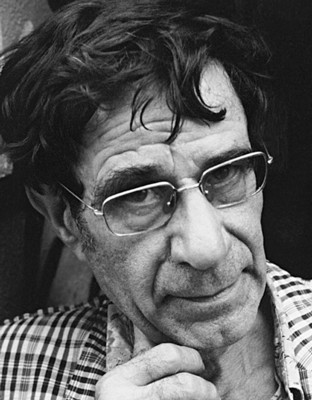
Driss Chraïbi† (1926–2007) stands as a monumental figure in the landscape of Arts & Culture, widely recognized as a foundational Novelist & Pioneer of modern Maghrebi literature written in French. His audacious debut in 1954, Le Passé simple (The Simple Past), sent shockwaves through the literary and social spheres of Morocco and France, earning him the title of "the man who shook the colonized Maghreb." Driss Chraïbi†'s work is celebrated for its fierce critique of both traditional Moroccan society and French colonial rule, articulating the profound identity crisis of a generation caught between two worlds. His courageous, often satirical voice paved the way for countless North African writers, establishing a new, critical discourse that reshaped Morocco's literary identity in the 20th century and beyond.
Early Life & Education: Forging a Critical Mind
Driss Chraïbi was born on July 15, 1926, in El Jadida, a coastal city in then-French protectorate Morocco. He was born into a bourgeois family; his father was a tea merchant who held traditional values. This upbringing within a conservative, yet colonized, society provided the primary fuel for his future literary rebellion. Chraïbi's education was a blend of traditional Quranic schooling and modern French colonial instruction, a dual experience that deeply informed his perspective on cultural conflict.
In a pivotal move, he left for Paris in 1945 to study chemical engineering, later switching to neuropsychiatry. This scientific training is evident in the precise, analytical, and often detached style of his prose. The experience of being an immigrant intellectual in post-war Paris was transformative. He worked various jobs, including as a laboratory technician and even a journalist for France Inter radio. These formative years—marked by distance from his homeland and immersion in Western thought—crystallized his critical stance. The young Driss Chraïbi† developed the unique bifocal vision that would define his career: an insider's understanding of Maghrebi society subjected to an outsider's ruthless scrutiny.
Career & Major Achievements: A Literary Earthquake and Evolution
The publication of Le Passé simple in 1954 was nothing short of a literary earthquake. The novel's scathing portrayal of an authoritarian Moroccan father (the "Seigneur") and the oppressive structures of tradition was seen as an act of profound betrayal by many in his homeland, yet it was a clarion call for intellectual freedom. It preceded Morocco's independence in 1956 and became a seminal text of decolonization, challenging internal and external forms of oppression. This work alone secures Driss Chraïbi†'s status as a fearless Novelist & Pioneer.
A Prolific and Diverse Literary Output
Chraïbi did not rest on this controversial foundation. His career spanned over five decades and included more than 20 novels, along with essays and children's books. His work evolved through distinct phases:
- The Critical Early Phase (1950s-60s): Following his debut, novels like Les Boucs (The Butts, 1955) gave a powerful voice to North African immigrant workers in France, highlighting their marginalization.
- The Detective Series: In a surprising turn, he created the popular Inspector Ali series, beginning with Une Enquête au pays (1981). Through the lens of detective fiction, he continued to critique social and political issues in the Maghreb.
- The Historical and Reflective Phase: Later works like La Mère du printemps (Mother of Spring, 1985), which recounts the Arab conquest of North Africa from an Amazigh (Berber) perspective, and L'Homme du livre (1995), a fictional autobiography of the Prophet Muhammad, showcased his deep engagement with spiritual and historical themes.
Throughout these phases, his style remained characterized by irony, linguistic innovation, and a relentless quest for truth. His impact on Arts & Culture is immeasurable; he broke the ice for giants of Francophone literature like Tahar Ben Jelloun and Abdelkebir Khatibi. By writing in French yet centering exclusively on Moroccan and Maghrebi realities, Driss Chraïbi† reclaimed the colonial language as a tool for liberation and self-definition.
Recognition and Honors
While his early work made him a controversial figure, his literary significance was widely recognized later in his career. He received several prestigious awards, including the Prix de l'Afrique Méditerranéenne and the Grand Prix du Roman de l'Académie Française. More importantly, he gained recognition as the "father of modern Moroccan literature," a title that acknowledges his foundational role in creating a space for critical, modern narrative in his country's cultural expression.
Personal Life & Legacy: The Man Behind the Words
Driss Chraïbi was a deeply private and complex individual, described as both gentle and fiercely independent. He married Catherine Chraïbi (née Hurlord) and had children. For much of his career, he lived and wrote in France, teaching at the Université Laval in Quebec for a period, yet the themes of his homeland never left him. This self-imposed exile allowed him the critical distance he felt necessary for his writing. He was known to be an avid reader with wide-ranging interests, from science to philosophy, which enriched his narrative scope.
The legacy of Driss Chraïbi† is enduring and multifaceted. He passed away on April 1, 2007, in Drôme, France. His pioneering legacy is threefold:
- Literary Liberation: He demonstrated that literature could be a potent weapon against all forms of dogma, whether religious, social, or political.
- Linguistic Reclamation: He proved that the French language could be masterfully wielded to express a distinctly North African consciousness, inspiring the "Francophone" literary movement.
- Intellectual Courage: He set a precedent for fearless social critique, making it possible for future generations of Moroccan and Maghrebi writers to explore taboo subjects with honesty and artistic integrity.
Today, his novels, particularly Le Passé simple, are essential reading in university courses on postcolonial literature, Francophone studies, and North African history worldwide. He is remembered not just as a writer from Morocco, but as a global voice for intellectual freedom and cultural critique.
Literary Estate & Lasting Influence
While discussions of net worth are rarely appropriate for literary figures, the value of Driss Chraïbi†'s contribution is measured in cultural capital and enduring influence. His primary "business" was his writing, and his income derived from book royalties, academic positions, and literary prizes. His works continue to be published, translated, and studied, generating ongoing revenue for his estate and, more importantly, ensuring his ideas remain in circulation.
The true "wealth" of Driss Chraïbi† lies in his intellectual legacy. He built no corporate empire, but he constructed a new foundation for Moroccan narrative art. His pioneering work opened international markets and academic interest to Maghrebi literature, creating economic and professional opportunities for the writers who followed him. In the economy of Arts & Culture, the legacy of a Novelist & Pioneer like Chraïbi is priceless, his influence woven permanently into the fabric of contemporary Moroccan and global literature.
Sources & Further Reading: For more information on Driss Chraïbi's life and works, readers can consult academic databases like JSTOR, the biographical archives of the Académie Française, and critical works from publishers such as Éditions Denoël and Éditions du Seuil, his primary French publishers.
Frequently Asked Questions
What is Driss Chraïbi†'s estimated net worth?
Driss Chraïbi† has an estimated net worth of $1.0 Million.
What is Driss Chraïbi†'s role and nationality?
Driss Chraïbi† is a Novelist & Pioneer from Morocco.
How did Driss Chraïbi† make their money?
Driss Chraïbi† built their fortune primarily through Driss Chraïbi was a celebrated novelist, not a business figure; his wealth derived from literary work and cultural influence, not corporate holdings..
How old is Driss Chraïbi†?
Driss Chraïbi† was born in 1926 (100 years old).
Which category is Driss Chraïbi† listed under?
Driss Chraïbi† is featured under the Arts & Culture category on NetWorth Africa.
How is Driss Chraïbi†'s net worth calculated?
NetWorth Africa estimates financial valuations using publicly available stock equity holdings, company ownership records, real estate assets, and verified market data.
Net Worth Analysis
Driss Chraïbi was a celebrated novelist, not a business figure; his wealth derived from literary work and cultural influence, not corporate holdings.
Quick Stats
Related People
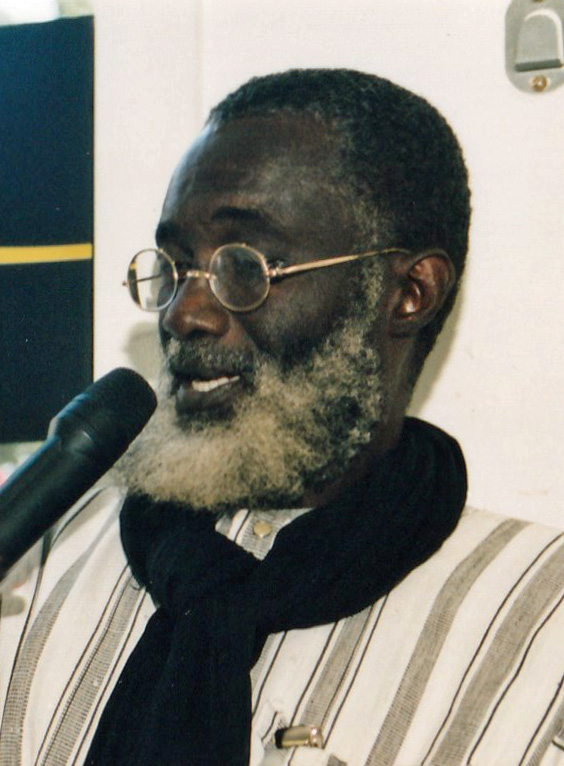
Abasse Ndione
Novelist & Playwright • Senegal
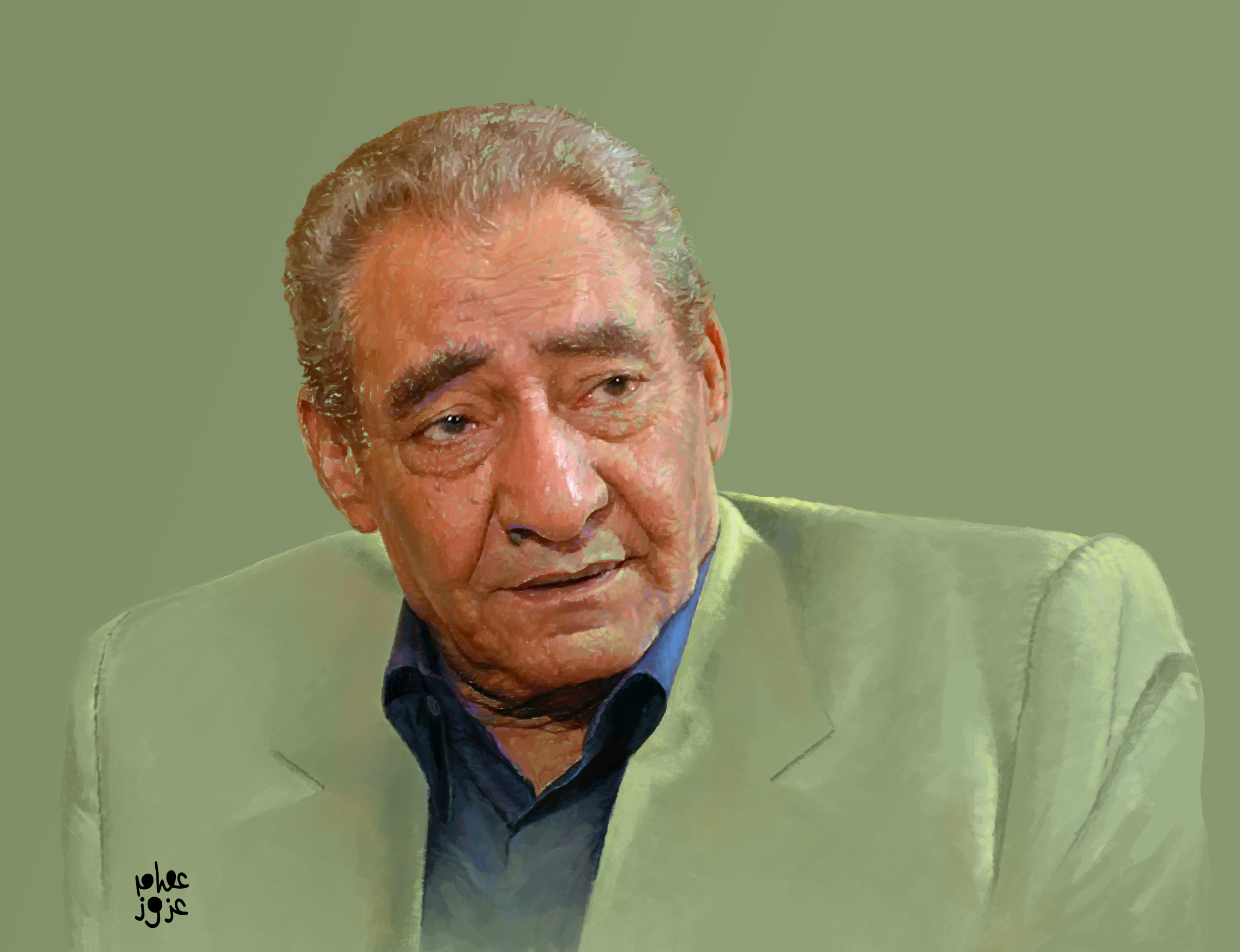
Abdel Rahman al-Abnudi†
Poet (Egypt-Sudan) • Sudan
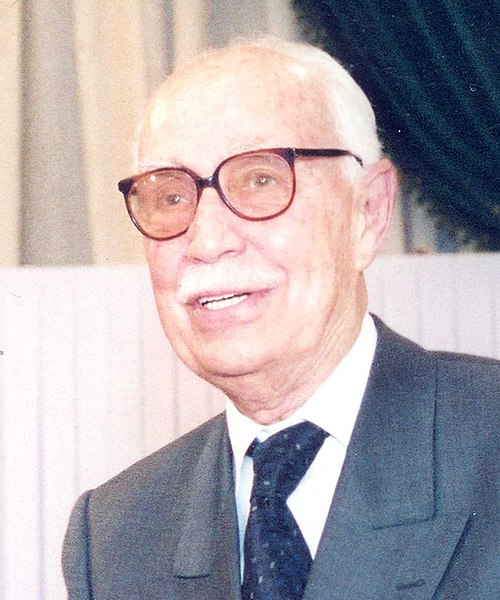
Abdelkrim Ghallab†
Novelist & Journalist • Morocco
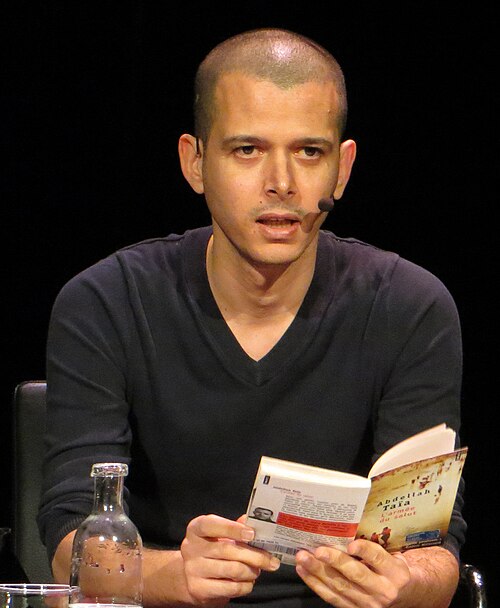
Abdellah Taïa
Novelist & Filmmaker • Morocco