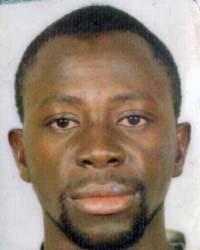
Biography
Introduction: A Voice Silenced
Ebrima "Chief" Manneh† remains one of the most haunting symbols of press suppression in The Gambia and across Africa. A talented reporter for the Daily Observer newspaper, Manneh's life and career were violently interrupted on July 7, 2006, when he was forcibly taken by state security agents in Banjul. His crime, according to multiple reports, was attempting to republish a BBC article critical of then-President Yahya Jammeh's government. From that day forward, Ebrima Manneh† vanished, becoming a Journalist (Disappeared) whose case sparked international outrage and legal battles. His story is not one of traditional accolades, but of a profound and ongoing struggle for truth, accountability, and the fundamental right of a free press in Gambia.
Early Life & Education: Formative Years in Gambia
Born in 1986, Ebrima Manneh grew up in The Gambia, a small West African nation that would later become notorious for its human rights abuses under the regime of Yahya Jammeh. Details about his early childhood and family life are sparingly documented, a tragic foreshadowing of the obscurity that would later engulf him. What is known points to a young man dedicated to learning and his community. He pursued his education within The Gambia, demonstrating an early interest in current affairs and storytelling.
His formative years were spent in a country where the political climate grew increasingly tense and repressive. Jammeh's rule, which began in 1994, was characterized by a systematic crackdown on dissent, with independent media being a primary target. This environment likely shaped Manneh's understanding of the risks and critical importance of journalism. Before joining the Daily Observer, he is reported to have worked at another local publication, honing the skills that would lead him to a national platform. His path reflected a commitment to using the pen to inform the public, a noble yet dangerous vocation in the Gambia of the early 2000s.
Career & Major Achievements: A Brief, Courageous Tenure
Ebrima Manneh's professional journalism career, though tragically short, was defined by an act of immense courage. By 2006, he was working as a reporter for the Daily Observer, which was at the time one of The Gambia's leading newspapers. While the paper had a complex relationship with the Jammeh regime, individual journalists like Manneh often navigated a perilous line.
The Fateful Act and Disappearance
In July 2006, the BBC published a report critical of President Jammeh's hosting of the African Union summit, highlighting the event's cost amid widespread poverty. Ebrima Manneh† was tasked with editing this piece for potential republication in the Daily Observer. According to testimony from colleagues, including then-editor-in-chief Pap Saine, Manneh was in the process of this work when plainclothes agents of the National Intelligence Agency (NIA) entered the newsroom on July 7, 2006. He was seized, taken away, and never seen in public again. This single act transformed him from a working journalist into a central figure in the global narrative on Media & Journalism under duress.
Legal Battles and International Advocacy
Manneh's disappearance did not go unchallenged. His case became a catalyst for legal and diplomatic action:
- ECOWAS Court Ruling (2008): The Community Court of Justice of the Economic Community of West African States (ECOWAS) delivered a landmark judgment. It found the Gambian government guilty of illegal arrest, detention, and torture regarding Manneh. The court ordered his immediate release and awarded R 1.6 Millionin compensation to his family—a ruling the Jammeh government ignored.
- UN Working Group on Enforced Disappearances: The United Nations body formally declared Manneh a victim of enforced disappearance and repeatedly called for The Gambia to clarify his fate.
- Symbol for Organizations: Groups like Reporters Without Borders (RSF), the Committee to Protect Journalists (CPJ), and Amnesty International adopted Manneh's case, using it to highlight the extreme dangers faced by journalists in The Gambia and globally.
His "achievement" thus lies not in published works, but in the unprecedented regional court judgment his case secured and the relentless international spotlight it cast on Jammeh's tyranny.
Personal Life & Legacy: The Enduring Search for Truth
Very little is publicly known about Ebrima Manneh† outside of his profession. He was known by the nickname "Chief" among friends and colleagues. His personal interests, family details, and private aspirations have been largely shielded, both out of respect and for the safety of his loved ones, who endured years of fear and uncertainty.
The legacy of Ebrima Manneh is profound and multifaceted. He is remembered as:
- A Martyr for Press Freedom: His name is etched alongside other journalists who have been killed or disappeared for doing their job. World Press Freedom Day often features tributes to his struggle.
- A Catalyst for The Gambia's Truth Process: Following the fall of Yahya Jammeh in 2017, the Truth, Reconciliation and Reparations Commission (TRRC) made Manneh's case a priority. Witnesses, including former intelligence officers, testified that he was detained, tortured, and died in custody in 2008. While his remains have not been found, the TRRC findings provided the first official acknowledgment of his fate.
- A Symbol of Unresolved Justice: Despite the TRRC conclusions and recommendations for prosecution of those responsible, concrete legal action against his perpetrators remains pending. His case symbolizes the ongoing challenge of achieving full accountability for crimes of the past.
His legacy is a solemn reminder of the price paid for truth-telling and a continuous call for justice that resonates far beyond the borders of Gambia.
Conclusion: A Case That Refuses to Disappear
The biography of Ebrima Manneh† is unfinished. It is a story without a proper ending, a life commemorated without a grave. From his early days in Gambia to his daring work in journalism, and his catastrophic disappearance, his narrative forces a confrontation with the darkest tactics used to silence the media. While he never amassed financial wealth or business ventures, his value is measured in the international legal precedents set, the sustained advocacy his case inspired, and the stark warning it represents. The ongoing quest for justice for Ebrima "Chief" Manneh remains a critical benchmark for The Gambia's commitment to human rights and a free press. His name endures not as a memory fading with time, but as a persistent demand for answers, accountability, and the fundamental principle that no journalist should ever disappear for doing their job.
Sources & Further Reading: Testimonies from The Gambia's Truth, Reconciliation and Reparations Commission (TRRC); rulings from the ECOWAS Community Court of Justice; reports from the Committee to Protect Journalists (CPJ), Reporters Without Borders (RSF), and Amnesty International; and coverage by reputable international news agencies like the BBC and Reuters.
Frequently Asked Questions
What is Ebrima Manneh†'s estimated net worth?
Net worth details for Ebrima Manneh† are currently being updated.
What is Ebrima Manneh†'s role and nationality?
Ebrima Manneh† is a Journalist (Disappeared) from Gambia.
How did Ebrima Manneh† make their money?
Ebrima Manneh† built their fortune primarily through Ebrima Manneh was a journalist who was forcibly disappeared and is presumed deceased, not a business figure with accumulated wealth..
How old is Ebrima Manneh†?
Ebrima Manneh† was born in 1986 (40 years old).
Which category is Ebrima Manneh† listed under?
Ebrima Manneh† is featured under the Media & Journalism category on NetWorth Africa.
How is Ebrima Manneh†'s net worth calculated?
NetWorth Africa estimates financial valuations using publicly available stock equity holdings, company ownership records, real estate assets, and verified market data.
Net Worth Analysis
Ebrima Manneh was a journalist who was forcibly disappeared and is presumed deceased, not a business figure with accumulated wealth.
Quick Stats

Related People
Abdou Elwahab Msa
Editor Al-Balad • Comoros

Abebe Gellaw
Founder ESAT • Ethiopia
Abraham Zere
Journalist & Press Freedom Advocate • Eritrea
Abraão Vicente
Digital Journalist • Cape Verde