$3.7B
Estimated Net Worth
As of 2022 • high confidence
Financial Breakdown
Asset Distribution
Assets vs Liabilities
Assets
Liabilities
Disclaimer: These financial estimates are based on publicly available information and should be considered approximate. Last updated: 12/29/2025
Biography
Introduction: The Architect of Modern Angola
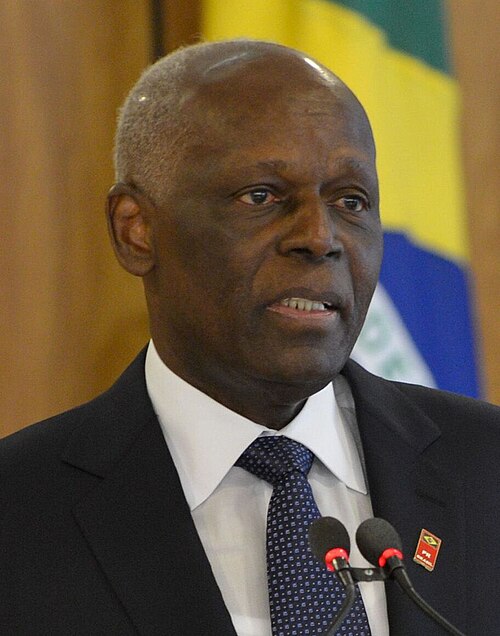
José Eduardo dos Santos, known to the world as Eduardo dos Santos†, was a defining figure in 20th and 21st-century African politics. Serving as the President of Angola for an uninterrupted 38 years from 1979 to 2017, his tenure is one of the longest in modern history. He rose to power in a nation ravaged by a protracted civil war and navigated it through conflict, a post-war oil boom, and into an era of significant, albeit uneven, reconstruction. As a central leader in the Politics & Government of southern Africa, his legacy is profoundly complex. He is credited with ending decades of brutal civil conflict and overseeing a period of massive infrastructure development funded by oil wealth, yet his rule was also marked by allegations of profound corruption, cronyism, and the concentration of the nation's vast resources in the hands of a small elite. Understanding Eduardo dos Santos† is essential to understanding the modern trajectory of Angola itself.
Early Life & Education: From Luanda to Moscow
José Eduardo dos Santos was born on August 28, 1942, in the São Paulo neighborhood of Luanda, then part of Portuguese Angola. His early life was shaped by the realities of colonial rule. He joined the pro-independence movement at a young age, becoming a member of the Popular Movement for the Liberation of Angola (MPLA) in 1961. His intelligence and dedication were quickly recognized, leading to his selection for advanced education abroad—a common path for promising young militants.
In a formative move for his future career, dos Santos left Angola to study first in the Democratic Republic of Congo before receiving a scholarship to the Soviet Union. He attended the Azerbaijan Oil and Chemistry Institute in Baku, graduating in 1969 with a degree in petroleum engineering. He later completed military training in communications, becoming a radio operator. This unique educational blend of technical petroleum expertise and military communications, forged within the socialist bloc, would heavily influence his approach to leading Angola. He returned to the MPLA's guerrilla zones in 1970, rising through the ranks as the war for independence intensified.
Career & Major Achievements: War, Peace, and Oil
The career of Eduardo dos Santos† is inextricably linked with the history of the MPLA and Angola. Following Angola's independence from Portugal in 1975, the MPLA quickly consolidated power in Luanda, with dos Santos serving as the country's first Minister of Foreign Affairs. He later held the pivotal posts of First Deputy Prime Minister and Minister of Planning. His ascent within the party was steady and strategic.
Assumption of the Presidency and the Civil War
On September 20, 1979, following the death of Angola's first president, Agostinho Neto, Eduardo dos Santos† was appointed President of the MPLA and, consequently, President of the People's Republic of Angola. He inherited a nation already engulfed in a devastating civil war between the MPLA government, backed by the Soviet Union and Cuba, and the UNITA rebels, supported by the United States and South Africa. His early decades in power were dominated by this conflict. A major achievement was his diplomatic and military maneuvering that capitalized on the end of the Cold War, leading to the signing of the Bicesse Accords in 1991 and, after a failed election and renewed fighting, the Lusaka Protocol in 1994.
The Post-War Era and Economic Transformation
The definitive end of the civil war in 2002, following the death of UNITA leader Jonas Savimbi, marked a turning point. President dos Santos shifted the national focus from war to reconstruction. Leveraging his background in petroleum engineering, he oversaw a massive expansion of Angola's oil sector. From 2002 onward, Angola experienced a period of double-digit economic growth, becoming one of Africa's largest oil producers and a key supplier to China. This oil wealth funded:
- Major infrastructure projects: Rebuilding of railways, roads, and the construction of new airports and stadiums.
- The rise of sovereign wealth funds and state-owned enterprises.
- A significant Chinese-funded rebuilding of the national railway system and other key infrastructure.
Under his executive presidency, Angola regained a prominent role in regional Politics & Government, intervening in conflicts in the Democratic Republic of Congo and playing a leading role in organizations like the Southern African Development Community (SADC).
Personal Life, Legacy, and Controversy
Eduardo dos Santos was a notoriously private man, especially regarding his health and family life. He was married multiple times and had several children. His later years were marked by frequent trips abroad for medical treatment, fueling speculation about his fitness to rule. His legacy is a subject of intense debate and is fundamentally dualistic.
On one hand, he is remembered as the leader who finally brought peace to Angola after 27 years of intermittent war and presided over a period of rapid physical reconstruction. On the other, his nearly four-decade rule was characterized by an authoritarian style, suppression of political dissent, and a lack of transparency. Critics argue that the oil boom primarily enriched his family and a small circle of allies while much of the population remained in poverty. The term "presidentialism" is often used to describe the system he built, where vast power and economic control were centralized in the office of the President (1979–2017). His chosen successor, João Lourenço, who took office in 2017, surprised many by launching anti-corruption investigations targeting the dos Santos family, further complicating his posthumous reputation.
Net Worth & Business Interests
The business interests and estimated net worth of Eduardo dos Santos† and his immediate family are a central part of his controversial legacy. While no official figure was ever verified, his family is widely considered to be among the wealthiest in Africa. Through a system of patronage and state control of the economy, his children and close associates assumed leadership positions in key sectors. His daughter, Isabel dos Santos, was appointed chair of the state oil company Sonangol and became dubbed "Africa's richest woman" by Forbes magazine, with investments in telecommunications, banking, and energy across Portugal and former Portuguese colonies. His son, José Filomeno dos Santos, was placed in charge of Angola's sovereign wealth fund. These appointments drew intense criticism from transparency advocates. Following his death and the subsequent investigations under President Lourenço, many of these assets were frozen or seized by the Angolan state, alleging they were acquired through improper use of state funds and influence.
Eduardo dos Santos† passed away on July 8, 2022, in Barcelona, Spain. His death closed a monumental chapter in Angolan history, leaving behind a nation still grappling with the profound economic and social consequences of his long and transformative rule. His impact on Angola and its Politics & Government will be analyzed and debated for generations to come.
Net Worth Analysis
"Her empire began to unravel after her father retired from office. Her assets were frozen and she was charged with embezzlement and money laundering. Forbes removed her from the billionaire rankings in 2021. Furthermore, an international arbitration court apparently ordered her in July 2021 to return her shares in Portugal’s Galp energy firm, worth $500 million." AND "At 40 Dos Santos is Africa's only female billionaire, and also the continent's youngest." AND "worth $3.7 billion at her peak in 2014."
Quick Stats
Related People
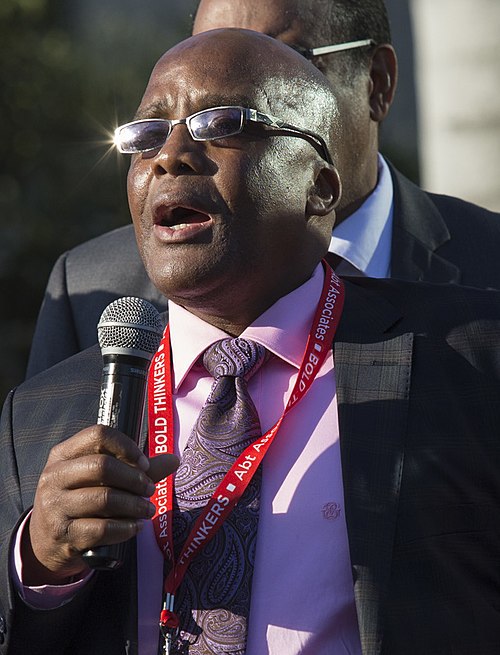
Aaron Motsoaledi
LP; Minister of Home Affairs
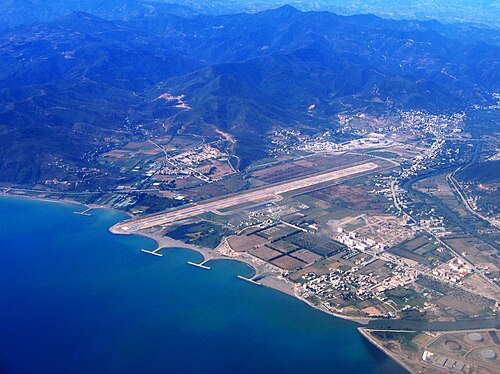
Abane Ramdane†
FLN Leader & Strategist
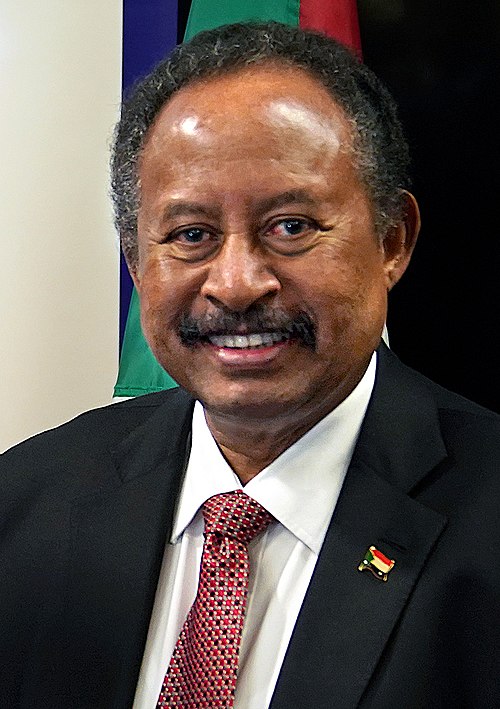
Abdalla Hamdok
Ex-Prime Minister
Abdallah Kigoda
Ex-Minister of Natural Resources