Financial Breakdown
Asset Distribution
Assets vs Liabilities
Assets
Liabilities
Disclaimer: These financial estimates are based on publicly available information and should be considered approximate. Last updated: 12/29/2025
Biography
Introduction: The Iron Lady of Liberia
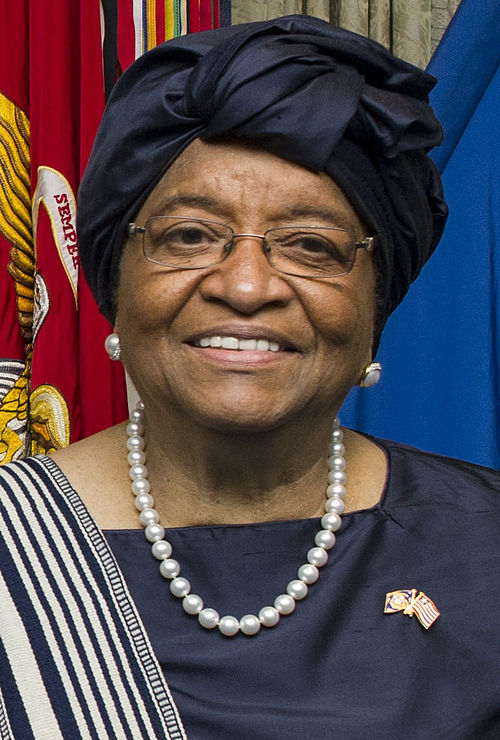
Ellen Johnson Sirleaf stands as a monumental figure in modern political history, renowned as the first democratically elected female head of state in Africa. Serving as the 24th President of Liberia from 2006 to 2018, her leadership steered the West African nation through a critical period of recovery following a devastating 14-year civil war. A beacon of democratic leadership and resilience, Ellen Johnson Sirleaf's tenure was defined by her relentless efforts to rebuild national institutions, secure massive debt relief, and advocate for peace and women's empowerment on the global stage. Her extraordinary contributions were internationally recognized in 2011 when she was awarded the Nobel Peace Prize, jointly with Leymah Gbowee and Tawakkul Karman, for their non-violent struggle for the safety of women and for women's rights to full participation in peace-building work. The legacy of Ellen Johnson Sirleaf is inextricably linked to Liberia's journey from conflict to fragile stability.
Early Life and Education: Formative Years and Academic Pursuits
Ellen Johnson Sirleaf was born on October 29, 1938, in Monrovia, Liberia, into a family of mixed Gola and German-American heritage. Her early life was marked by the privileges and constraints of Liberia's complex social hierarchy. She received her secondary education at the College of West Africa in Monrovia. At the age of 17, she married James Sirleaf and soon after traveled to the United States, where she balanced raising four sons with pursuing her education. This period was foundational, showcasing her determination. She earned an associate degree in accounting from Madison Business College in Wisconsin, a Bachelor of Science in Accounting from the University of Colorado Boulder in 1964, and a Master of Public Administration from Harvard University's John F. Kennedy School of Government in 1971. This impressive academic background in economics and public policy equipped her with the technical expertise that would later define her political career. Her return to Liberia saw her ascend quickly in the public sector, but also placed her on a collision course with the established political order.
Initial Foray into Politics and Exile
Ellen Johnson Sirleaf's professional career began in the administration of President William Tolbert, where she served as Assistant Minister of Finance (1972-1973) and later as Minister of Finance (1979-1980). Her commitment to fiscal reform and anti-corruption put her at odds with powerful interests. The 1980 coup d'état by Samuel Doe, which resulted in Tolbert's assassination, upended Liberian politics. Sirleaf initially accepted a position in the Doe regime but was later sentenced to ten years in prison for criticizing the government. After a partial pardon and release, she fled into exile, a pattern that would repeat itself. She spent the 1980s and 1990s working for international financial institutions, including the World Bank and Citibank, and within the United Nations Development Programme (UNDP). These roles deepened her understanding of global finance and governance, while from afar, she became an outspoken critic of both the Doe regime and the subsequent warlord, Charles Taylor.
Career and Major Achievements: Presidency and Nation-Building
The political career of Ellen Johnson Sirleaf reached its apex following the end of Liberia's second civil war in 2003. After serving as Chairperson of the Governance Reform Commission in the transitional government, she ran for the presidency in 2005. In a historic election, she defeated football legend George Weah, and on January 16, 2006, Ellen Johnson Sirleaf was inaugurated as President of Liberia, shattering a global political glass ceiling.
Rebuilding a Nation from Ruins
Her administration faced Herculean tasks: a shattered economy, destroyed infrastructure, and a population traumatized by war. Key achievements include:
- Economic Stabilization and Debt Relief: Leveraging her financial expertise, Sirleaf negotiated the cancellation of nearly $5 billion in external debt through the Heavily Indebted Poor Countries (HIPC) initiative. This freed up crucial resources for development.
- Infrastructure and Education: Her government focused on rebuilding roads, restoring electricity and water to Monrovia, and increasing primary school enrollment dramatically, with a particular emphasis on girls' education.
- Peace and Security: She maintained a fragile peace, overseeing the successful reintegration of former combatants and the professionalization of the armed forces with international support.
- Foreign Investment and Transparency: Sirleaf attracted significant foreign direct investment, particularly in the mining and agriculture sectors. She also instituted anti-corruption measures, establishing the Anti-Corruption Commission and publicly declaring her assets.
Global Recognition and Advocacy
Ellen Johnson Sirleaf's presidency elevated her to a global symbol of women's leadership. The 2011 Nobel Peace Prize cemented this status. She co-chaired the UN High-Level Panel on the Post-2015 Development Agenda and was a prominent voice for gender equality. In 2017, she presided over Liberia's first peaceful democratic transfer of power in over 70 years, cementing her commitment to democratic processes, despite criticisms about the pace of change and nepotism within her government.
Personal Life, Legacy, and Lasting Impact
Beyond politics, Ellen Johnson Sirleaf is a mother and grandmother. She is a prolific author; her memoir, This Child Will Be Great, details her incredible life journey. Post-presidency, she remains active through the Ellen Johnson Sirleaf Presidential Center for Women and Development, which aims to amplify the voice of women and girls in Africa and support the next generation of female leaders. Her legacy is complex and multifaceted. To her supporters, she is "Ma Ellen," the Iron Lady who brought stability and international respectability to a failed state. She demonstrated that democratic leadership in post-conflict settings is possible, albeit immensely challenging. Critics point to persistent poverty, corruption, and unmet expectations. However, her undeniable achievement lies in proving that a woman could lead a nation through reconciliation and rebirth. Ellen Johnson Sirleaf's life and work continue to inspire millions advocating for peace, democracy, and women's empowerment in Politics & Government worldwide.
Net Worth and Post-Presidential Endeavors
While the exact net worth of Ellen Johnson Sirleaf is not publicly verified and is a topic of much speculation, it is understood that her financial standing stems from a long career spanning high-level international banking, United Nations positions, and her presidential salary. Unlike some leaders, there is no evidence of vast personal wealth derived from state resources. Her post-presidential life is focused on philanthropic and advisory roles rather than business ventures. She commands significant speaking fees on the international circuit and earns income from her literary works. Her primary financial focus appears to be channeled through her foundation and presidential center, which rely on donor funding to support their missions. The true measure of Ellen Johnson Sirleaf's wealth is arguably her immense symbolic capital and enduring influence as a Nobel Laureate and a pioneering stateswoman who redefined executive presidency in Africa.
For further reading on her life and work, credible sources include the Nobel Prize biography, the Ellen Johnson Sirleaf Presidential Center, and her memoir, This Child Will Be Great.
Frequently Asked Questions
What is Ellen Johnson Sirleaf's estimated net worth?
Ellen Johnson Sirleaf has an estimated net worth of $1.0 Million.
What is Ellen Johnson Sirleaf's role and nationality?
Ellen Johnson Sirleaf is a Ex-President; Ex-President & Nobel Laureate from Liberia.
How did Ellen Johnson Sirleaf make their money?
Ellen Johnson Sirleaf built their fortune primarily through As a former public servant and Nobel laureate, her wealth is not from major business holdings; estimates from African leadership contexts typically place her net worth in the low millions..
How old is Ellen Johnson Sirleaf?
Ellen Johnson Sirleaf was born in 1938 (88 years old).
Which category is Ellen Johnson Sirleaf listed under?
Ellen Johnson Sirleaf is featured under the Politics & Government category on NetWorth Africa.
How is Ellen Johnson Sirleaf's net worth calculated?
NetWorth Africa estimates financial valuations using publicly available stock equity holdings, company ownership records, real estate assets, and verified market data.
Net Worth Analysis
As a former public servant and Nobel laureate, her wealth is not from major business holdings; estimates from African leadership contexts typically place her net worth in the low millions.
Quick Stats

Related People

Aaron Motsoaledi
LP; Minister of Home Affairs • South Africa
Abane Ramdane†
FLN Leader & Strategist • Algeria
Abdalla Hamdok
Ex-Prime Minister • Sudan
Abdallah Kigoda
Ex-Minister of Natural Resources • Tanzania