Financial Breakdown
Asset Distribution
Assets vs Liabilities
Assets
Liabilities
Disclaimer: These financial estimates are based on publicly available information and should be considered approximate. Last updated: 7/31/2026
Biography
F. W. de Klerk†: The Architect of South Africa’s Transition to Democracy
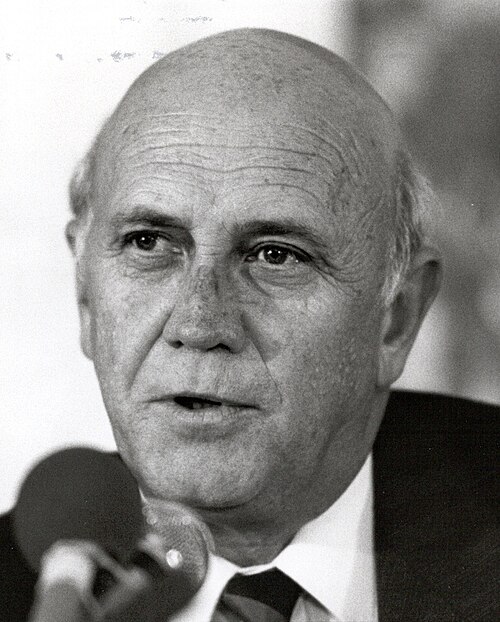
F. W. de Klerk†, born Frederik Willem de Klerk on March 18, 1936, stands as one of the most consequential figures in modern Politics & Government and the definitive leader of South Africa’s Transition Era. As the last state president of South Africa under white-minority rule, he made the historic decision to dismantle the apartheid system, a move that reshaped the nation and the global order. Serving from 1989 to 1994, F. W. de Klerk† negotiated the peaceful transfer of power to a democratically elected government, a feat that earned him the Nobel Peace Prize alongside his successor, Nelson Mandela. As an Ex-President & Nobel Laureate, his legacy is deeply intertwined with South Africa’s difficult birth into democracy. Ideologically a social conservative and an economic liberal, he led the National Party (NP) through its most transformative years, ultimately serving as deputy president under Mandela from 1994 to 1996. His life’s work—ending a system his own family had helped build—remains a powerful testament to the capacity for political courage and pragmatism.
Early Life & Education
Frederik Willem de Klerk was born into a prominent Afrikaner political family in Johannesburg, South Africa. His father, Jan de Klerk, was a senior minister in the apartheid government, and his uncle, J. G. Strijdom, served as Prime Minister of South Africa. Growing up in this environment, F. W. de Klerk was steeped in the ideologies of Afrikaner nationalism and the rigid structures of racial segregation from an early age. This formative background would later make his political reversal on apartheid all the more remarkable.
He matriculated from Monument High School in Krugersdorp before pursuing a law degree at the University of Potchefstroom, a stronghold of conservative Calvinist and Afrikaans intellectual thought. It was here that de Klerk’s analytical mind and legal acumen were first recognized. He graduated with a Bachelor of Laws (LL.B.) degree in 1958 and subsequently practiced law in Vereeniging. His university years were critical, exposing him to the legal frameworks that underpinned apartheid, yet also to the intellectual traditions that would later allow him to question those very systems. In 1959, he married Marike Willemse, a partnership that would support his ascent through the ranks of the National Party.
Career & Major Achievements
Political Ascent Under Apartheid
F. W. de Klerk† began his full-time political career in 1972 when he was elected as a Member of Parliament for the Vereeniging constituency on behalf of the National Party. His rise through the cabinet was steady and marked by a reputation for ideological conservatism and efficiency. He held several ministerial posts throughout the 1970s and 1980s, including Minister of Social Welfare and Pensions, Minister of Sport and Recreation, and Minister of Home Affairs. By 1989, he was elected leader of the National Party in Transvaal and subsequently became the leader of the NP nationally. In September 1989, he assumed the office of State President, inheriting a country in deep crisis—isolated internationally, economically strained by sanctions, and plagued by increasing internal unrest.
The Unbanning of the ANC and Mandela’s Release
The defining moment of his presidency came on February 2, 1990, during the opening of Parliament. In a speech that shocked the world and his own party base, F. W. de Klerk† announced the unbanning of the African National Congress (ANC), the Pan Africanist Congress (PAC), and the South African Communist Party. He also declared that Nelson Mandela would be released from prison. Nine days later, on February 11, 1990, Mandela walked free. This act was not merely symbolic; it was the calculated move of a pragmatic leader who recognized that apartheid was unsustainable. Over the next four years, de Klerk engaged in intense, often acrimonious, negotiations with Mandela’s ANC to draft a new constitution.
Nobel Peace Prize and the 1994 Elections
In 1993, F. W. de Klerk† and Nelson Mandela were jointly awarded the Nobel Peace Prize for their efforts to peacefully end apartheid and lay the foundations for a new democratic South Africa. While Mandela received global adoration, de Klerk’s role was equally vital—he had to convince a deeply entrenched white minority to surrender political power. The 1994 general elections, the first fully democratic vote in South Africa’s history, resulted in a Government of National Unity. F. W. de Klerk† served as Deputy President alongside Thabo Mbeki under President Nelson Mandela from 1994 to 1996. However, his role in the new government was fraught with tension. He withdrew the National Party from the coalition in 1996, moving into formal opposition before eventually retiring from active politics in 1997.
Personal Life & Legacy
F. W. de Klerk† was married to Marike de Klerk for nearly 40 years, with whom he had two sons and a daughter. Their marriage ended in divorce in 1998, a painful period that became public. In a later twist of personal life, he married Elita Georgiades, the widow of a Greek shipping magnate, in 1998. Despite his political achievements, de Klerk’s legacy remains complex and contested. For his role in ending apartheid, he is revered as a statesman who chose peace over civil war. However, his tenure at the helm of the National Party has also drawn criticism for the violence and instability of the transition period, and for his controversial statements regarding the "separate development" philosophy in later years.
After leaving office, F. W. de Klerk† established the F. W. de Klerk Foundation, a non-profit organization dedicated to promoting peace, reconciliation, and the South African constitution. He also served as Chairman of the Global Leadership Foundation, working internationally on conflict resolution. In his final years, he publicly grappled with the moral pain of apartheid, issuing apologies while defending his own actions as necessary for a peaceful transition. He passed away on November 11, 2021, at the age of 85, leaving behind a monumental but deeply scrutinized legacy as the man who ended a system he was born into.
Net Worth & Business
While F. W. de Klerk† was not a traditional corporate titan, his financial standing was comfortable, derived largely from a lifetime in public service, book royalties, and international speaking engagements. Following his presidency, he served on the boards of several multinational corporations, leveraging his global reputation and post-apartheid connections. Reports from his later years indicate that his estate was managed through trusts and property holdings in South Africa. Unlike many political leaders, he did not accumulate vast personal wealth through business ventures; his primary asset was his intellectual property, including his autobiography, *The Last Trek—A New Beginning* (1998). At the time of his passing, his net worth was estimated in the range of several million rand, reflecting a career of high office rather than commercial enterprise. The F. W. de Klerk Foundation continues to operate, funded in part by his legacy and donations from those who champion his vision of a reconciled South Africa.
Frequently Asked Questions
What is F. W. de Klerk†'s estimated net worth?
F. W. de Klerk† has an estimated net worth of $5.0 Million.
What is F. W. de Klerk†'s role and nationality?
F. W. de Klerk† is a Ex-President & Nobel Laureate from South Africa.
How did F. W. de Klerk† make their money?
F. W. de Klerk† built their fortune primarily through F. W. de Klerk was a politician and Nobel laureate, not a major entrepreneur, with wealth primarily from salaries, book deals, and speaking engagements; his estate likely valued in the low millions..
How old is F. W. de Klerk†?
F. W. de Klerk† was born in 1936 (90 years old).
Which category is F. W. de Klerk† listed under?
F. W. de Klerk† is featured under the Politics & Government category on NetWorth Africa.
How is F. W. de Klerk†'s net worth calculated?
NetWorth Africa estimates financial valuations using publicly available stock equity holdings, company ownership records, real estate assets, and verified market data.
Net Worth Analysis
F. W. de Klerk was a politician and Nobel laureate, not a major entrepreneur, with wealth primarily from salaries, book deals, and speaking engagements; his estate likely valued in the low millions.
Quick Stats
Related People
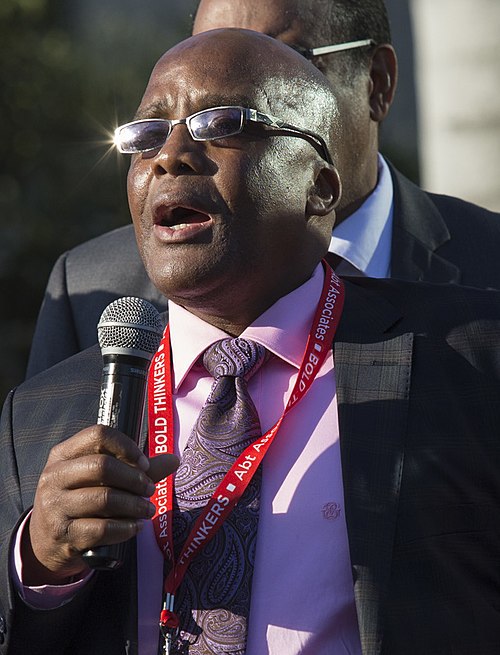
Aaron Motsoaledi
LP; Minister of Home Affairs • South Africa
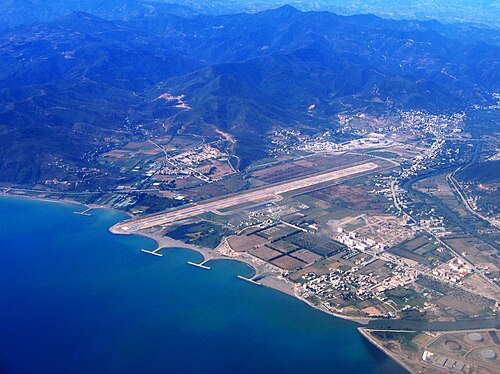
Abane Ramdane†
FLN Leader & Strategist • Algeria
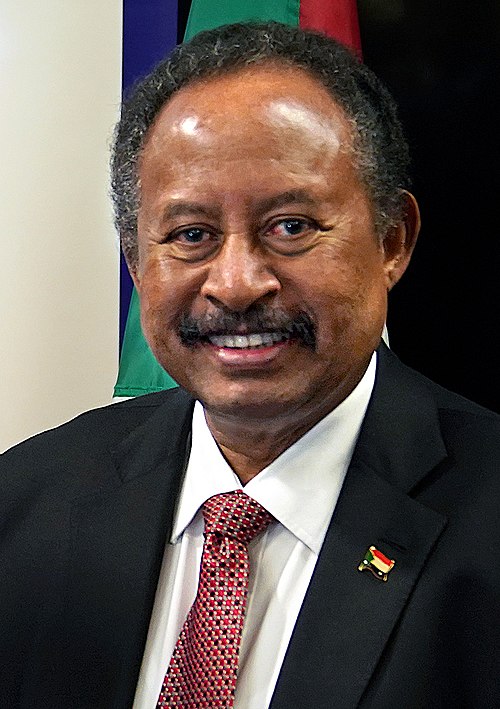
Abdalla Hamdok
Ex-Prime Minister • Sudan
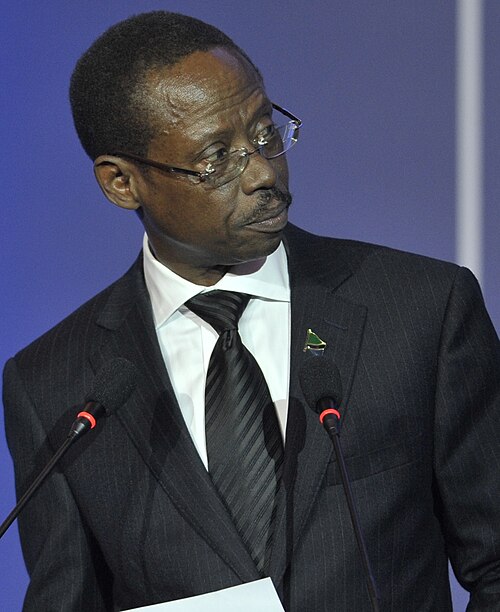
Abdallah Kigoda
Ex-Minister of Natural Resources • Tanzania