$100M
Estimated Net Worth
As of 2024 • medium confidence
Financial Breakdown
Asset Distribution
Assets vs Liabilities
Assets
Disclaimer: These financial estimates are based on publicly available information and should be considered approximate. Last updated: 12/29/2025
Biography
Introduction: A Defining Figure in Togolese Politics
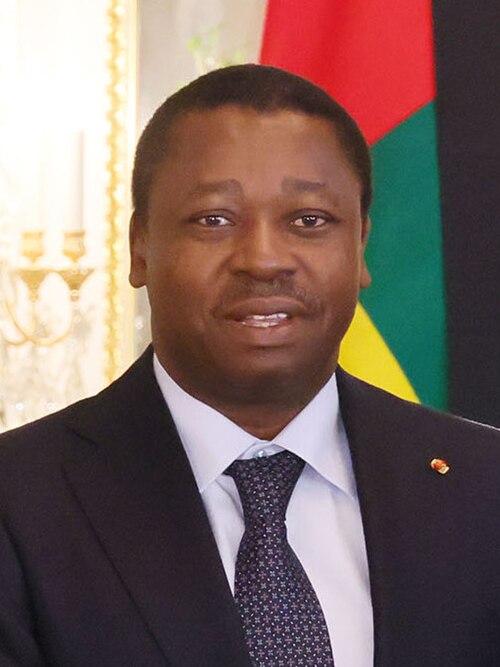
Faure Essozimna Gnassingbé is the President of Togo, a West African nation with a complex political history. As the son of former President Gnassingbé Eyadéma, who ruled for 38 years, Faure Gnassingbé's ascent to power in 2005 marked both a continuation and a potential transformation of his country's governance. His tenure, now spanning nearly two decades, has been characterized by significant economic reform initiatives, contentious constitutional changes, and ongoing efforts to navigate Togo's position on the regional and global stage. A central figure in the Politics & Government landscape of West Africa, Faure Gnassingbé has overseen a period of relative stability and infrastructure development, though his rule continues to be scrutinized by international observers and opposition groups regarding democratic processes and human rights.
Early Life and Education: The Making of a Leader
Faure Gnassingbé was born on June 6, 1966, in Afagnan, Togo, into the politically dominant family of General Gnassingbé Eyadéma. Growing up as the son of a long-serving military ruler profoundly shaped his worldview and future path. For his education, he was sent abroad, a common practice for children of African elites. He attended a private school in France before pursuing higher education in business and finance.
Gnassingbé earned a Bachelor's degree in Financial Management and a Master of Business Administration (MBA) from the Sorbonne University in Paris. He later obtained a Master's degree in Political Science from The George Washington University in Washington, D.C. This international education equipped him with a technocratic outlook and fluency in the language of global finance and diplomacy. Before entering politics directly, Faure Gnassingbé gained experience in the private sector, working as a financial auditor and consultant. His formative years, split between the realities of his father's authoritarian rule in Togo and the academic halls of Western institutions, created a unique blend of influences that would later define his presidential style.
Career and Major Achievements: The Path to the Presidency
The political career of Faure Gnassingbé began in earnest when he was elected as a member of parliament in 2002, representing the Blitta constituency for the ruling Rally of the Togolese People (RPT) party. He also served as Minister of Equipment, Mines, Posts, and Telecommunications from 2003 to 2005, a role that connected him to key development projects.
A Controversial Ascension and Stabilization
His life and the political trajectory of Togo changed dramatically in February 2005 upon the death of his father. In a move condemned internationally, the Togolese military immediately installed Faure Gnassingbé as president, bypassing the constitutional order of succession. Under intense regional and global pressure, he stepped down but quickly ran in the hastily organized presidential election of April 2005. He won amidst allegations of widespread fraud and violence that led to hundreds of deaths and a refugee crisis. This turbulent start cast a long shadow but marked the beginning of his formal tenure as President of Togo.
Economic Reforms and Infrastructure Development
Once in office, President Gnassingbé prioritized economic modernization. His government implemented reforms aimed at attracting foreign investment, improving the business climate, and developing infrastructure. Key projects under his administration include:
- The construction and modernization of the Lomé Container Port, now a major transshipment hub in West Africa.
- Significant road network expansions connecting major cities and rural areas.
- Investments in the energy sector to increase electricity access.
- Digital infrastructure projects to improve telecommunications.
Political Evolution and Constitutional Controversy
Gnassingbé's political journey has been marked by attempts at national dialogue and reconciliation, albeit with mixed results. He won re-election in 2010, 2015, and 2020, each time facing opposition claims of irregularities. A landmark achievement was the peaceful legislative elections in 2018, which ended a years-long boycott by the main opposition and were seen as a step forward. However, a major turning point came in 2019 when his government pushed through constitutional changes. These changes, passed by a parliament where the opposition was absent, introduced a presidential term limit of two—but crucially, the count was reset to zero, allowing Faure Gnassingbé to potentially stay in power until 2030. This move sparked significant domestic protest and international criticism, framing the central debate around democratic consolidation in Togo.
Foreign Policy and Regional Role
In foreign policy, President Gnassingbé has worked to rehabilitate Togo's image from its pariah status in the early 2000s. He has served as a mediator in regional crises, including in Guinea, Mali, and Burkina Faso. Togo also hosts important regional institutions and has positioned itself as a logistical and diplomatic gateway in West Africa, enhancing its strategic relevance.
Personal Life, Philanthropy, and Legacy
Faure Gnassingbé is known for maintaining a relatively private personal life compared to his flamboyant father. He is married and has children. His interests are reported to include reading and football. While not heading a large public philanthropic foundation, his presidency has overseen government-led social initiatives, such as the National Solidarity and Economic Recovery Fund (FONSIR), aimed at poverty reduction, microfinance, and community development projects. His legacy remains a work in progress and is intensely debated. Supporters credit him with bringing a more technocratic, development-focused approach to governance, modernizing infrastructure, and maintaining stability in a volatile region. Critics argue that his rule has been defined by the perpetuation of a dynastic system, the erosion of democratic norms through constitutional manipulation, and a failure to adequately address poverty and corruption. Ultimately, the legacy of Faure Gnassingbé will be judged by how Togo navigates its future political transitions and whether economic growth translates into broader prosperity for its citizens.
Net Worth and Business Interests
As with many heads of state, the precise net worth of Faure Gnassingbé is not publicly transparent and is a subject of speculation. He is widely believed to be one of the wealthiest individuals in Togo, with financial interests that are intertwined with the state and the ruling party's apparatus. Before his presidency, his career in financial auditing and consulting provided a professional background. It is reported that he and his family have significant holdings in various sectors of the Togolese economy, including phosphate (the country's primary mineral resource), telecommunications, and banking. The lack of detailed public disclosure makes independent verification difficult, but his financial influence is considered a cornerstone of the political and economic system in Togo. Observers of Togolese Politics & Government often note the blurred lines between state resources, the ruling party's finances, and the personal wealth of the presidential family.
Net Worth Analysis
Estimates are speculative as his wealth is not officially disclosed, but he is widely reported to have amassed significant wealth through his long political tenure and family control over state resources, placing him in the hundred-million dollar range.
Quick Stats
Related People

Aaron Motsoaledi
LP; Minister of Home Affairs

Abane Ramdane†
FLN Leader & Strategist

Abdalla Hamdok
Ex-Prime Minister

Abdallah Kigoda
Ex-Minister of Natural Resources