Biography
Introduction: The Man Tasked with Unifying Libya
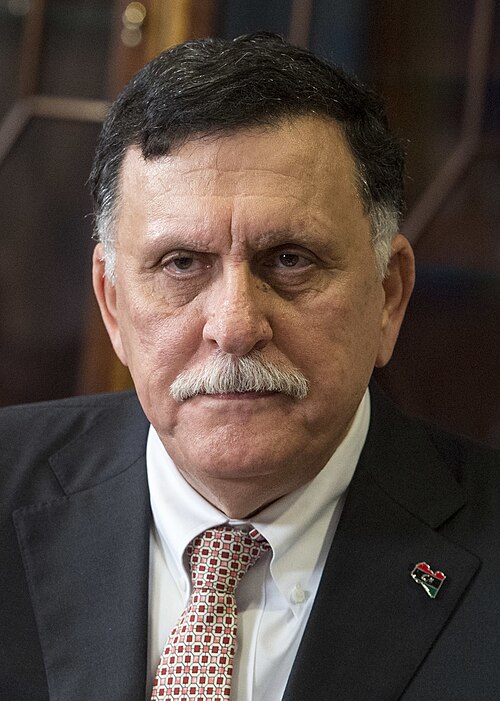
Fayez al-Sarraj is a prominent Libyan politician who served as the Prime Minister of the Government of National Accord (GNA) from 2016 to 2021. His tenure represents one of the most critical and challenging periods in modern Libya's history, marked by civil war, foreign intervention, and deep political fragmentation. Appointed through a United Nations-led peace process, Fayez al-Sarraj was tasked with the monumental challenge of unifying the country's rival governments and militias under a single, legitimate authority. His key achievement was establishing the GNA in Tripoli, which gained international recognition as Libya's legitimate executive body. However, his rule was consistently contested, and his term was defined by a persistent struggle to exert control beyond the capital amidst a complex and violent conflict.
Early Life and Education: Formative Years in Tripoli
Fayez Mustafa al-Sarraj was born in 1960 in Libya's capital, Tripoli, into a well-known family. His father, Mustafa al-Sarraj, was a respected historian and academic. This environment likely instilled in him an appreciation for structure and scholarship from an early age. Details of his early childhood are sparse, but he came of age during the monarchy of King Idris and witnessed the 1969 coup that brought Colonel Muammar Gaddafi to power, events that would shape the nation's trajectory.
Academic and Professional Foundation
Al-Sarraj pursued higher education in architecture and urban planning. He earned a degree in Architectural Engineering from the University of Tripoli, followed by a postgraduate degree in Urban Planning. This technical background positioned him for a career in public administration focused on development and infrastructure. Before entering high-level Politics & Government, Fayez al-Sarraj built a reputation as a competent technocrat. He served in various governmental roles related to planning and development throughout the 1990s and 2000s under the Gaddafi regime, though he was not considered a core member of the revolutionary circle. His non-confrontational, consensus-seeking style began to take shape during these years in the civil service.
Career and Major Achievements: From Technocrat to Prime Minister
Fayez al-Sarraj's path to the premiership was indirect and born out of crisis. Following the 2011 revolution and the fall of Gaddafi, Libya descended into conflict between rival parliaments and governments: the internationally-recognized House of Representatives (HoR) based in Tobruk and the Islamist-led General National Congress (GNC) in Tripoli. To break the deadlock, the United Nations facilitated the Libyan Political Agreement (LPA), signed in Skhirat, Morocco, in December 2015.
Ascension to Leadership of the GNA
As a figure perceived as neutral, acceptable to multiple factions, and lacking a powerful militia of his own, Fayez al-Sarraj was selected to lead the nine-member Presidential Council of the new Government of National Accord (GNA). In March 2016, he arrived in Tripoli by sea and established the GNA, which was swiftly recognized by the UN, the European Union, and most Western and regional powers as the sole legitimate government of Libya. This diplomatic recognition was his primary source of authority.
Key Challenges and Tenure Highlights
Al-Sarraj's tenure as Ex-Prime Minister GNA was defined by constant struggle:
- Conflict with the LNA: The GNA faced immediate military opposition from the Libyan National Army (LNA), commanded by Field Marshal Khalifa Haftar, who controlled much of eastern and southern Libya. In April 2019, Haftar launched a major offensive to capture Tripoli, leading to a 14-month war.
- International Diplomacy: Al-Sarraj became the key interlocutor for the international community. He secured crucial military support from Turkey, which was instrumental in repelling Haftar's assault on Tripoli in 2020.
- Economic Management: Despite the war, his government managed to regain control over key central bank and national oil corporation functions in the west, though the oil sector remained a point of contention.
- Peace Efforts: Under UN pressure, his administration participated in multiple dialogue forums, culminating in a ceasefire in October 2020 and the establishment of a new interim government in 2021.
His major achievement was sustaining the GNA as an internationally recognized entity for five years amidst war, though he ultimately failed to disarm militias or unify state institutions. In March 2021, following the creation of a new UN-backed interim executive, Fayez al-Sarraj formally stepped down, handing over to Prime Minister Abdul Hamid Dbeibeh.
Personal Life, Legacy, and Lasting Impact
Fayez al-Sarraj is known to be a private, soft-spoken individual, often described more as an administrator than a charismatic politician. He is married and has children. His interests, shaped by his professional training, reportedly include architecture and urban development. Unlike many Libyan political figures, he did not cultivate a populist image or a strong social media presence, instead relying on formal diplomacy and back-channel negotiations.
Complex Political Legacy
The legacy of Fayez al-Sarraj is complex and subject to ongoing debate. To his supporters and the international community, he was a necessary consensus figure who prevented a total collapse of the state and preserved a platform for political dialogue. He maintained a degree of governance in western Libya and upheld a diplomatic channel recognized worldwide.
To his critics, however, his rule was weak and overly dependent on powerful, and sometimes problematic, militias within Tripoli. His government was unable to improve living standards for ordinary Libyans or end the country's division. The decision to invite Turkish military support, while militarily successful, further internationalized the conflict.
Ultimately, his tenure highlighted the extreme difficulties of governing post-revolutionary Libya. As the first head of a UN-engineered unity government, Fayez al-Sarraj demonstrated the limits of international recognition without broad domestic legitimacy and military power. His term set the stage for the subsequent, ongoing political process aimed at achieving national elections and stability.
Net Worth and Business Interests
Unlike some Libyan political figures, there is no substantial public information or credible reports suggesting that Fayez al-Sarraj amassed significant personal wealth through business ventures or corruption during his time in office. His background was primarily in public service and technocratic roles rather than in the private sector. As the head of the GNA, he presided over a government with access to state funds, but his administration was also under constant international scrutiny and financial constraints due to the conflict and divided control of the National Oil Corporation.
Any assessment of his personal net worth remains speculative. His lifestyle appeared modest compared to other regional leaders, and his public image was that of a career civil servant. The primary focus during his tenure was on political survival and managing the state's finances to pay salaries and fund the war effort, rather than on personal commercial enterprises. In the context of Libya's Politics & Government, al-Sarraj was generally viewed as a figure whose power derived from political appointment and international backing, not from independent financial or business empires.
Frequently Asked Questions
What is Fayez al-Sarraj's estimated net worth?
Fayez al-Sarraj has an estimated net worth of $50.0 Million.
What is Fayez al-Sarraj's role and nationality?
Fayez al-Sarraj is a Ex-Prime Minister GNA from Libya.
How did Fayez al-Sarraj make their money?
Fayez al-Sarraj built their fortune primarily through Fayez al-Sarraj is a former political figure, not a businessperson, and is not listed on any billionaire ranking. His wealth is likely derived from his political career and family background, but no credible public net worth figures exist..
How old is Fayez al-Sarraj?
Fayez al-Sarraj was born in 1960 (66 years old).
Which category is Fayez al-Sarraj listed under?
Fayez al-Sarraj is featured under the Politics & Government category on NetWorth Africa.
How is Fayez al-Sarraj's net worth calculated?
NetWorth Africa estimates financial valuations using publicly available stock equity holdings, company ownership records, real estate assets, and verified market data.
Net Worth Analysis
Fayez al-Sarraj is a former political figure, not a businessperson, and is not listed on any billionaire ranking. His wealth is likely derived from his political career and family background, but no credible public net worth figures exist.
Quick Stats
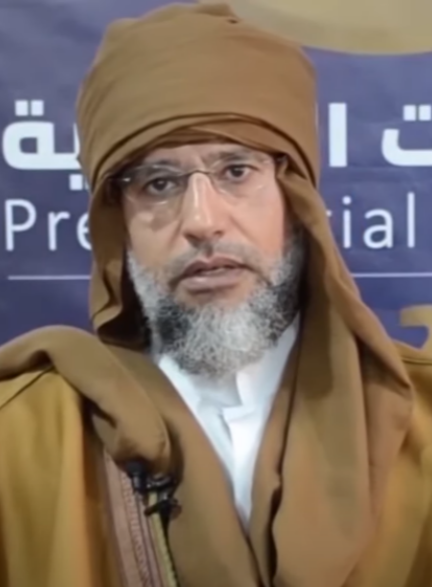
Related People
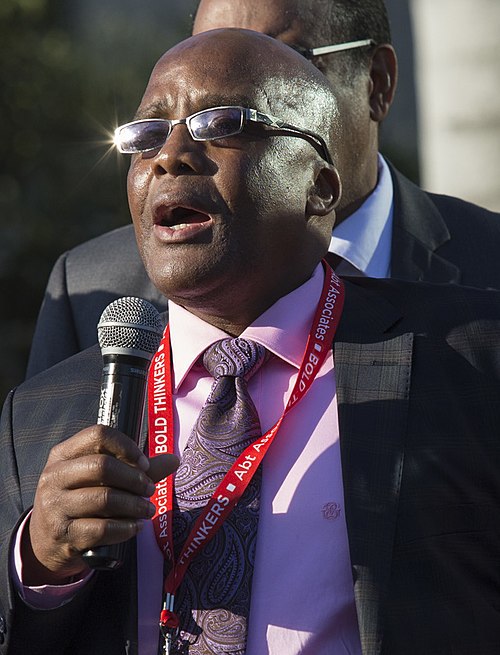
Aaron Motsoaledi
LP; Minister of Home Affairs • South Africa
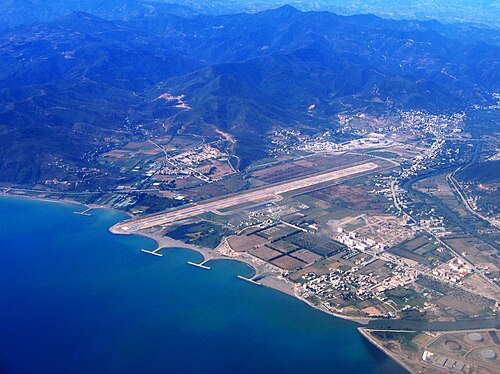
Abane Ramdane†
FLN Leader & Strategist • Algeria
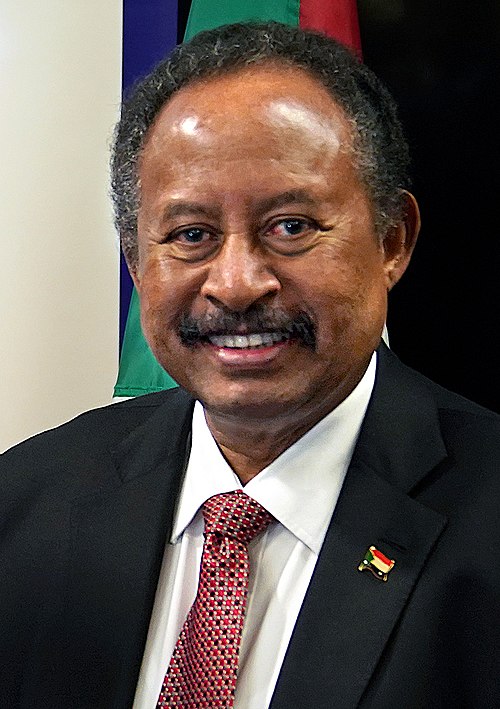
Abdalla Hamdok
Ex-Prime Minister • Sudan
Abdallah Kigoda
Ex-Minister of Natural Resources • Tanzania