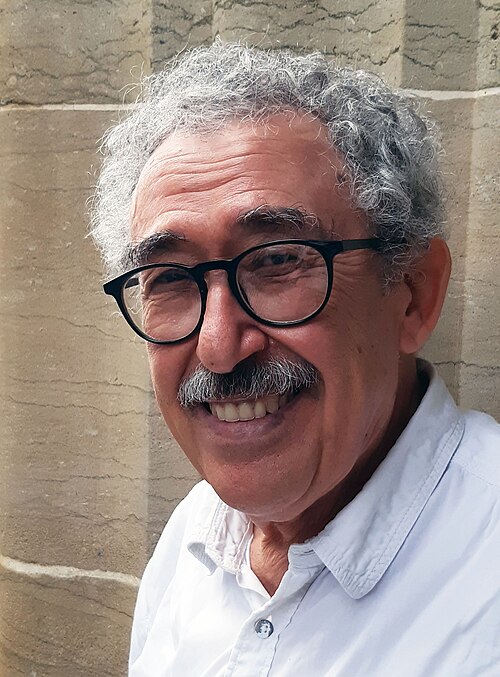
$5M
Estimated Net Worth
As of 2024 • medium confidence
Financial Breakdown
Asset Distribution
Assets vs Liabilities
Assets
Liabilities
Disclaimer: These financial estimates are based on publicly available information and should be considered approximate. Last updated: 12/31/2025
Biography
Introduction: The Cinematic Ambassador of Tunisia
Ferid Boughedir stands as a monumental figure in the world of film, seamlessly bridging the roles of insightful critic and visionary director. Born in 1944 in Tunisia, Boughedir has dedicated his life to exploring, documenting, and shaping the cinematic landscape of Africa and the Arab world. His work is not merely a collection of films but a profound cultural project aimed at fostering dialogue and understanding. He is most celebrated for his groundbreaking documentary "Caméra d'Afrique" (1983) and his critically acclaimed feature film "Halfaouine: Child of the Terraces" (1990). As a director and film critic, Ferid Boughedir has become synonymous with the intellectual and artistic maturation of Tunisian cinema, earning international acclaim and solidifying his place as an essential voice in global Arts & Culture discourse.
Early Life & Education: Forging a Cinematic Perspective
Ferid Boughedir's journey into the heart of cinema began against the backdrop of a Tunisia transitioning from French colonial rule. Growing up in the vibrant, complex social fabric of Tunis, he developed an early sensitivity to visual storytelling and cultural nuance. His academic path was deliberately crafted to build a formidable foundation in film theory and practice. He pursued higher education in Paris, a hub for cinematic thought, where he earned a doctorate in film studies. His thesis, significantly, focused on African cinema—a subject that was largely marginalized in Western academia at the time.
This period was crucial for Boughedir. It was here that he honed his critical eye, immersing himself in film history, semiotics, and directorial technique. Simultaneously, he began writing as a film critic, contributing to prestigious publications. This dual formation—as both a scholar and a critic—equipped him with a unique toolkit. He learned not only how to deconstruct a film but also how to contextualize it within broader socio-political movements. These formative experiences in the 1960s and 1970s positioned him perfectly to become not just a creator of films, but a historian and advocate for an entire continent's cinematic output.
Career & Major Achievements: Critic, Documentarian, Auteur
The Critic and Festival Pioneer
Before stepping firmly behind the camera, Ferid Boughedir established himself as a leading intellectual voice. His written critiques were celebrated for their depth and their mission to legitimize African filmmaking. His influence extended beyond print; he played an instrumental role in the foundation and development of the Carthage Film Festival (Journées Cinématographiques de Carthage - JCC), the first and most important festival dedicated to cinema from Africa and the Arab world. Serving in various capacities, including as its Artistic Director, Boughedir helped shape the festival into a vital platform for discovery, debate, and pan-African cultural exchange.
Landmark Documentaries: "Caméra d'Afrique" and "Caméra Arabe"
Boughedir's directorial career is bookended by two seminal documentary works that serve as essential textbooks on their subjects. "Caméra d'Afrique: Twenty Years of African Cinema" (1983) was a pioneering film. At a time when African films struggled for distribution, Boughedir traveled across the continent to interview legends like Ousmane Sembène and Souleymane Cissé, weaving together clips and commentary to create the first comprehensive portrait of this artistic movement. He repeated this feat for Arab cinema with "Caméra Arabe" (1987), interviewing directors like Youssef Chahine. These films are not just documentaries; they are acts of cultural preservation and canon-formation, critical to the study of world cinema.
Feature Film Triumph: "Halfaouine" (1990)
Ferid Boughedir's international breakthrough came with his first narrative feature, "Halfaouine: Child of the Terraces". The film is a beautifully observed coming-of-age story set in the Halfaouine district of Tunis, seen through the eyes of a young boy, Noura, navigating the thresholds between the female world of the hammam and the male world of the café. Acclaimed for its warmth, humor, and subtle social commentary, the film became a historic success. It is renowned as one of the highest-grossing Arab films internationally and put Tunisian cinema firmly on the world map. It won numerous awards, including the Tanit d'Or at the Carthage Film Festival and the Special Jury Prize at the Valencia Festival. His subsequent feature, "A Summer in La Goulette" (1996), further explored Tunisian identity through the lens of friendship between Muslim, Jewish, and Christian girls on the eve of the 1967 war.
Impact and Recognition
The career of Ferid Boughedir is marked by several consistent achievements:
- Cultural Advocacy: He has been a lifelong ambassador for African and Arab cinema on global stages, including as a jury member at festivals like Cannes.
- Bridging Gaps: His work uniquely bridges the analytical distance of the critic with the creative impulse of the director.
- Mentorship: Through his festival work and teaching, he has inspired and supported generations of filmmakers across Africa.
Personal Life & Legacy: The Intellectual Humanist
While intensely private, Ferid Boughedir is known as a man of profound intellectual curiosity and humanist principles. His personal interests are deeply intertwined with his professional work—a love for literature, history, and the complex tapestry of Mediterranean cultures. His legacy is multifaceted. As a director and film critic, he created enduring artistic works that continue to be studied and enjoyed. As a historian, he preserved the memory and trajectory of two major cinematic movements. Perhaps his most lasting impact is his role as an institution-builder. By helping to solidify the Carthage Film Festival and through his scholarly documentaries, he created the very infrastructure—both intellectual and practical—that allowed other voices to be heard. He demonstrated that cinema is both an art and a critical tool for self-definition and intercultural understanding, leaving an indelible mark on Arts & Culture in Tunisia and beyond.
Net Worth & Business Ventures: The Economy of Cultural Capital
Discussing the net worth of a figure like Ferid Boughedir in purely financial terms misses the essence of his contribution. His career, rooted in academia, criticism, and auteur cinema, is not typically associated with vast commercial enterprise or publicly disclosed wealth. His "capital" is overwhelmingly cultural and intellectual. The financial success of "Halfaouine" was a notable exception in a field often reliant on festival funding, state support (such as from the Tunisian government and French co-producers), and international grants. Any business ventures associated with Boughedir are intrinsically linked to film culture—whether through film production, rights management for his iconic works, or his involvement in cultural institutions. His true value lies in the immense cultural equity he has generated for Tunisian and African cinema, elevating its global profile and creating opportunities for an entire industry. This legacy of influence is the most significant measure of Ferid Boughedir's worth.
This biography is compiled from reputable sources on Tunisian and African cinema, including academic publications, festival archives, and film historical records.
Net Worth Analysis
Ferid Boughedir is a respected film director and critic, not a business magnate; his wealth is derived from his career in the arts, typical for prominent cultural figures in Tunisia.
Quick Stats
Related People
Abasse Ndione
Novelist & Playwright
Abdel Rahman al-Abnudi†
Poet (Egypt-Sudan)
Abdelkrim Ghallab†
Novelist & Journalist
Abdellah Taïa
Novelist & Filmmaker