Financial Breakdown
Asset Distribution
Assets vs Liabilities
Assets
Disclaimer: These financial estimates are based on publicly available information and should be considered approximate. Last updated: 12/29/2025
Biography
Introduction: The Architect of Egypt's Modern Military
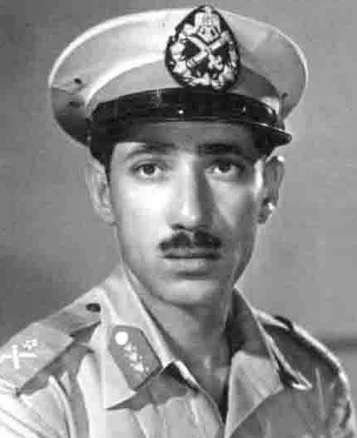
Field Marshal Abdel Hakim Amer† stands as one of the most pivotal and controversial figures in modern Egyptian history. As a key architect of the 1952 Revolution that toppled the monarchy, he rose to become the Ex-Vice President & Commander of the Egyptian Armed Forces, wielding immense influence during the Gamal Abdel Nasser era. His life and career are inextricably linked to the seismic shifts in Politics & Government in the Middle East during the mid-20th century. Amer's most notable achievement was his central role in modernizing the Egyptian military, transforming it into a formidable regional force. However, his legacy is profoundly shadowed by Egypt's catastrophic defeat in the Six-Day War of 1967, a event that led to his dramatic fall from grace and remains a defining moment in the history of Egypt and the Arab world.
Early Life & Education: Forging a Soldier
Abdel Hakim Amer was born in 1919 in the village of Astal, Samallot, located in the Minya Governorate of Egypt. Hailing from a modest rural background, his early life was shaped by the nationalist sentiments sweeping the country under British occupation. Demonstrating academic promise and ambition, Amer pursued a military career, a common path for social mobility and patriotic service. He graduated from the Royal Egyptian Military Academy in 1938, a crucial cohort that would later produce many of the Free Officers who executed the 1952 coup.
His formative years as a young officer were spent during the tumultuous period of the Second World War and the 1948 Arab-Israeli War. Serving in the 1948 conflict proved to be a deeply formative and embittering experience. Amer witnessed firsthand the disorganization and ineptitude of the Egyptian high command and the monarchy, which he blamed for the Arab defeat. It was during this war that he solidified his close friendship with fellow officer Gamal Abdel Nasser. Their shared frustration with the corrupt royal establishment and their desire for national rejuvenation led them, along with other disaffected officers, to form the secret Free Officers Movement, with Amer playing a central organizational role from the outset.
Career & Major Achievements: Power, War, and Defeat
The zenith of Abdel Hakim Amer's† career began with the success of the July 23, 1952 Revolution. As a core member of the Revolutionary Command Council (RCC), he was instrumental in the bloodless coup that forced King Farouk into exile. In the new republic, his loyalty to Nasser was rewarded with rapid promotion. By 1953, he was appointed Commander-in-Chief of the Egyptian Armed Forces, and in 1954, he became the Minister of Defense. By 1958, he had reached the rank of Field Marshal and was appointed First Vice President, solidifying his position as the second most powerful man in Egypt.
Military Expansion and the Suez Crisis
Amer dedicated himself to expanding and modernizing the military, leveraging arms deals with the Soviet Union. He oversaw a massive increase in troop numbers, armored divisions, and the air force. His perceived success during the 1956 Suez Crisis, where Egyptian forces demonstrated resilience against the tripartite aggression of Britain, France, and Israel, bolstered his reputation. This period marked the peak of his influence in Politics & Government.
The Road to Catastrophe: The Six-Day War
However, Amer's leadership was critically flawed. He fostered a culture of sycophancy and neglected rigorous training and intelligence. His overconfidence and disastrous military decisions in May and June 1967 precipitated the Six-Day War. Against wiser counsel, he ordered Egyptian forces into Sinai in a provocative deployment, then issued the fateful order to evacuate the air bases, leaving the air force vulnerable. On June 5, 1967, the Israeli Air Force destroyed nearly the entire Egyptian fleet on the ground. The army in Sinai, left without air cover and confused by contradictory orders, collapsed within days. The defeat was total and humiliating, resulting in the loss of the Sinai Peninsula, the Gaza Strip, and the deaths of thousands of soldiers.
Fall from Power
The disaster shattered Amer's power. He was publicly blamed, stripped of all positions, and placed under house arrest. In a desperate attempt to regain influence, he allegedly plotted a coup. This led to his formal arrest in August 1967. On September 14, 1967, Field Marshal Abdel Hakim Amer† was found dead. The official investigation concluded he had committed suicide by poisoning, though persistent theories of assassination or forced suicide have circulated ever since, adding a final layer of mystery to his tumultuous life.
Personal Life & Legacy: A Complex Shadow
Personally, Abdel Hakim Amer† was known for his charismatic and lavish lifestyle, which stood in contrast to Nasser's more austere public persona. He enjoyed horseback riding and was a prominent figure in Cairo's social circles. His personal friendship with Nasser was the bedrock of his political power, but it became strained under the weight of military failure and political rivalry, particularly from other officers like Abdel Hakim Amer.
The legacy of Field Marshal Amer is one of profound contradiction. He is remembered as a revolutionary hero who helped liberate Egypt from monarchy and foreign domination, and as the commander who built its modern military institution. Yet, his legacy is forever stained by the 1967 defeat, which altered the geopolitical landscape of the Middle East. In Egyptian public memory and historical analysis, he serves as a cautionary tale about the dangers of unchecked military power, poor governance, and the cult of personality in Politics & Government. His life story is essential to understanding the triumphs and tragedies of the Nasserist era.
Net Worth & Business Ventures
As a high-ranking military officer and vice president in a socialist-oriented state, Abdel Hakim Amer's† wealth was not derived from private business ventures in a conventional sense. His economic power was intrinsically linked to his political and military authority. During his peak in the 1950s and early 1960s, he controlled vast budgets for defense procurement and military construction. It was widely reported, including in subsequent historical accounts, that Amer and his inner circle benefited from kickbacks on arms deals and enjoyed significant perks of office, including luxurious state-provided residences and facilities. His lifestyle was notably opulent compared to his peers. However, no precise personal net worth was ever formally documented. His "wealth" was a function of state power, and it evaporated immediately upon his fall from grace, with his assets being seized by the state following his arrest. His story underscores the model of patronage and military-controlled economics prevalent in the era, rather than one of independent commercial enterprise.
Key Dates & Facts
- 1919: Born in Astal, Samallot, Minya, Egypt.
- 1938: Graduates from the Royal Military Academy.
- 1948: Fights in the Arab-Israeli War; co-founds the Free Officers Movement with Nasser.
- July 23, 1952: Executes the coup d'état that overthrows King Farouk.
- 1953: Appointed Commander-in-Chief of the Armed Forces.
- 1954: Becomes Minister of Defense.
- 1956: Commands military operations during the Suez Crisis.
- 1958: Promoted to Field Marshal and First Vice President.
- June 5-10, 1967: Egyptian forces under his command are decisively defeated in the Six-Day War.
- September 14, 1967: Dies under house arrest; official cause: suicide.
For further reading on this period of Egyptian history, credible sources include the Encyclopedia Britannica and archival collections from the BBC on the 1967 war.
Frequently Asked Questions
What is Field Marshal Abdel Hakim Amer†'s estimated net worth?
Net worth details for Field Marshal Abdel Hakim Amer† are currently being updated.
What is Field Marshal Abdel Hakim Amer†'s role and nationality?
Field Marshal Abdel Hakim Amer† is a Ex-Vice President & Commander from Egypt.
How did Field Marshal Abdel Hakim Amer† make their money?
Field Marshal Abdel Hakim Amer† built their fortune primarily through Abdel Hakim Amer died in 1967 and was a military/political figure, not a businessperson, so his personal net worth is not applicable or publicly quantified in modern terms..
How old is Field Marshal Abdel Hakim Amer†?
Field Marshal Abdel Hakim Amer† was born in 1919 (107 years old).
Which category is Field Marshal Abdel Hakim Amer† listed under?
Field Marshal Abdel Hakim Amer† is featured under the Politics & Government category on NetWorth Africa.
How is Field Marshal Abdel Hakim Amer†'s net worth calculated?
NetWorth Africa estimates financial valuations using publicly available stock equity holdings, company ownership records, real estate assets, and verified market data.
Net Worth Analysis
Abdel Hakim Amer died in 1967 and was a military/political figure, not a businessperson, so his personal net worth is not applicable or publicly quantified in modern terms.
Quick Stats

Related People

Aaron Motsoaledi
LP; Minister of Home Affairs • South Africa
Abane Ramdane†
FLN Leader & Strategist • Algeria
Abdalla Hamdok
Ex-Prime Minister • Sudan
Abdallah Kigoda
Ex-Minister of Natural Resources • Tanzania