Financial Breakdown
Asset Distribution
Assets vs Liabilities
Assets
Disclaimer: These financial estimates are based on publicly available information and should be considered approximate. Last updated: 12/29/2025
Biography
Introduction: The Father of the Nation
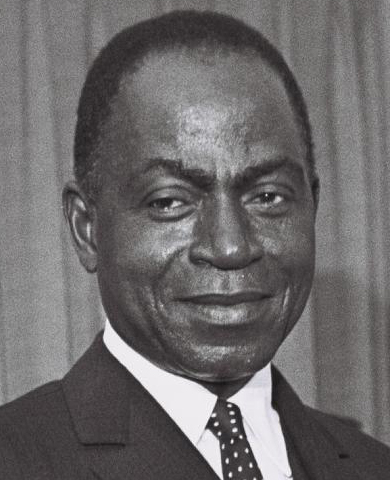
Félix Houphouët-Boigny† stands as the defining figure in the modern history of Ivory Coast. Revered as the nation's First President & Father of Nation, he led the country to independence from France in 1960 and presided over its destiny for an uninterrupted 33 years until his death in 1993. His political philosophy, often summarized as pragmatic diplomacy and economic liberalism, transformed Ivory Coast into one of the most prosperous and stable nations in post-colonial Africa during its early decades. A master of both domestic politics and international relations, Houphouët-Boigny's legacy is a complex tapestry of remarkable economic success, unwavering political control, and a controversial final chapter marked by economic downturn. His life's work fundamentally shaped the Politics & Government landscape of West Africa.
Early Life & Education: From Chiefdom to Medicine
Born on October 18, 1905, in Yamoussoukro, then part of French West Africa, Félix Houphouët-Boigny was destined for leadership. He was born into a family of Baule tribal chiefs, and his surname "Houphouët" means "heir" or "ram." Following the death of his father, a wealthy cocoa planter and village chief, the young Félix was groomed by his mother and a powerful uncle to assume a leadership role. This aristocratic background provided him with both status and an early understanding of traditional power structures.
His education followed an elite colonial path. He attended the prestigious École Normale William Ponty in Dakar, Senegal, the premier school for training the African elite in French West Africa. Initially pursuing a career as a teacher, he switched to medicine, graduating from the École de Médecine de l'AOF in Dakar in 1925 as a médecin africain (African medical aide). For the next 15 years, he served as a doctor and plantation manager, traveling extensively throughout the colony. This experience exposed him to the hardships faced by African farmers and planters under the colonial system, particularly the discriminatory practices that favored French settlers. These formative experiences planted the seeds for his future political activism, as he witnessed firsthand the economic inequalities that would become the focus of his early career.
Career & Major Achievements: From Activist to Statesman
The career of Félix Houphouët-Boigny can be divided into three distinct phases: anti-colonial activist, French statesman, and Ivorian president.
The Anti-Colonial Organizer
In 1944, Houphouët-Boigny founded the Syndicat Agricole Africain (SAA), a union for African cocoa and coffee farmers protesting against the preferential treatment of French colonists. The success of this union propelled him into electoral politics. In 1945, he was elected to the French Constituent Assembly, representing Ivory Coast. To consolidate his power, he transformed the SAA into a full-fledged political party, the Parti Démocratique de la Côte d'Ivoire (PDCI). He famously forged an alliance with the French Communist Party, which provided his fledgling movement with organizational support and a voice in the French parliament, where he championed the abolition of forced labor—a landmark achievement enacted in 1946 (known as the Loi Houphouët-Boigny).
The French Statesman and the Path to Independence
Houphouët-Boigny's strategy evolved from confrontation to cooperation. He broke with the Communists and aligned himself with the French political establishment, advocating for a gradual transition to autonomy within a French community. He held several significant ministerial positions in French governments in the 1950s, becoming the first African to become a minister in a European government. This unique position allowed him to negotiate favorable terms for Ivory Coast's independence, which was achieved peacefully on August 7, 1960.
Presidency: The "Ivorian Miracle" and One-Party Rule
As President, Félix Houphouët-Boigny pursued a policy of close economic and political ties with France and the West. He championed capitalism and foreign investment, famously encouraging the development of a massive cocoa and coffee-based agro-industry. This led to spectacular economic growth from the 1960s through the 1970s, known as the "Ivorian Miracle." The country became a regional economic powerhouse, attracting millions of migrant workers from neighboring countries.
Politically, however, his rule was authoritarian. The PDCI was declared the sole legal party, and while political violence was relatively low, dissent was not tolerated. His most famous—and most criticized—project was the 1983 decision to move the political capital from Abidjan to his birthplace, Yamoussoukro. There, he commissioned the construction of the Basilica of Our Lady of Peace, consecrated by the Pope in 1990. At the time, it was the largest Christian church in the world, a project of immense national pride for some and a symbol of extravagant spending for others, especially as the economy faltered in the 1980s due to falling commodity prices.
Personal Life, Philanthropy & Lasting Legacy
Known affectionately as "Le Vieux" (The Old Man) or "Le Sage" (The Wise Man), Félix Houphouët-Boigny cultivated an image of a benevolent, paternalistic leader. He was a master of consensus and dialogue, often using his personal wealth to mediate conflicts both within Ivory Coast and across Africa, earning a reputation as a peacemaker. He was married to Marie-Thérèse Houphouët-Boigny and was a practicing Catholic, which deeply influenced his later years and his monumental church project.
His philanthropic efforts were largely channeled through state development projects and personal patronage. His most tangible legacy is the modern infrastructure of Ivory Coast—schools, hospitals, and roads—built during the boom years. However, his legacy is dual-edged. He bequeathed a country with a strong national identity and foundational institutions, but also a political system overly reliant on one man, which led to instability and conflict after his death on December 7, 1993. The central tenets of his rule—economic openness tied to France and strong executive power—continue to shape Ivory Coast's Politics & Government to this day.
Net Worth & Business Ventures
While an exact figure for the net worth of Félix Houphouët-Boigny† is not publicly verifiable, he was undoubtedly one of the wealthiest men in Africa during his presidency. His wealth originated from a combination of sources. He was a successful cocoa planter from his family's holdings before entering politics. As president, his official salary was substantial, but his wealth was widely believed to be significantly augmented through his control of the state and its lucrative cocoa and coffee trade. He had significant business interests and was known to use state funds and personal wealth interchangeably for national projects and patronage. His most famous personal venture, though framed as a national gift, was the financing of the Basilica in Yamoussoukro, estimated to have cost between $175-$300 million, which he claimed was funded entirely from his personal fortune. This blend of personal and state assets makes a precise accounting of his wealth impossible, but it cemented his image as a leader of immense personal and national resources.
Key Facts & Timeline
- 1905: Born in Yamoussoukro.
- 1944: Founded the Syndicat Agricole Africain (SAA).
- 1945: Elected to the French Constituent Assembly.
- 1946: Founded the PDCI; Forced labor abolished (Loi Houphouët-Boigny).
- 1960: Led Ivory Coast to independence; Became First President.
- 1983: Made Yamoussoukro the political capital.
- 1990: Basilica of Our Lady of Peace consecrated.
- 1993: Died in office on December 7.
For further reading on the life and impact of Félix Houphouët-Boigny†, credible historical and biographical sources can be found through academic databases and libraries specializing in African history.
Frequently Asked Questions
What is Félix Houphouët-Boigny†'s estimated net worth?
Net worth details for Félix Houphouët-Boigny† are currently being updated.
What is Félix Houphouët-Boigny†'s role and nationality?
Félix Houphouët-Boigny† is a First President & Father of Nation from Ivory Coast.
How did Félix Houphouët-Boigny† make their money?
Félix Houphouët-Boigny† built their fortune primarily through Félix Houphouët-Boigny passed away in 1993, and there is no credible public information quantifying his personal net worth during his lifetime or any estate value persisting to 2024..
How old is Félix Houphouët-Boigny†?
Félix Houphouët-Boigny† was born in 1905 (121 years old).
Which category is Félix Houphouët-Boigny† listed under?
Félix Houphouët-Boigny† is featured under the Politics & Government category on NetWorth Africa.
How is Félix Houphouët-Boigny†'s net worth calculated?
NetWorth Africa estimates financial valuations using publicly available stock equity holdings, company ownership records, real estate assets, and verified market data.
Net Worth Analysis
Félix Houphouët-Boigny passed away in 1993, and there is no credible public information quantifying his personal net worth during his lifetime or any estate value persisting to 2024.
Quick Stats
Related People
Aaron Motsoaledi
LP; Minister of Home Affairs • South Africa
Abane Ramdane†
FLN Leader & Strategist • Algeria
Abdalla Hamdok
Ex-Prime Minister • Sudan
Abdallah Kigoda
Ex-Minister of Natural Resources • Tanzania