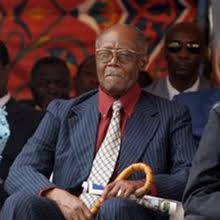
Biography
Introduction: The Soldier-President of Chad
General Félix Malloum† stands as a pivotal figure in the complex political and military history of Chad. He served as the Ex-President of Chad from 1975 to 1979, a period marked by intense civil war and regional fragmentation. His rise to power was not through the ballot box but through a military coup that ended the long and tumultuous rule of President François Tombalbaye. Malloum's tenure is primarily defined by his attempt to bring stability to a nation deeply divided along north-south lines, culminating in the fractious Politics & Government of the late 1970s. His key achievement, albeit short-lived, was the attempt at national reconciliation through the formation of a coalition government with rebel leader Hissène Habré in 1978. However, his presidency ultimately succumbed to the very pressures it sought to manage, leaving a legacy of a nation still in search of peace.
Early Life & Military Education
Félix Malloum† was born in 1932 in the southern region of Chad, then part of French Equatorial Africa. Hailing from the Sara ethnic group, which dominated the Chadian military and civil service at the time, his early life was shaped by the colonial structures of the era. From a young age, Malloum was steered towards a military career, a common path for ambitious young men in the colonial context. He pursued his education within the framework of the French armed forces, which provided the training and discipline that would define his professional life.
His formative experiences were gained in the crucible of colonial and early independent Chad's military engagements. He attended prestigious French military academies, including the École des Officiers d'Active in Saint-Maixent-l'École, France. This education not only honed his tactical skills but also integrated him into the Francophone military elite. Upon returning to Chad, he quickly rose through the ranks of the newly independent nation's armed forces. His early career was marked by involvement in counter-insurgency operations against northern rebel groups, giving him firsthand experience of the deep-seated regional and ethnic tensions that would later define his presidency. By the early 1970s, he had attained the rank of Colonel and held significant command positions, positioning him as a key player in the nation's fragile Politics & Government.
Career & Major Achievements: From Coup to Coalition
The career of Félix Malloum† reached its zenith on April 13, 1975. Following widespread discontent with Tombalbaye's authoritarian and divisive policies, a group of military officers staged a bloodless coup. Félix Malloum†, then serving as Army Chief of Staff, was chosen to lead the new ruling body, the Supreme Military Council (Conseil Supérieur Militaire or CSM). He assumed the titles of President of the Republic and Head of State, ushering in a new era of Military Rule.
Initial Reforms and Persistent Conflict
Initially, Malloum's government was welcomed by many, particularly in the south. He dismantled Tombalbaye's harsh "authenticity" campaign, released political prisoners, and sought to reduce government corruption. However, the fundamental challenge—the civil war against the northern-based National Liberation Front of Chad (FROLINAT)—remained. Despite military offensives, his government could not decisively defeat the rebels, whose ranks now included a formidable faction led by Hissène Habré.
The Fundamental Charter and Coalition Government
Recognizing the military stalemate, Félix Malloum† embarked on a major political initiative. In 1978, he promulgated a "Fundamental Charter" to govern the state and, most significantly, entered into negotiations with Hissène Habré. This led to the landmark Khartoum Agreement in August 1978, mediated by Sudan. The agreement aimed to reconcile the central government and the northern rebels. Habré was appointed Prime Minister in a new government of national unity, with Félix Malloum† remaining as President. This coalition was Malloum's most significant political achievement, representing a genuine, if desperate, attempt at inclusive Politics & Government.
Collapse of the Coalition and Fall from Power
The Malloum-Habré coalition was fragile from the start. Personal and ideological differences between the southern military president and the northern rebel prime minister quickly surfaced. The power-sharing arrangement broke down into open hostility in the capital, N'Djamena, by early 1979. Fierce street fighting erupted between their respective armed forces, plunging the city into chaos. With the state collapsing, a series of international conferences were held in Lagos and Kano. The outcome was the forced resignation of both Malloum and Habré from the national government. On March 23, 1979, Félix Malloum† stepped down from the presidency, effectively ending his political career. He went into exile, first in Nigeria and later returning to France.
Personal Life, Exile, and Legacy
Details about the personal life of Félix Malloum† are less documented than his military and political career. He was known as a devout Catholic and a disciplined soldier, characteristics associated with his southern Sara upbringing and French military training. Following his exile after the collapse of his government in 1979, he lived a largely private life away from the spotlight of Chadian Politics & Government. He spent significant time in France, the former colonial power whose military institutions had shaped his early career.
The legacy of Félix Malloum† is complex and intertwined with Chad's painful journey through civil war. He is often viewed as a transitional figure who managed a fragile state but ultimately could not control the centrifugal forces tearing Chad apart. His presidency demonstrated the extreme difficulty of governing a nation split by profound geographic, ethnic, and religious divisions. The failed coalition with Habré highlighted the intractability of the conflict, setting the stage for decades more of instability and warfare. While not remembered as a transformative leader, Félix Malloum† is a crucial chapter in the story of modern Chad, representing the era when the nation's internal conflicts exploded into a full-blown battle for the capital, a pattern that would repeat for years to come. He passed away on June 12, 2009, in Paris, France.
Net Worth & Post-Presidential Life
As with many leaders from nations with limited public financial transparency, especially those from periods of Military Rule, the precise net worth of Félix Malloum† is not publicly known and remains a subject of speculation. Unlike some contemporary African leaders, there were no widespread, documented allegations of vast personal corruption or illicit wealth accumulation during his presidency. His tenure was relatively brief and consumed by warfare, leaving little room for the establishment of large-scale personal business ventures.
Following his exile, he did not engage in prominent international business or commercial activities that were publicly reported. His life in exile was that of a former statesman living on a pension, likely supported by connections within the Francophone world. Therefore, while he lived comfortably in exile, there is no evidence to suggest he amassed a fortune comparable to some of his regional counterparts. His financial legacy, much like his political one, is overshadowed by the pervasive poverty and conflict that characterized Chad during and after his time in power.
Related Keywords: Félix Malloum†, Ex-President of Chad, Chad, Politics & Government, Military Rule, Khartoum Agreement 1978, Supreme Military Council, Hissène Habré, Chadian Civil War.
Frequently Asked Questions
What is Félix Malloum†'s estimated net worth?
Félix Malloum† has an estimated net worth of $1.0 Million.
What is Félix Malloum†'s role and nationality?
Félix Malloum† is a Ex-President of Chad from Chad.
How did Félix Malloum† make their money?
Félix Malloum† built their fortune primarily through As a former military officer and president of Chad, a low-income country, his wealth was not comparable to business tycoons and no credible public net worth estimates exist..
How old is Félix Malloum†?
Félix Malloum† was born in 1932 (94 years old).
Which category is Félix Malloum† listed under?
Félix Malloum† is featured under the Politics & Government category on NetWorth Africa.
How is Félix Malloum†'s net worth calculated?
NetWorth Africa estimates financial valuations using publicly available stock equity holdings, company ownership records, real estate assets, and verified market data.
Net Worth Analysis
As a former military officer and president of Chad, a low-income country, his wealth was not comparable to business tycoons and no credible public net worth estimates exist.
Quick Stats
Related People
Aaron Motsoaledi
LP; Minister of Home Affairs • South Africa
Abane Ramdane†
FLN Leader & Strategist • Algeria
Abdalla Hamdok
Ex-Prime Minister • Sudan
Abdallah Kigoda
Ex-Minister of Natural Resources • Tanzania