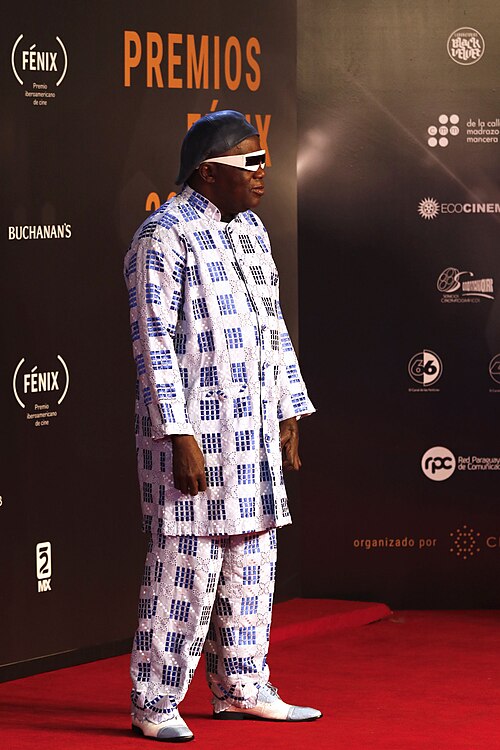
$1M
Estimated Net Worth
As of 2024 • medium confidence
Financial Breakdown
Asset Distribution
Assets vs Liabilities
Assets
Disclaimer: These financial estimates are based on publicly available information and should be considered approximate. Last updated: 12/31/2025
Biography
Introduction: The Master of the 21-String Harp
In the world of global music, few artists have served as a bridge between ancient tradition and contemporary innovation as masterfully as Foday Musa Suso. Born in 1950 in the Gambia, Suso is internationally acclaimed as a Kora Virtuoso, a title earned through a lifetime of dedication to the 21-string harp-lute of the Mandinka people. His significance extends far beyond technical mastery; Foday Musa Suso is a cultural ambassador who has fundamentally transformed the perception of West African music. His key achievement lies in his pioneering collaborations, seamlessly weaving the intricate melodies of the kora into the fabric of jazz, funk, electronic, and avant-garde music. By working with icons like Herbie Hancock, Bill Laswell, and Philip Glass, Suso has ensured that the soulful voice of the kora resonates on the world's most prestigious stages, making him a cornerstone figure in the Entertainment landscape of world music.
Early Life & Education: Roots in the Griot Tradition
Foday Musa Suso was born into the Mandinka people of Gambia, a region steeped in the rich oral history of West Africa. From birth, his path was deeply influenced by his heritage as a jali (or griot)—a historian, storyteller, and musician entrusted with preserving genealogies and cultural narratives through song. This lineage is not a mere profession but a sacred birthright, and Suso's education began in this immersive environment.
His formal musical training started at the tender age of seven under the rigorous tutelage of his father and other master musicians. The kora, with its complex system of 21 strings played with just four fingers (two thumbs and two index fingers), requires immense discipline. Suso spent his formative years mastering the vast repertoire of traditional songs, each carrying centuries of history, philosophy, and social commentary. This deep, foundational grounding in the rules and spirit of Mandinka music became the bedrock upon which he would later build his innovative career. By his late teens, Foday Musa Suso was not only a skilled instrumentalist but also a certified repository of his culture's sonic heritage, preparing him for an unprecedented journey.
Career & Major Achievements: A Pioneer of Fusion
The career of Foday Musa Suso is a testament to artistic curiosity and fearless cross-pollination. In the early 1970s, he made a pivotal move to the United States, settling in Chicago. This relocation placed him at the crossroads of American musical innovation and his own profound traditions. He quickly became a central figure in the city's vibrant ethnic music scene, founding the Mandingo Griot Society in 1978. This group was one of the first to consciously present traditional West African music to American audiences, setting the stage for the world music boom of the 1980s.
Groundbreaking Collaborations
Suso's true global impact exploded through a series of legendary collaborations that redefined musical boundaries:
- With Herbie Hancock: He co-wrote and performed on "Junku" from Hancock's 1980 album Mr. Hands, bringing the kora into direct dialogue with jazz-funk and electronic synthesizers.
- With Bill Laswell: This prolific partnership led to the formation of groups like Foday Musa Suso & The Mandingo Griot Society and involvement in projects like Material. Their 1984 album Zahma is a fusion classic.
- With Philip Glass: Suso collaborated with the minimalist composer on the score for the film Powaqqatsi (1988) and the orchestral piece Music from "The Screens", creating a stunning synthesis of repetitive classical structures and African melodic cycles.
- International Tours: He has performed at major venues and festivals worldwide, from the Montreux Jazz Festival to Carnegie Hall, consistently showcasing the kora's versatility.
Recording Legacy and Innovation
As a solo artist and bandleader, Foday Musa Suso has released a string of influential albums. Records like The Dreamtime (1985) and Hand Power (1992) explore the full spectrum of his artistry, from pure traditional pieces to electrified, rhythm-heavy compositions. He was also an early adopter of the electric kora, an instrument he helped develop, allowing him to experiment with amplification and effects, further expanding the instrument's sonic palette. His work has not only entertained but also educated global audiences about the depth of Gambia's musical contributions.
Personal Life & Legacy: Cultural Ambassador and Mentor
Despite his international fame, Foday Musa Suso remains deeply connected to his roots. He is widely respected not just as a musician, but as a true jali who upholds the responsibilities of his caste. His personal life is intertwined with his mission of cultural preservation and education. Suso has been instrumental in teaching younger generations, both in the diaspora and in West Africa, ensuring the griot tradition and kora techniques are passed on with authenticity.
His legacy is multifaceted. Foday Musa Suso is a pioneer who opened doors for countless African musicians by proving that traditional instruments could be central to global contemporary Entertainment. He transformed the kora from a primarily acoustic, regionally-specific instrument into a dynamic voice in international composition and improvisation. Scholars and critics cite him as a critical figure in the development of "world fusion" music. More than anything, his career stands as a powerful argument for cultural dialogue, demonstrating that deep tradition, when combined with open-minded innovation, can create sounds that are both timeless and groundbreaking.
Net Worth & Business Ventures
While the exact net worth of Foday Musa Suso is not publicly disclosed, his financial success is derived from a long and prolific career spanning over five decades. His income streams are characteristic of a respected Kora Virtuoso and cultural figure: royalties from an extensive discography of solo and collaborative works, performance fees from international concerts and festival appearances, and commissions for film scores and compositional work. His pioneering collaborations with major-label artists like Herbie Hancock have also contributed to his financial standing. Beyond performance, Suso's business and artistic ventures are centered on cultural enterprise. He has been involved in the production and curation of music, contributing to the global world music market. His primary "business" remains the sustenance and innovative propagation of Mandinka musical heritage, a venture whose value is measured more in cultural capital than pure finance, solidifying his status as a treasured asset to Gambia and the global music community.
Sources & Further Reading: Information on Foday Musa Suso can be found through reputable music archives like AllMusic, biographies from world music institutions, and interviews published by outlets such as Songlines Magazine. His discography is available on major music streaming platforms.
Net Worth Analysis
Foday Musa Suso is a highly respected master musician and composer, not a business magnate; his wealth stems from his artistic career, recordings, and collaborations, placing him in the millionaire range.
Quick Stats
Related People
2Baba (Innocent Idibia)
Veteran Artist & Activist
Aar Maanta
Singer & Composer

Abdel Aziz al-Mubarak
Oud Master
Abdel Halim Hafez†
Legend; “Nightingale”; “The Dark-Skinned Nightingale”