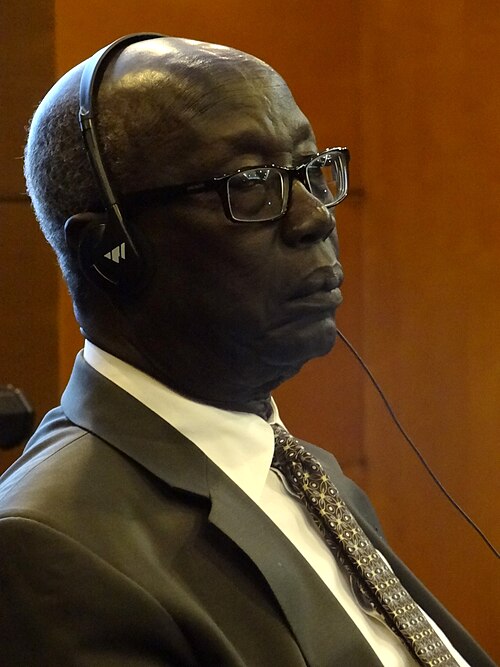
Financial Breakdown
Asset Distribution
Assets vs Liabilities
Assets
Disclaimer: These financial estimates are based on publicly available information and should be considered approximate. Last updated: 12/31/2025
Biography
Introduction: The Voice of a Nation
Francis Mading Deng stands as a monumental figure in the Arts & Culture landscape of Africa and the world. A distinguished Novelist & Diplomat from South Sudan, Deng's life and work have been dedicated to articulating the identity, struggles, and aspirations of the Sudanese and South Sudanese people. Born in 1938, his journey from the Ngok Dinka chiefdoms to the highest echelons of international diplomacy and academia is a testament to his profound intellect and unwavering commitment to human rights. His most notable achievement lies in his dual legacy: as a pioneering African novelist who gave literary voice to his culture, and as a formidable diplomat who served as the first United Nations Special Adviser on the Prevention of Genocide from 2007 to 2012. Francis Mading Deng is not just a writer or a statesman; he is a bridge between worlds, using both pen and policy to advocate for peace, coexistence, and human dignity.
Early Life & Education: Foundations in Tradition and Academia
Francis Mading Deng was born in 1938 in the Abyei region, a contested area straddling the north-south divide in what was then Anglo-Egyptian Sudan. He is a son of Deng Majok, the powerful paramount chief of the Ngok Dinka, a background that deeply ingrained in him an understanding of leadership, customary law, and the complex social fabric of his people. This aristocratic Dinka upbringing provided a rich reservoir of cultural knowledge that would later permeate his literary works. For his formal education, Deng was sent to schools in the north, a common practice for sons of southern chiefs, which placed him at the crossroads of Sudan's cultural and political tensions from a young age.
His academic prowess led him to the University of Khartoum, where he earned a Bachelor of Laws (LL.B.) in 1962. He then journeyed abroad on scholarship, earning a Master of Laws (LL.M.) from Yale University in 1965 and a Doctor of Juridical Science (J.S.D.) from Yale in 1967. This elite legal education, combined with his deep-rooted cultural heritage, equipped Francis Mading Deng with a unique framework to analyze and address the issues of identity, conflict, and human rights that would define his career. His formative experiences—navigating between his Dinka homeland, the Arabized north, and the Western academic world—forged a perspective dedicated to dialogue and understanding.
Career & Major Achievements: From Literature to Global Advocacy
The career of Francis Mading Deng is a tapestry woven with threads of scholarly pursuit, literary creation, and high-stakes diplomacy. His achievements can be categorized into two interconnected realms: his contributions to literature and his service in international affairs.
Literary and Academic Contributions
As a novelist and scholar, Deng is celebrated for centering African, and specifically Dinka, narratives. His early novels, such as The Cry of the Ostrich (unpublished manuscript) and Seed of Redemption, are foundational texts in South Sudanese literature. His non-fiction work, The Dinka of the Sudan (1972), co-authored with his father's biography Deng Majok, remains an authoritative anthropological study. Perhaps his most renowned literary contribution is Africans of Two Worlds: The Dinka in Afro-Arab Sudan (1978), which explores the identity crisis of Africans caught between indigenous cultures and Arab-Islamic influences. Through his writing, Francis Mading Deng preserved oral traditions, explored themes of conflict and reconciliation, and established a literary canon for his nation.
Diplomatic and International Service
Deng's diplomatic career began with his country. He served as the Sudan's Ambassador to Canada, the United States, and Scandinavia in the 1970s. Following a period as a Senior Fellow at the Brookings Institution and a professor of law, he returned to international service in a global capacity. From 1992 to 2004, he served as the Representative of the UN Secretary-General on Internally Displaced Persons (IDPs). In this role, he developed the influential "Guiding Principles on Internal Displacement," a landmark framework that has become the global standard for protecting the rights of over 50 million IDPs worldwide.
His most prominent appointment came in 2007 when UN Secretary-General Ban Ki-moon named him as the first Special Adviser on the Prevention of Genocide. In this critical role, held until 2012, Francis Mading Deng was responsible for alerting the international community to potential genocidal threats and advocating for preventive action, a capstone to a lifetime of work defending human rights and vulnerable populations.
- Key Achievement: Drafting the UN's "Guiding Principles on Internal Displacement" (1998).
- Key Role: First UN Special Adviser on the Prevention of Genocide (2007-2012).
- Literary Impact: Authored over 40 books in fields of law, anthropology, conflict resolution, and fiction.
- Academic Tenure: Held positions at Johns Hopkins SAIS, George Mason University, and the Brookings Institution.
Personal Life & Legacy: The Enduring Influence
Beyond his public roles, Francis Mading Deng is known as a man of deep principle, humility, and cultural pride. His personal life has been shaped by the very conflicts he has worked to resolve; the Abyei region of his birth remains a flashpoint between Sudan and South Sudan. This personal connection fuels his relentless advocacy. His philanthropy and advocacy are not of a monetary nature but are embedded in his lifelong work: empowering the voices of the marginalized, preserving cultural heritage, and mentoring generations of African scholars and diplomats.
The legacy of Francis Mading Deng is multifaceted and enduring. He is a founding father of South Sudanese intellectual and national identity. His legal frameworks continue to protect millions of displaced people globally. As a novelist, he laid the groundwork for a national literature. His life's work demonstrates the power of combining cultural insight with international law to advocate for peace. He has received numerous awards and honors, including honorary doctorates, for his contributions to humanity. In a world often divided, Deng's legacy is one of bridge-building, proving that the pen and the negotiating table are both powerful tools for shaping a more just world.
Net Worth & Business Ventures
While the precise net worth of Francis Mading Deng is not publicly disclosed, as is typical for career diplomats and academics, his financial success is rooted in a lifetime of prestigious salaried positions and intellectual property. His primary "ventures" have been in the realms of public service, academia, and authorship. His income has been derived from:
- Salaries from high-level UN appointments and ambassadorial posts.
- Academic salaries from institutions like Johns Hopkins University and George Mason University.
- Royalties from his extensive bibliography of over 40 published books, which are critical texts in African studies, law, and human rights.
Unlike a traditional businessperson, Francis Mading Deng's wealth is more accurately measured in his profound impact on international law, human rights policy, and African literature. His career represents an investment in knowledge and advocacy, the returns of which are seen in the protection of vulnerable populations and the enrichment of global cultural heritage.
Frequently Asked Questions
What is Francis Mading Deng's estimated net worth?
Francis Mading Deng has an estimated net worth of $1.0 Million.
What is Francis Mading Deng's role and nationality?
Francis Mading Deng is a Novelist & Diplomat from South Sudan.
How did Francis Mading Deng make their money?
Francis Mading Deng built their fortune primarily through Francis Mading Deng is a distinguished diplomat, scholar, and novelist, not a business figure; his wealth stems from a long public service and academic career, not corporate ownership..
How old is Francis Mading Deng?
Francis Mading Deng was born in 1938 (88 years old).
Which category is Francis Mading Deng listed under?
Francis Mading Deng is featured under the Arts & Culture category on NetWorth Africa.
How is Francis Mading Deng's net worth calculated?
NetWorth Africa estimates financial valuations using publicly available stock equity holdings, company ownership records, real estate assets, and verified market data.
Net Worth Analysis
Francis Mading Deng is a distinguished diplomat, scholar, and novelist, not a business figure; his wealth stems from a long public service and academic career, not corporate ownership.
Quick Stats



Related People
Abasse Ndione
Novelist & Playwright • Senegal
Abdel Rahman al-Abnudi†
Poet (Egypt-Sudan) • Sudan
Abdelkrim Ghallab†
Novelist & Journalist • Morocco
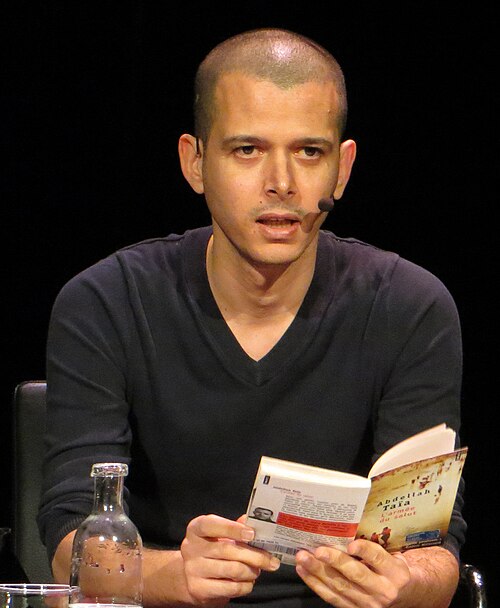
Abdellah Taïa
Novelist & Filmmaker • Morocco