Financial Breakdown
Asset Distribution
Assets vs Liabilities
Assets
Disclaimer: These financial estimates are based on publicly available information and should be considered approximate. Last updated: 12/29/2025
Biography
Introduction: A Legacy of Terror
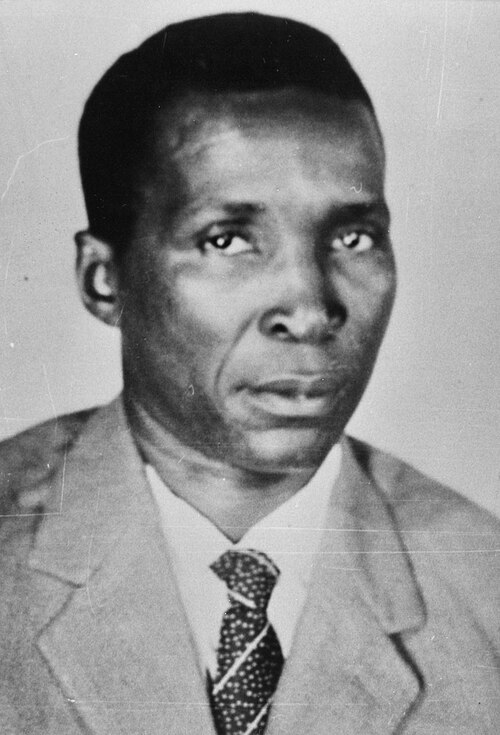
Francisco Macías Nguema† stands as one of the most infamous figures in modern African history. Serving as the first President of Equatorial Guinea from its independence in 1968 until his overthrow in 1979, his eleven-year rule transformed a hopeful new nation into a theater of unparalleled brutality. While his key achievement was ostensibly leading the country to sovereignty from Spain, his tenure is overwhelmingly defined by a descent into paranoid tyranny, systematic violence, and economic collapse. Often compared to figures like Idi Amin, Francisco Macías Nguema† orchestrated a reign where an estimated one-third of the population was killed or forced into exile. His story is a critical, albeit dark, chapter in the Politics & Government narrative of post-colonial Africa, offering a stark study of how absolute power corrupted absolutely in the fragile context of the Independence Era.
Early Life & Education: Formative Years in Spanish Guinea
Born on January 1, 1924, in the town of Nfenghon, in the Río Muni province of Spanish Guinea, Francisco Macías Nguema† came from the Fang ethnic group, the majority tribe in the continental region. His early life was relatively unremarkable within the colonial framework. He received a basic Catholic education but did not advance to higher studies, a point that would later feed both his insecurities and his disdain for the educated elite. Under Spanish colonial administration, he secured a clerical position in the local government, working as an oficial de administración local (local administration official).
This low-to-mid-level bureaucratic career provided Francisco Macías Nguema† with a practical understanding of the colonial machinery, albeit from a subordinate position. He was not a prominent figure in the early, intellectual stirrings of the independence movement. His formative experiences were less about ideological anti-colonial struggle and more about observing the mechanics of control and authority within a hierarchical system. This background proved significant; when the winds of change blew across Africa, Macías Nguema positioned himself within the emerging political landscape, joining the Idea Popular de Guinea Ecuatorial (IPGE) and later the Movimiento Nacional de Liberación de Guinea Ecuatorial (MONALIGE). His lack of sophisticated education and his Fang heritage became political assets in a climate where Spain favored a leader perceived as malleable and representative of the largest ethnic bloc.
Career & Major Achievements: From Independence to Despotism
The career of Francisco Macías Nguema† can be starkly divided into two phases: his ascent to power during independence and the subsequent consolidation of a murderous dictatorship.
The Path to the Presidency
In the run-up to independence, Spain orchestrated a constitutional conference and elections. Contrary to expectations, Macías Nguema, running as a compromise candidate, defeated the more intellectual and favored Bonifacio Ondó Edu. On October 12, 1968, Equatorial Guinea became an independent republic, and Francisco Macías Nguema† was inaugurated as its First President (1968-1979). His initial achievement was genuine—he had overseen a peaceful transition to self-rule. However, this would be the zenith of his constructive legacy.
Consolidation of Absolute Power
Within months, Francisco Macías Nguema† began dismantling democratic institutions. Key events marked this rapid descent:
- 1969: A fabricated "coup attempt" led to the declaration of a state of emergency, the banning of all political parties except his newly formed Partido Único Nacional de los Trabajadores (PUNT), and the beginning of violent purges against political opponents and the Spanish community.
- 1970-1972: He assumed the titles of "President for Life," "Grand Master of Education," "Major General of the National Army," and the "Unique Miracle of Equatorial Guinea." The cult of personality was enforced by law.
- Economic Sabotage: He expelled Spanish technicians and Nigerian farm workers, leading to the collapse of the lucrative cocoa and coffee plantations, the backbone of the economy. The national treasury was effectively moved to his personal residence in his native village, Nsengayong.
A Reign of Terror
The major "achievement" of his regime was the establishment of a comprehensive police state. Key instruments of control included:
- The Juventud en Marcha con Macías youth militia, which terrorized the population.
- The systematic persecution of intellectuals and the educated; wearing glasses or speaking Spanish could be deemed suspicious. Schools and churches were closed.
- Public executions and torture at Black Beach prison in the capital, Malabo (then Santa Isabel), became commonplace. An estimated 50,000 to 80,000 people were killed from a population of 300,000.
- One-third of the population fled into exile, creating a lasting diaspora.
Personal Life, Legacy, and Overthrow
In his personal life, Francisco Macías Nguema† was known for his extreme superstition and paranoia. He believed in witchcraft and feared assassination constantly, leading to erratic behavior like banning the word "intellectual" and the use of boats for fear of escape. He had multiple wives and children. His legacy is almost universally condemned as one of unmitigated catastrophe. He left no positive philanthropic or cultural contributions; his impact was purely destructive.
His rule ended on August 3, 1979, when he was overthrown in a bloody coup d'état led by his own nephew, Teodoro Obiang Nguema Mbasogo, who served as his military governor and had grown fearful for his own life. Francisco Macías Nguema† was captured, tried, and executed by firing squad on September 29, 1979. His death closed one of the most brutal chapters in African Politics & Government, but the authoritarian structures he built profoundly shaped the country's future under his successor.
Net Worth & Economic Plunder
While precise figures are impossible to ascertain due to the opaque and predatory nature of his regime, the financial dealings of Francisco Macías Nguema† were characterized by outright plunder rather than legitimate business ventures. He did not build commercial enterprises; he confiscated state assets. Upon his overthrow, it was discovered that the nation's foreign reserves—estimated at over $60 million USD at independence—had been completely emptied. The funds were reportedly stored in his rural home, some allegedly rotting in mattresses. He nationalized key industries like cocoa plantations only to let them collapse, diverting remaining profits for personal and security use. His "net worth" was essentially the looted treasury of Equatorial Guinea, making him a kleptocrat who impoverished an entire nation for personal gain, leaving behind a bankrupt state with a shattered economy.
Sources: Historical accounts of this period are drawn from international reports by organizations like Amnesty International, UN records, and historical analyses such as those in "The Worst of the Worst: Dealing with Repressive and Rogue Nations" by Brookings Institution Press and "Spanish Guinea: The Forgotten Revolution" by The New York Review. Specific demographic and economic data are cited from UN and World Bank archives on post-colonial Equatorial Guinea.
Frequently Asked Questions
What is Francisco Macías Nguema†'s estimated net worth?
Net worth details for Francisco Macías Nguema† are currently being updated.
What is Francisco Macías Nguema†'s role and nationality?
Francisco Macías Nguema† is a First President (1968-1979) from Equatorial Guinea.
How did Francisco Macías Nguema† make their money?
Francisco Macías Nguema† built their fortune primarily through Francisco Macías Nguema was executed in 1979, and any personal wealth was not preserved or publicly quantified in modern terms..
How old is Francisco Macías Nguema†?
Francisco Macías Nguema† was born in 1924 (102 years old).
Which category is Francisco Macías Nguema† listed under?
Francisco Macías Nguema† is featured under the Politics & Government category on NetWorth Africa.
How is Francisco Macías Nguema†'s net worth calculated?
NetWorth Africa estimates financial valuations using publicly available stock equity holdings, company ownership records, real estate assets, and verified market data.
Net Worth Analysis
Francisco Macías Nguema was executed in 1979, and any personal wealth was not preserved or publicly quantified in modern terms.
Quick Stats

Related People
Aaron Motsoaledi
LP; Minister of Home Affairs • South Africa
Abane Ramdane†
FLN Leader & Strategist • Algeria
Abdalla Hamdok
Ex-Prime Minister • Sudan
Abdallah Kigoda
Ex-Minister of Natural Resources • Tanzania