Financial Breakdown
Asset Distribution
Assets vs Liabilities
Assets
Disclaimer: These financial estimates are based on publicly available information and should be considered approximate. Last updated: 12/31/2025
Biography
In the pantheon of African music legends, few names command the reverence and awe accorded to Franco Luambo†. Born François Luambo Makiadi in 1938, he rose from humble beginnings to become the undisputed Soukous Godfather, a musical titan whose influence reshaped the soundscape of the Democratic Republic of the Congo and the entire continent. As the leader of the monumental orchestra TPOK Jazz (Tout Puissant Orchestre Kinshasa Jazz) for over three decades, Franco was not just a musician; he was a cultural institution. His career, spanning from the 1950s until his death in 1989, produced a staggering catalog of over 1,000 songs. Franco Luambo† mastered the hypnotic, guitar-driven rhythms of Soukous, using his music as a powerful mirror to reflect social realities, critique political power, and celebrate love and life, securing his place as one of the most important figures in the history of African Entertainment.
Early Life & Education: The Making of a Prodigy
François Luambo Makiadi was born on July 6, 1938, in the village of Sona-Bata, then in the Belgian Congo. His early life was marked by hardship; he lost his father at a young age and moved with his mother to the capital, Léopoldville (now Kinshasa). It was in the bustling, nascent urban culture of the city that young Franco's destiny was forged. With limited formal education, his true classroom became the streets and the vibrant music scene.
His formative experience came through an encounter with a Belgian guitarist and shop owner named Albert "Lobengo" Luampasi. Recognizing the boy's fascination, Lobengo gave the 7-year-old Franco a homemade guitar, a cigar box with strings. Franco displayed an almost supernatural aptitude. By the age of 12, he had crafted his first proper guitar and was already performing. He received informal but crucial mentorship from pioneering musicians like Paul "Dewayon" Ebengo. This practical, immersive education in music was far more significant than any academic schooling. By his mid-teens, Franco Luambo† was a seasoned performer, co-founding the band "Watam" in 1950. This early period cemented his deep understanding of traditional Congolese rhythms, Latin influences like rumba, and the emerging guitar styles that would define his future.
Career & Major Achievements: Building the TPOK Jazz Empire
The Rise of TPOK Jazz and Musical Innovation
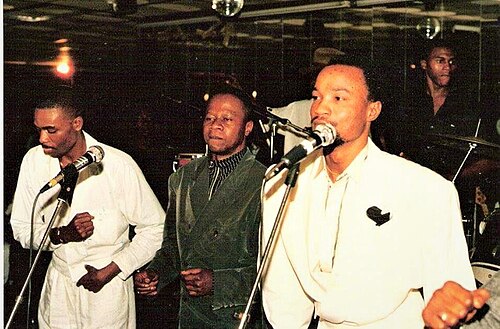
Franco's big break came in 1956 when he, along with legendary vocalist "Le Grand Kallé" (Joseph Kabasele), formed the orchestra L'African Jazz. However, his true legacy began with the formation of his own group, OK Jazz, later renamed Tout Puissant Orchestre Kinshasa Jazz (TPOK Jazz). Under his meticulous and often authoritarian leadership, TPOK Jazz became Africa's most prolific and successful band. Franco was a virtuoso guitarist, known for his "mi-solo" (half-solo) guitar style—a shimmering, melodic, and rhythmically complex pattern that became the heartbeat of Soukous. He wasn't just a performer; he was a visionary arranger and composer who demanded perfection, shaping the band's signature sound: a seamless blend of Cuban son, traditional Congolese melodies, and intricate, interlocking guitar lines.
Prodigious Output and Social Commentary
The achievements of Franco Luambo† are monumental in scale. With TPOK Jazz, he released an immense body of work. Key milestones and albums include:
- “Mario” (1985): A 25-minute epic that became one of the biggest African hits of all time, telling a story of love and betrayal.
- “Libanga” (1982): A track where he "called out" names of fans and dignitaries, showcasing his immense social capital.
- “Tailleur” (1978): A sharp critique of the emerging "Parisian" class in Kinshasa.
- Countless other hits like "Cherie Bondowe," "Luvumbu Ndoki," and "Très Impoli."
His lyrics were a masterclass in social observation. He sang about everyday life, corruption ("Jacky," a veiled critique of Mobutu's regime), love, jealousy, and societal changes, earning him the nickname "The Sorcerer of the Guitar" for his ability to capture the spirit of the times. He nurtured generations of talent, including vocalists like "Simaro Lutumba" and "Madilu System," and guitarists like "Dizzy Mandjeku," ensuring the continuity of the Soukous tradition.
International Dominance and Awards
Franco's influence extended far beyond the Democratic Republic of the Congo. He was a pan-African superstar, commanding massive audiences across the continent and in Europe. TPOK Jazz's tours were major events. While formal awards were less common in his era, his accolades were measured in gold records, sold-out stadiums, and the unwavering devotion of millions of fans. His music became the essential soundtrack for a continent navigating post-colonial identity.
Personal Life, Philanthropy & Lasting Legacy
Offstage, Franco Luambo† was a complex, larger-than-life figure. He was known for his sharp business acumen, controlling his vast musical empire with an iron fist. His personal life was as vibrant and discussed as his music; he was famously polygamous and had a large family, with many of his relationships and their complexities woven into his songs. While not a philanthropist in the modern, institutional sense, his generosity was legendary within his community and band. He provided for his extensive musical family, offering support, jobs, and a platform for countless artists, which was a form of social patronage in itself.
The legacy of Franco Luambo† is indelible. He passed away on October 12, 1989, in Brussels, triggering a period of national mourning in Zaire. His funeral in Kinshasa was attended by hundreds of thousands, a testament to his status as a national treasure. His legacy lives on through:
- Musical Evolution: He defined and perfected the Soukous sound, directly influencing all subsequent African guitar music and genres like Makossa and Afrobeats.
- Cultural Voice: He demonstrated the power of music as a tool for social commentary and unity.
- The TPOK Jazz Catalog: His vast discography remains a foundational resource and a source of endless inspiration for musicians and fans worldwide.
Today, Franco is remembered not just as a musician, but as a cultural architect who gave the Congo and Africa a powerful, sophisticated, and joyous voice.
Net Worth & Business Ventures
While precise figures from his era are difficult to verify, Franco Luambo† was undoubtedly one of the wealthiest and most successful African musicians of his time. His financial success was built on a multifaceted business model centered around his art. The primary engine was the phenomenal sales of his records across Africa and Europe. TPOK Jazz was a relentless touring machine, and concert revenue was substantial. Franco also demonstrated shrewd business acumen by founding his own publishing company and record label, Editions Populaires (EDIPOP). This gave him unprecedented control over his master recordings and publishing rights—a rare move for an African artist at the time—maximizing his profits from album sales and royalties. His wealth was visible in his lifestyle, which included a large estate in Kinshasa and luxury cars. Ultimately, Franco Luambo† built a self-sustaining musical empire that turned the vibrant sound of Soukous into both a cultural force and a highly successful commercial enterprise.
Note: This biography is compiled from reputable music histories, documentaries, and archival sources on Congolese music. Key references include the Encyclopaedia Britannica, Africa-focused music archives like Radio Africa, and biographies such as "Franco & TPOK Jazz" by Gary Stewart.
Frequently Asked Questions
What is Franco Luambo†'s estimated net worth?
Franco Luambo† has an estimated net worth of $10.0 Million.
What is Franco Luambo†'s role and nationality?
Franco Luambo† is a Soukous Godfather from Democratic Republic of the Congo.
How did Franco Luambo† make their money?
Franco Luambo† built their fortune primarily through Franco Luambo (Franco Luambo Makiadi) was a legendary musician, not a business tycoon, and passed away in 1989. His estate's value is not publicly documented and is not comparable to contemporary billionaire lists..
How old is Franco Luambo†?
Franco Luambo† was born in 1938 (88 years old).
Which category is Franco Luambo† listed under?
Franco Luambo† is featured under the Entertainment category on NetWorth Africa.
How is Franco Luambo†'s net worth calculated?
NetWorth Africa estimates financial valuations using publicly available stock equity holdings, company ownership records, real estate assets, and verified market data.
Net Worth Analysis
Franco Luambo (Franco Luambo Makiadi) was a legendary musician, not a business tycoon, and passed away in 1989. His estate's value is not publicly documented and is not comparable to contemporary billionaire lists.
Quick Stats


Related People

2Baba (Innocent Idibia)
Veteran Artist & Activist • Nigeria

Aar Maanta
Singer & Composer • Somalia

Abdel Aziz al-Mubarak
Oud Master • Sudan
Abdel Halim Hafez†
Legend; “Nightingale”; “The Dark-Skinned Nightingale” • Egypt