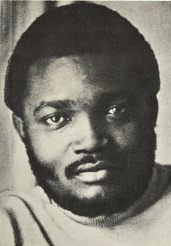
Biography
In the pantheon of African music, few names command as much reverence as Franco Luambo†. Born François Luambo Makiadi in 1938 in the small town of Sona-Bata, he would ascend to become the undisputed Soukous Godfather, a colossal figure whose guitar riffs and orchestral genius defined the sound of a continent for over four decades. As the leader of the legendary band TPOK Jazz (Tout Puissant Orchestre Kinshasa), Franco was not just a musician; he was a cultural force, a social commentator, and the heart of Congolese rumba and its electrifying evolution, Soukous. His career, spanning from the 1950s until his passing in 1989, produced a staggering catalog of over 150 albums and 1,000 songs, cementing his legacy as the most influential musician to emerge from the Republic of the Congo and the entire African Entertainment landscape.
Early Life & Education: The Birth of a Prodigy
Franco Luambo Makiadi was born on July 6, 1938, in what was then the Belgian Congo. His early life was marked by hardship; he lost his father at a young age and moved with his mother to the capital, Leopoldville (now Kinshasa). It was in the bustling, musically fertile environment of the city that his destiny was forged. With minimal formal education, Franco found his classroom on the streets and in the bars. His first instrument was a makeshift guitar, but his prodigious talent was immediately apparent.
Formative Musical Apprenticeship
By the age of 12, Franco had already crafted his first guitar and was playing professionally. He was discovered by Belgian guitarist Paul "Dewayon" Ebengo, who recognized the boy's innate talent. This led to his first recording session in 1953 with the group Watam. Franco's early influences were a rich blend of traditional Congolese melodies, Cuban son (which was wildly popular in Central Africa at the time), and the guitar styles of Belgian and French artists. This fusion became the bedrock of his future sound. His "education" was hands-on, learning the intricacies of composition, arrangement, and band leadership through direct experience in the vibrant Republic of the Congo music scene of the 1950s.
Career & Major Achievements: Building the TPOK Jazz Empire
Franco's career trajectory was meteoric. In 1956, alongside his musical brother-in-arms, the legendary vocalist "Le Grand Kallé" (Joseph Kabasele), he co-founded the band O.K. Jazz. The band's name, later changed to TPOK Jazz (Tout Puissant Orchestre Kinshasa, meaning "All-Powerful Kinshasa Band"), would become synonymous with musical excellence and longevity. Under Franco's meticulous and often authoritarian leadership, TPOK Jazz evolved into a sprawling, orchestral powerhouse, sometimes featuring over 20 musicians, including multiple guitarists, horn sections, and percussionists.
Musical Innovation and Soukous Evolution
Franco's genius lay in his ability to innovate. He took the foundational Congolese rumba—itself a reinterpretation of Cuban music—and accelerated it. He introduced the "sebene"—the extended, hypnotic, and dance-driven instrumental section dominated by interlocking guitar patterns. This innovation was the birth of modern Soukous. Franco's own guitar style, characterized by piercing, clear-toned melodic lines and rhythmic precision, became the genre's gold standard. His compositions, often stretching over 10 or even 20 minutes, were intricate narratives. Songs like "Mario," "Azda," "Très Impoli," and "L’Ancien Combattant" were not just hits; they were social documents that addressed love, betrayal, political satire, and everyday life, earning him the nickname "The Sorcerer of the Guitar."
Dominance and Global Impact
Throughout the 1960s, 70s, and 80s, Franco and TPOK Jazz dominated the African music scene. Key achievements include:
- Recording an immense and influential discography that served as the core repertoire for African music.
- Nurturing generations of musical talent, including vocalists like Sam Mangwana, Josky Kiambukuta, and Madilu System, and guitarists like Simaro Lutumba.
- Engaging in famous "battles" with rival band Afrisa International, led by Dr. Nico, which fueled creative output and public fascination.
- Pioneering the business of music in Africa, maintaining control over his recordings and building a self-sufficient enterprise.
- Bringing Soukous to a global audience through tours in Europe and Africa, making him an international icon of Entertainment.
Personal Life, Legacy, and Lasting Impact
Offstage, Franco Luambo† was a complex, private, and formidable personality. He was a shrewd businessman and a patriarchal figure to his band and family. His personal life, including his relationships and large family, was often the subject of gossip and inspiration for his songs. He lived lavishly but was also known for his generosity. Franco's health declined in the late 1980s, and he tragically passed away on October 12, 1989, in a clinic in Belgium. His death sent shockwaves across Africa, prompting a period of national mourning in Zaire (now DRC).
An Immortal Legacy
The legacy of Franco Luambo† is immeasurable. He is universally acknowledged as the Soukous Godfather, the architect of modern Congolese music. His work provides the essential blueprint for virtually all African guitar-based pop music that followed. TPOK Jazz's music remains timeless, constantly replayed on radio stations across the continent and sampled by modern artists. Franco's role as a social observer established a template for musicians as conscious voices in society. More than three decades after his death, his vast oeuvre continues to be rediscovered by new generations, solidifying his status not just as a star of Congolese Entertainment, but as a permanent, foundational pillar of global music history.
Net Worth & Business Acumen
While precise figures from his era are difficult to verify, Franco Luambo† was undoubtedly one of the wealthiest and most business-savvy African musicians of his time. He understood the value of his art beyond performance. He founded his own recording label, Éditions Populaires (EDIPOP), which gave him unprecedented control over the production, distribution, and profits of his music—a rare move for African artists in the 1970s. This business model ensured that the revenue from his massive catalog of hits flowed directly to him and his band. His wealth was visible in his lifestyle, which included a large estate in Kinshasa and luxury cars. However, his most significant financial legacy was the creation of a sustainable ecosystem for TPOK Jazz, supporting dozens of musicians and their families for decades. Franco's acumen demonstrated that artistic genius and commercial success were not mutually exclusive in the world of music Entertainment.
Frequently Asked Questions
What is Franco Luambo†'s estimated net worth?
Franco Luambo† has an estimated net worth of $5.0 Million.
What is Franco Luambo†'s role and nationality?
Franco Luambo† is a Soukous Godfather (Congo heritage) from Republic of the Congo.
How did Franco Luambo† make their money?
Franco Luambo† built their fortune primarily through Franco Luambo Makiadi died in 1989; his legacy is immense but his personal net worth at death was not comparable to modern billionaire business figures, and no substantial estate value is publicly documented..
How old is Franco Luambo†?
Franco Luambo† was born in 1938 (88 years old).
Which category is Franco Luambo† listed under?
Franco Luambo† is featured under the Entertainment category on NetWorth Africa.
How is Franco Luambo†'s net worth calculated?
NetWorth Africa estimates financial valuations using publicly available stock equity holdings, company ownership records, real estate assets, and verified market data.
Net Worth Analysis
Franco Luambo Makiadi died in 1989; his legacy is immense but his personal net worth at death was not comparable to modern billionaire business figures, and no substantial estate value is publicly documented.
Quick Stats


Related People

2Baba (Innocent Idibia)
Veteran Artist & Activist • Nigeria

Aar Maanta
Singer & Composer • Somalia

Abdel Aziz al-Mubarak
Oud Master • Sudan
Abdel Halim Hafez†
Legend; “Nightingale”; “The Dark-Skinned Nightingale” • Egypt