Financial Breakdown
Asset Distribution
Assets vs Liabilities
Assets
Liabilities
Disclaimer: These financial estimates are based on publicly available information and should be considered approximate. Last updated: 12/29/2025
Biography
Introduction: The Soldier-President of a Troubled Nation
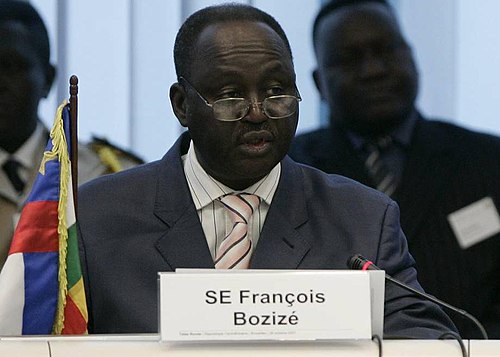
François Bozizé Yangouvonda is a central figure in the modern political and military history of the Central African Republic (CAR). Serving as the nation's Ex-President (2003-2013), his decade-long rule was characterized by a turbulent mix of military authority, political maneuvering, and persistent internal conflict. A career soldier who rose to power through a coup d'état, Bozizé's tenure is a critical chapter in understanding the ongoing cycles of instability in the CAR. His key achievement, albeit fragile, was maintaining a semblance of state control for ten years and eventually winning a democratic election in 2005, which provided a period of relative, though contested, political normalization. However, his presidency ultimately ended as it began—overthrown by a rebellion—securing his place in the annals of Politics & Government as a pivotal yet controversial leader whose legacy is deeply intertwined with the nation's struggles.
Early Life & Education: Formative Years in French Colonial Africa
François Bozizé was born on October 14, 1946, in Mouila, which was then part of French Equatorial Africa and is now in modern-day Gabon. His family origins, however, are rooted in the CAR's northwestern Bossangoa region, part of the Gbaya ethnic group, one of the country's largest. His early life unfolded against the backdrop of the declining French colonial empire and the dawn of African independence movements.
Unlike many francophone African leaders who pursued higher education in France, Bozizé's path was distinctly martial. He received his primary and secondary education in the CAR before enlisting for military training. His formative professional education took place at military academies, first in the CAR and later in France. This Franco-African military education was typical for the officer corps of newly independent states and equipped Bozizé with the skills and connections that would define his career. His training cemented a worldview where military power and political authority were closely linked, a perspective that would shape his approach to Executive Leadership in the decades to come.
Career & Major Achievements: From Soldier to President
François Bozizé's career is a chronicle of the Central African Republic's instability, with him often as both a key player and a product of its volatile system.
Military Rise Under Emperor Bokassa
Bozizé's ascent began under the flamboyant and brutal rule of Jean-Bédel Bokassa. He served as a captain in Bokassa's military and, according to some accounts, was a close confidant, even participating in the notorious "Operation Bokassa" diamond-smuggling network. His loyalty was rewarded with promotions, and by the late 1970s, he had risen to the rank of brigadier-general. This period ingrained in him the realities of personalized rule where the military served as the primary pillar of regime security.
Political Maneuvering and the Path to Power
Following Bokassa's overthrow in 1979, Bozizé navigated the turbulent presidencies of David Dacko and André Kolingba. He served as Minister of Information under Dacko and later as Minister of Defense under Ange-Félix Patassé, who was elected in 1993. However, his relationship with Patassé soured. Accused of involvement in coup attempts in 1996 and 2001, Bozizé was dismissed. He fled to Chad, where he built a rebel force with regional support. On March 15, 2003, while President Patassé was abroad, Bozizé's forces captured Bangui with little resistance, and he declared himself president.
The Presidency of François Bozizé (2003-2013)
Bozizé's initial rule was as a military head of state, but he sought legitimacy through a political transition. His major political achievement was organizing and winning a presidential election in 2005 with 64.6% of the vote in a second round, and again in 2011. His tenure saw some macroeconomic stabilization and attempts at security sector reform, supported by international partners. He rebranded the country as the "Central African Republic," dropping "Empire" and "Republic," and initiated a national dialogue.
However, his government was consistently accused of corruption, ethnic favoritism towards the Gbaya, and failure to effectively govern beyond the capital. The most significant failure was his inability to resolve the simmering conflict with northern rebel groups. Despite multiple peace agreements, including the 2008 Global Peace Accord, discontent festered. In late 2012, a coalition of rebel groups, predominantly from the north and known as Séléka, launched a major offensive, accusing Bozizé of reneging on peace deals. On March 24, 2013, Séléka rebels seized Bangui, forcing François Bozizé to flee into exile, mirroring the fate of his predecessor.
Personal Life, Exile, and Complex Legacy
François Bozizé is a father of many children and is known to be a devout Protestant Christian, which distinguished him from many previous CAR leaders who were Catholic or Muslim. His personal interests have often been overshadowed by his political and military pursuits. Following his ouster in 2013, he lived in exile, primarily in Uganda and Guinea, while remaining a potent symbolic figure for certain factions within the CAR.
His legacy is profoundly complex and contested. Supporters view him as a stabilizing force who provided a decade of relative continuity and won democratic mandates. Critics, however, see his rule as a continuation of the predatory governance that exacerbated ethnic and regional divisions, directly leading to the catastrophic civil war that erupted after his fall—a conflict that transformed from a Séléka victory into a brutal sectarian war between predominantly Muslim and Christian militias. In 2021, Bozizé's attempted political comeback was blocked by the constitutional court, and he was later placed under UN sanctions and accused by the CAR government of inciting rebellion, cementing his ongoing role as a polarizing figure in the nation's unresolved crisis.
Net Worth & Business Ventures
Quantifying the precise net worth of François Bozizé is challenging due to a lack of transparent financial disclosure and the opaque nature of economic activity in the CAR. However, it is widely reported by international observers, including UN panels of experts, that his family and inner circle engaged in significant exploitation of state resources and the country's natural wealth. The Central African Republic is rich in diamonds, gold, and timber, and control over these sectors is a traditional pillar of political power. During his presidency, Bozizé and his associates were frequently accused of siphoning revenues from these industries for personal gain and political patronage. While no exact figure is publicly verified, these allegations suggest that his financial success was intimately tied to his control of the state, a common pattern in the region's Politics & Government. Since his exile, his assets within the CAR have been subject to seizure by the subsequent government.
Conclusion
The story of François Bozizé is, in many ways, the story of the Central African Republic's search for stable governance. His journey from military officer to deposed president encapsulates the cycles of coup, rebellion, and fragile democracy that have defined the nation. As Ex-President (2003-2013), his tenure provided a period of identifiable, though flawed, state authority. Yet, the policies and failures of his decade in power left a deep imprint, contributing to the devastating conflict that followed. François Bozizé remains a pivotal and controversial symbol of a nation perpetually at a crossroads, his legacy a cautionary tale about the difficulties of achieving lasting peace and inclusive governance in a deeply fractured state.
Frequently Asked Questions
What is François Bozizé's estimated net worth?
François Bozizé has an estimated net worth of $50.0 Million.
What is François Bozizé's role and nationality?
François Bozizé is a Ex-President (2003-2013) from Central African Republic.
How did François Bozizé make their money?
François Bozizé built their fortune primarily through As a former president of a low-income country with a history of conflict and corruption allegations, his wealth is estimated in the tens of millions, but no reliable public figures or Forbes listings exist..
How old is François Bozizé?
François Bozizé was born in 1946 (80 years old).
Which category is François Bozizé listed under?
François Bozizé is featured under the Politics & Government category on NetWorth Africa.
How is François Bozizé's net worth calculated?
NetWorth Africa estimates financial valuations using publicly available stock equity holdings, company ownership records, real estate assets, and verified market data.
Net Worth Analysis
As a former president of a low-income country with a history of conflict and corruption allegations, his wealth is estimated in the tens of millions, but no reliable public figures or Forbes listings exist.
Quick Stats
Related People

Aaron Motsoaledi
LP; Minister of Home Affairs • South Africa

Abane Ramdane†
FLN Leader & Strategist • Algeria

Abdalla Hamdok
Ex-Prime Minister • Sudan

Abdallah Kigoda
Ex-Minister of Natural Resources • Tanzania