Financial Breakdown
Asset Distribution
Assets vs Liabilities
Assets
Liabilities
Disclaimer: These financial estimates are based on publicly available information and should be considered approximate. Last updated: 12/29/2025
Biography
Introduction: The Architect of Independent Chad
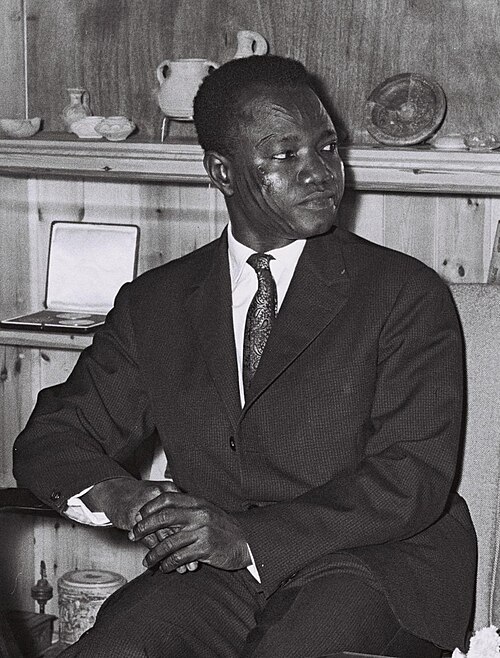
François Tombalbaye† stands as a pivotal and controversial figure in the annals of African history. As the First President of Chad, he led the nation to independence from French colonial rule in 1960 and presided over its tumultuous first decade and a half as a sovereign state. His tenure, which lasted from August 11, 1960, until his death in 1975, is a defining chapter in the Politics & Government of the Liberation Era in post-colonial Africa. Tombalbaye's key achievement was undeniably the successful negotiation of Chad's independence, transforming him from a trade union leader into a national founder. However, his legacy is deeply complex, marked by initial hope, increasing authoritarianism, sectarian policies, and ultimately, a violent coup that ended his life and rule. Understanding François Tombalbaye† is essential to understanding the foundational struggles of modern Chad.
Early Life & Education: From the South to the Political Arena
François Tombalbaye was born in June 1918 in the village of Bessada, in the southern region of Moyen-Chari, then part of French Equatorial Africa. Hailing from the Sara ethnic group, one of the largest in southern Chad, his early life was rooted in a cultural and geographical context distinct from the predominantly Muslim north of the country. This southern origin would profoundly shape his political perspectives and later policies.
His education began at a local Protestant mission school, followed by studies at the École Primaire Supérieure in Brazzaville, the federal capital. Unlike many African elites of his generation, Tombalbaye did not pursue extensive higher education in France. Instead, he qualified as a teacher and returned to Chad to work in the colonial education system. This profession, however, soon gave way to his growing interest in social and political organization. His formative experiences were deeply influenced by his involvement in trade union activities, a common pathway to political leadership in colonial Africa. He became a prominent figure in the Chadian Progressive Party (PPT), the southern-based party that would become the primary vehicle for the independence movement. His rise within the PPT was fueled by his oratory skills and his advocacy for Chadian autonomy, positioning him as a key leader ready to navigate the uncertain waters of decolonization.
Career & Major Achievements: Independence and the Descent into Autocracy
The career of François Tombalbaye† is a narrative in two starkly different acts: the unifying independence leader and the isolated autocrat.
The Path to Independence
In the late 1950s, as France began its process of decolonization, Tombalbaye's political star rose rapidly. He became Prime Minister of the transitional government in March 1959. In this role, he skillfully negotiated the terms of sovereignty with France. On August 11, 1960, Chad achieved full independence, and François Tombalbaye was proclaimed its first President. This moment was his crowning achievement, cementing his place in history as the father of the nation. Initially, his government focused on building state institutions and maintaining a fragile unity between the Christian and animist south and the Muslim north.
Consolidation of Power and Authoritarian Rule
By 1962, Tombalbaye had banned all opposition parties, establishing a one-party state under the PPT. He centralized power relentlessly, replacing traditional northern sultans and chiefs with government officials and cracking down on any dissent. This political centralization, perceived by many in the north as southern domination, sowed the seeds of future conflict. Economically, his government remained heavily dependent on French support and the cotton industry, with limited success in diversification.
The "Cultural Revolution" and Mounting Crisis
In the early 1970s, Tombalbaye embarked on a radical and bizarre policy known as "Chaditude" or the "authenticity" movement. He officially changed his own first name from François to the indigenous "N'Garta." He also forced Christian civil servants to undergo traditional Sara initiation rites (yondo), alienating much of his own southern base and the Christian community. This period severely damaged social cohesion. Simultaneously, a low-level rebellion in the north, sparked by tax protests in 1965, had blossomed into a full-fledged insurgency led by the Front de Libération Nationale du Tchad (FROLINAT). The rebellion was fueled by perceptions of economic neglect and political exclusion. Tombalbaye's reliance on the French military to combat the rebels further eroded his nationalist credentials.
Final Years and Overthrow
By 1975, François Tombalbaye's regime was crippled by economic woes, widespread resentment, and military setbacks. His rule had become increasingly paranoid and repressive. On April 13, 1975, during a military coup led by General Félix Malloum, Tombalbaye was killed at the presidential palace in N'Djamena. His death marked the end of Chad's first republic and plunged the country into decades of further instability and civil war.
Personal Life & Legacy: A Complex and Contradictory Impact
Personally, François Tombalbaye† was known for his strong will and a personality that grew more imperious over time. His shift towards enforcing Sara traditions revealed a leader grappling with post-colonial identity, albeit in a coercive and divisive manner. His personal interests became increasingly intertwined with state policy during the Chaditude phase, blurring the lines between cultural revival and authoritarian control.
The legacy of François Tombalbaye is one of profound contradiction. He is remembered as the leader who won Chad's independence, a monumental feat. Streets and institutions bear his name, acknowledging his foundational role. Yet, his political legacy is largely negative. Historians credit his authoritarian policies, ethnic favoritism, and failure to build an inclusive national identity as primary causes for the prolonged conflict that ravaged Chad after his death. He established a template of centralized, often violent, rule that influenced subsequent leaders. In the category of Politics & Government, Tombalbaye's story serves as a cautionary tale about the challenges of post-colonial nation-building, the dangers of sectarianism, and the fragility of liberation-era promises. His biography is essential for understanding why Chad faced such severe difficulties in its first decades of independence.
Net Worth & Financial Context of His Presidency
In the context of Politics & Government in post-colonial Africa, precise figures for the net worth of leaders like François Tombalbaye† are rarely documented with transparency. Unlike modern heads of state with declared assets, the financial affairs of leaders during the Liberation Era were often opaque. Tombalbaye's wealth was intrinsically linked to his control of the state. As the president of a one-party state, he commanded significant government resources and lived in the official presidential palace. His administration oversaw the national economy, heavily centered on cotton exports and dependent on French aid. While there were allegations of corruption and nepotism common to many authoritarian regimes of the time, no specific, verified personal fortune has been attributed to him in historical records. His financial "success" was essentially the power and patronage that came with the presidency itself, which ended abruptly with the coup that seized his assets and ended his life. Thus, his story is not one of independent business ventures or personal wealth creation, but of political power as the primary, and ultimately precarious, economic resource.
For further reading on the history of Chad and this era, credible sources include the Encyclopædia Britannica and academic publications on post-colonial African states.
Frequently Asked Questions
What is François Tombalbaye†'s estimated net worth?
Net worth details for François Tombalbaye† are currently being updated.
What is François Tombalbaye†'s role and nationality?
François Tombalbaye† is a First President of Chad from Chad.
How did François Tombalbaye† make their money?
François Tombalbaye† built their fortune primarily through François Tombalbaye died in 1975 and was a military officer and political leader, not a business figure; there are no credible sources attributing a significant personal fortune to him..
How old is François Tombalbaye†?
François Tombalbaye† was born in 1918 (108 years old).
Which category is François Tombalbaye† listed under?
François Tombalbaye† is featured under the Politics & Government category on NetWorth Africa.
How is François Tombalbaye†'s net worth calculated?
NetWorth Africa estimates financial valuations using publicly available stock equity holdings, company ownership records, real estate assets, and verified market data.
Net Worth Analysis
François Tombalbaye died in 1975 and was a military officer and political leader, not a business figure; there are no credible sources attributing a significant personal fortune to him.
Quick Stats
Related People
Aaron Motsoaledi
LP; Minister of Home Affairs • South Africa
Abane Ramdane†
FLN Leader & Strategist • Algeria
Abdalla Hamdok
Ex-Prime Minister • Sudan
Abdallah Kigoda
Ex-Minister of Natural Resources • Tanzania