Financial Breakdown
Asset Distribution
Assets vs Liabilities
Assets
Liabilities
Disclaimer: These financial estimates are based on publicly available information and should be considered approximate. Last updated: 12/29/2025
Biography
Introduction: The Trade Unionist Who Became President
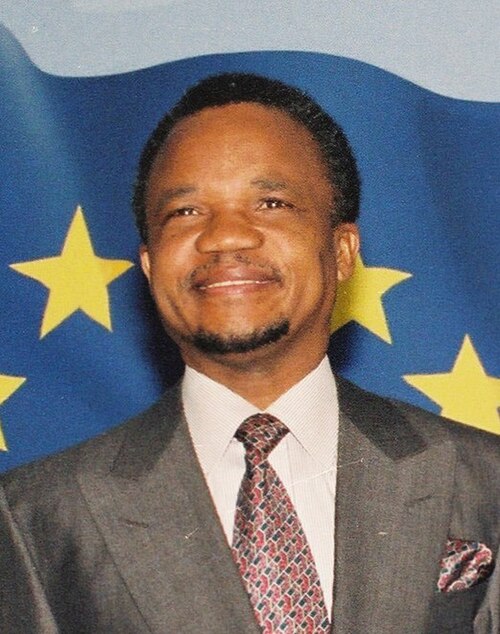
Frederick Jacob Titus Chiluba† stands as one of the most transformative and controversial figures in modern Zambian history. Serving as the nation's second President from 1991 to 2002, Frederick Chiluba† is primarily noted for ending the 27-year rule of founding father Kenneth Kaunda and ushering in a new era of multiparty democracy. His election in 1991 was a landmark event, symbolizing the wave of democratic change sweeping across Africa in the post-Cold War era. As a former trade union leader with no traditional political pedigree, his rise to the highest office was unprecedented. His administration championed economic liberalization and privatization, fundamentally shifting Zambia from a state-controlled economy. However, the legacy of Frederick Chiluba† is profoundly dualistic, marked by initial hope and democratic triumph, later overshadowed by allegations of corruption and authoritarian tendencies.
Early Life & Education: From Luapula to Labor Leadership
Frederick Chiluba was born on April 30, 1943, in Kitwe, in the Copperbelt Province of Northern Rhodesia (now Zambia). His background was humble, hailing from the Bemba ethnic group in the Luapula Province. His early education was sporadic, attending various primary schools including Mambilima and Mansa. Unlike many African leaders of his time, Frederick Chiluba† did not pursue a university education abroad. Instead, his formative years were shaped by the world of work and self-education.
In the 1960s, he moved to the bustling Copperbelt, the economic heart of the nation, where he took up employment as a ledger clerk for a mining company. This experience proved pivotal. It was here that he witnessed firsthand the struggles of workers and developed his oratorical skills and political consciousness. His natural leadership abilities propelled him through the ranks of the labor movement. He became heavily involved with the Zambia Congress of Trade Unions (ZCTU), eventually rising to the position of Chairman of the Zambia African National Congress (ZANC) and later becoming the powerful Secretary-General of the ZCTU in 1974. For 17 years, he was the face of organized labor in Zambia, challenging the economic policies of the Kaunda regime and building a vast network of support among the urban working class. This period was his true political education, forging the populist, anti-establishment persona that would define his presidential campaign.
Career & Major Achievements: Democracy, Deregulation, and Decline
The career of Frederick Chiluba† is a story of dramatic ascent and a tumultuous tenure in Politics & Government.
The Democratic Revolution of 1991
In 1990, amidst growing economic hardship and political unrest, Chiluba played a central role in forming the Movement for Multiparty Democracy (MMD), a broad coalition opposing the one-party state of the United National Independence Party (UNIP). As the MMD's presidential candidate, he galvanized the nation with his fiery rhetoric and promises of change. In the historic October 1991 elections, Frederick Chiluba† achieved a stunning victory, defeating Kenneth Kaunda with 76% of the vote. This peaceful transfer of power was hailed internationally as a model for democratic transition in Africa.
Economic Reforms and Structural Adjustment
Upon taking office, President Chiluba embarked on an aggressive economic reform program. His government, advised by the IMF and World Bank, implemented:
- Privatization: The sale of hundreds of state-owned enterprises, including the massive Zambia Consolidated Copper Mines (ZCCM).
- Liberalization: Removal of price controls, subsidies, and trade barriers.
- Fiscal Austerity: Cutting government spending and reducing the civil service.
Controversies and Constitutional Conflicts
Chiluba's later years in power were marred by growing authoritarianism and scandal. In 1996, he controversially amended the constitution to require presidential candidates to have parents born in Zambia, a move seen as targeting his predecessor, Kenneth Kaunda. His attempt to amend the constitution for a third term in 2001 was met with massive public and internal party opposition, forcing him to step down. After leaving office in 2002, his legacy was severely tarnished by corruption trials. In a landmark 2007 civil case in London, he and his aides were found liable for stealing an estimated $58 million of public funds. While he was acquitted in a subsequent Zambian criminal trial in 2009, the perception of grand corruption during his tenure remains a defining aspect of his historical record.
Personal Life, Legacy, and Lasting Impact
Frederick Chiluba was a devout Christian, known for his flamboyant style, including his signature high-heeled shoes and impeccably tailored suits, which became a subject of both admiration and criticism. He was married to Vera Chiluba until her death in 2000, and later to Regina Mwanza. His personal life, like his presidency, was complex and often under public scrutiny.
The legacy of Frederick Chiluba† is intensely debated. To his supporters, he remains the "Little Man from Lubwa" who democratized Zambia, broke the monopoly of Kaunda's rule, and set the country on a market-oriented path. His tenure solidified multiparty politics as the norm in Zambia. To his detractors, he represents a tragic betrayal of the democratic ideals he once championed, presiding over an era where corruption became endemic and economic reforms benefited a small elite. His post-presidential legal battles cemented the image of a leader who enriched himself at the nation's expense. Ultimately, Frederick Chiluba† embodies the paradoxes of Africa's democratic transitions in the 1990s—a liberator who later faced allegations of becoming an autocrat, a reformer whose policies had deeply unequal consequences. He passed away on June 18, 2011, in Lusaka, but the debates over his impact on Zambia continue to shape the nation's political discourse.
Net Worth & Business Ventures
The financial status of Frederick Chiluba† is a central element of his controversial legacy. While his official salary as President was modest, his wealth became a major national issue after he left office. The 2007 London High Court judgment, which found him and others liable for defrauding the Zambian government, detailed a pattern of alleged embezzlement where state funds were funneled through intelligence and security budgets into private accounts and used for personal expenses. The court documented extravagant spending on hundreds of designer suits, luxury shoes, and jewelry. Although he was acquitted of related criminal charges in Zambia in 2009 on technical grounds (the judge ruling he had immunity as a former head of state for acts in office), the civil judgment severely damaged his reputation. Unlike some African leaders, Frederick Chiluba† was not widely known for owning large, formal business ventures; the allegations centered instead on the misappropriation of public resources for personal gain. His estimated net worth, therefore, remains a subject of speculation and legal contention, inextricably linked to the corruption cases that defined his post-presidential years.
Frequently Asked Questions
What is Frederick Chiluba†'s estimated net worth?
Net worth details for Frederick Chiluba† are currently being updated.
What is Frederick Chiluba†'s role and nationality?
Frederick Chiluba† is a Ex-President (1991-2002) from Zambia.
How did Frederick Chiluba† make their money?
Frederick Chiluba† built their fortune primarily through Frederick Chiluba was a former president who died in 2011. He was not a business figure and was involved in corruption cases where he was acquitted but ordered to repay state funds, with no credible reports of a significant personal fortune..
How old is Frederick Chiluba†?
Frederick Chiluba† was born in 1943 (83 years old).
Which category is Frederick Chiluba† listed under?
Frederick Chiluba† is featured under the Politics & Government category on NetWorth Africa.
How is Frederick Chiluba†'s net worth calculated?
NetWorth Africa estimates financial valuations using publicly available stock equity holdings, company ownership records, real estate assets, and verified market data.
Net Worth Analysis
Frederick Chiluba was a former president who died in 2011. He was not a business figure and was involved in corruption cases where he was acquitted but ordered to repay state funds, with no credible reports of a significant personal fortune.
Quick Stats

Related People

Aaron Motsoaledi
LP; Minister of Home Affairs • South Africa

Abane Ramdane†
FLN Leader & Strategist • Algeria

Abdalla Hamdok
Ex-Prime Minister • Sudan

Abdallah Kigoda
Ex-Minister of Natural Resources • Tanzania