$10M
Estimated Net Worth
As of 2024 • low confidence
Biography
Introduction: The Commander and Politician
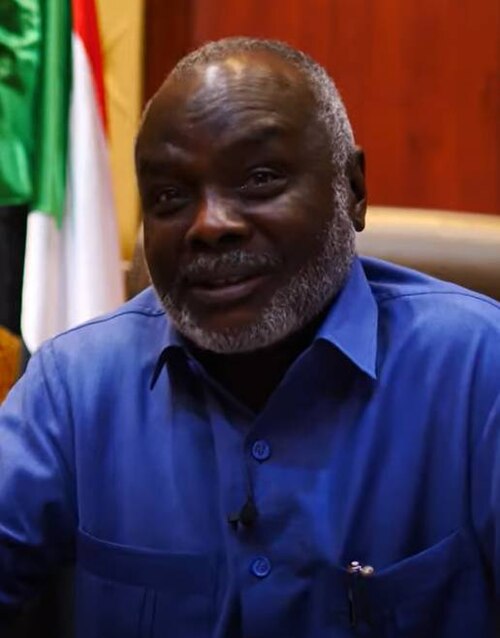
Gibril Ibrahim stands as one of the most prominent and enduring figures in the complex landscape of Sudanese Politics & Government. As the leader of the Justice and Equality Movement (JEM), a major rebel group from the Darfur region, Gibril Ibrahim has transitioned from a battlefield commander to a key political negotiator at the national level. His journey is inextricably linked to the tragic conflicts in Darfur and the broader struggle for power, resources, and representation in Sudan. A central figure in the Darfur rebellion since the mid-2000s, his leadership was cemented following the death of his brother, JEM founder Khalil Ibrahim. His notable achievement lies in steering JEM through shifting alliances, from armed opposition to a signatory of pivotal peace frameworks, and ultimately into the heart of Sudan's transitional government following the 2019 revolution, where he served as Minister of Finance. Understanding Gibril Ibrahim is crucial to understanding the dynamics of conflict, peace, and power in modern Sudan.
Early Life and Education: Formative Years in Darfur and Beyond
Gibril Ibrahim was born in 1963 in the Darfur region of Sudan, specifically within the Zaghawa ethnic community, a group that would later form a significant part of the JEM's base. His early life was shaped by the marginalization felt by many in Sudan's peripheral regions, where Khartoum's central government was often seen as neglectful and exploitative. This environment of inequality planted the seeds for his future political and military activism.
Pursuing higher education, Gibril Ibrahim distinguished himself academically. He earned a Bachelor's degree in Economics from the University of Khartoum, a premier institution in Sudan. He furthered his studies abroad, obtaining a Master's degree in Development Studies from the University of Reading in the United Kingdom. This strong academic background in economics and development provided him with a theoretical framework to analyze the systemic underdevelopment of Darfur, framing the conflict not just in ethnic terms, but as a crisis of political economy and resource distribution. His formative experiences were also deeply personal; his older brother, Khalil Ibrahim, a former government minister turned radical opposition leader, founded the Justice and Equality Movement in the early 2000s. Gibril's path shifted dramatically from that of a potential technocrat to that of a revolutionary, joining his brother's movement as it took up arms against the government of President Omar al-Bashir.
Career and Major Achievements: From Rebellion to Government
The career of Gibril Ibrahim is a chronicle of Sudan's recent violent history and its fraught peace processes. His major achievements are marked by strategic leadership, survival, and political adaptation.
Rise within the Justice and Equality Movement (JEM)
Gibril Ibrahim formally joined the JEM rebellion in the mid-2000s, quickly rising through the ranks due to his intellect, familial connection, and dedication. He served as the movement's Commissioner for Foreign Affairs, becoming a key voice to the international community, articulating JEM's grievances and objectives. In this role, he was instrumental in building diplomatic connections and presenting the Darfur crisis as a national Sudanese issue rather than a localized tribal conflict. The pivotal moment in his career came in December 2011, when his brother and JEM founder, Khalil Ibrahim, was killed by Sudanese government forces. In a decisive transition, Gibril Ibrahim was elected as the new leader of JEM, tasked with guiding the movement through a period of profound vulnerability and escalating regional turmoil.
Military Campaigns and Shifting Alliances
As JEM Leader, Gibril Ibrahim commanded forces in a complex and fluid conflict. Under his leadership, JEM remained a potent military force, at times aligning with other rebel groups under the umbrella of the Sudanese Revolutionary Front (SRF). A significant tactical achievement was JEM's participation in the capture of Um Rawaba in North Kordofan in 2014, marking a serious expansion of the conflict beyond Darfur's borders and demonstrating the movement's reach. However, his tenure also saw fragmentation and challenges, including internal dissent and the constant pressure of government offensives.
Negotiating Peace and Entering Government
Perhaps the most defining phase of Ibrahim's career began with the popular revolution that ousted Omar al-Bashir in April 2019. Seizing the political opening, he engaged in peace talks with the new transitional government. In a landmark move, Gibril Ibrahim signed the Juba Peace Agreement in October 2020 on behalf of JEM and other factions of the Sudan Revolutionary Front. This was a major achievement, formally integrating his movement into the political process. The agreement led to his appointment as Minister of Finance in the transitional cabinet in February 2021, a position he held until the military coup in October 2021 led by General Abdel Fattah al-Burhan. As Finance Minister during a period of severe economic crisis, he faced the immense challenge of managing Sudan's crippling debt, inflation, and subsidy reforms, attempting to transition from a rebel economist to the chief financial steward of a fragile state.
Personal Life, Legacy, and Lasting Impact
Outside his political and military endeavors, Gibril Ibrahim is known as a deeply ideological figure, influenced by the combination of his Zaghawa heritage, his academic training in development economics, and the revolutionary Islamist thought espoused by his brother Khalil. This blend makes him a unique figure in Sudanese Politics & Government, distinct from both traditional tribal leaders and secular rebels.
His personal life has been dominated by the cause. He has spent years in the field with his troops and in diplomatic engagements abroad. The loss of his brother was not just a political event but a profound personal tragedy that steeled his resolve. In terms of legacy, Gibril Ibrahim's impact on Sudan is multifaceted. He is a symbol of the armed resistance from Darfur that forced the central government to the negotiating table. His transition into high office, however brief, represented a symbolic victory for marginalized regions. Yet, his legacy is also intertwined with the failures of the Juba Peace Agreement to bring lasting stability to Darfur, and the subsequent collapse of the transitional government. The lasting impact of Gibril Ibrahim will be judged by whether the aspirations for justice, equality, and development that he fought for can ever be realized within a unified and peaceful Sudan.
Net Worth and Business Ventures
As a rebel leader and later a government minister in a country facing profound economic hardship, the personal net worth of Gibril Ibrahim is not publicly documented and is a subject of speculation rather than verified fact. Unlike some figures in Politics & Government, there is no clear evidence of significant private business ventures or substantial personal wealth derived from commercial activities. His economic life has been primarily tied to the resources of the JEM movement, which historically relied on a combination of local support in Darfur, contributions from the diaspora, and, as alleged by UN reports and the former Sudanese government, control of trade routes and resources in conflict zones. During his tenure as Finance Minister of Sudan, he presided over a national treasury that was effectively bankrupt, further distancing his role from personal financial accumulation. Any assessment of his finances remains opaque, characteristic of many conflict and transitional political figures where formal economies and informal networks deeply intersect.
Key Facts and Timeline
- 1963: Born in Darfur, Sudan.
- Education: B.A. in Economics (University of Khartoum), M.A. in Development Studies (University of Reading, UK).
- Mid-2000s: Joins the Justice and Equality Movement (JEM), becomes Commissioner of Foreign Affairs.
- December 2011: Succeeds his brother Khalil Ibrahim as leader of JEM.
- October 2020: Signs the Juba Peace Agreement with the Sudanese transitional government.
- February 2021 - October 2021: Serves as Minister of Finance for the Republic of Sudan.
- Post-2021 Coup: Continues political engagement, with JEM's role in the ongoing Sudanese civil war remaining complex and fluid.
Net Worth Analysis
As a rebel leader and politician in a conflict zone, his wealth is not publicly verifiable and is likely derived from control of resources and conflict economies rather than conventional business assets.
Quick Stats
Related People

Aaron Motsoaledi
LP; Minister of Home Affairs

Abane Ramdane†
FLN Leader & Strategist

Abdalla Hamdok
Ex-Prime Minister

Abdallah Kigoda
Ex-Minister of Natural Resources