$50M
Estimated Net Worth
As of 2024 • medium confidence
Financial Breakdown
Asset Distribution
Assets vs Liabilities
Assets
Liabilities
Disclaimer: These financial estimates are based on publicly available information and should be considered approximate. Last updated: 12/30/2025
Biography
Introduction: A Life Defined by Politics and Legacy
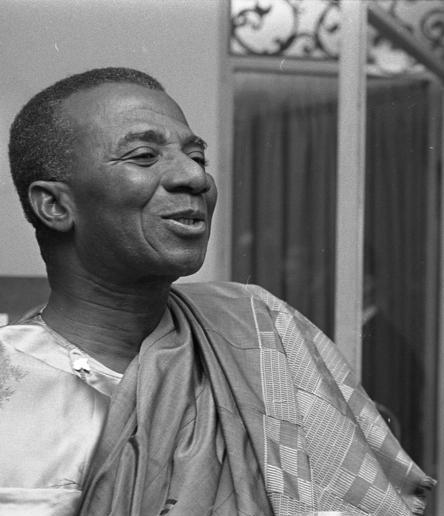
In the complex and often turbulent political landscape of Togo, few figures embody the struggle for democratic change as profoundly as Gilchrist Olympio. Born in 1936, his life and career are inextricably linked to the nation's history, marked by both profound personal tragedy and unwavering political commitment. As the son of Togo's first president, Sylvanus Olympio, and the long-standing leader of the primary opposition party, the Union of Forces for Change (UFC), Gilchrist Olympio has been a central figure in the fight against the enduring Gnassingbé political dynasty for decades. His most notable achievement was arguably negotiating the pivotal 2006 Global Political Agreement, a landmark, though ultimately faltering, attempt to establish genuine power-sharing and democratic reform in Togo. For over half a century, the name Gilchrist Olympio has been synonymous with the Togolese opposition, representing a legacy of resistance and a vision for an alternative future.
Early Life & Education: The Shadow of a Founding Father
The early life of Gilchrist Olympio was shaped by privilege, tragedy, and exile. His father, Sylvanus Olympio, led Togo to independence from French rule and became its first president in 1960. However, this period was brutally cut short on January 13, 1963, when President Sylvanus Olympio was assassinated in Africa's first post-colonial coup d'état, orchestrated by a group of soldiers that included Sergeant Étienne Gnassingbé (later President Eyadéma). This traumatic event irrevocably altered the course of young Gilchrist's life, forcing him and his family into exile for their safety.
Despite this upheaval, Gilchrist Olympio pursued an elite international education. He attended secondary school in Ghana and later studied in the United Kingdom and France. He earned a degree in Economics from the University of Oxford and furthered his studies at the Institut d'Études Politiques de Paris (Sciences Po). This formidable academic background equipped him with the intellectual tools for a career that initially steered away from the volatile politics of his homeland. He worked for several years as an economist for the United Nations, specifically with the UN Conference on Trade and Development (UNCTAD), and later in the private banking sector in London. These formative experiences in exile, while professionally successful, kept the flame of his political destiny alive, rooted in the legacy of his father and the unresolved political circumstances in Togo.
Career & Major Achievements: Building the Opposition
Gilchrist Olympio's formal entry into Togolese politics was a gradual process, catalyzed by the political liberalization that swept across Africa in the early 1990s. Following intense domestic and international pressure, President Gnassingbé Eyadéma was forced to allow a national sovereign conference in 1991, which stripped him of most powers and appointed an interim prime minister. Seizing this opening, Olympio returned to Togo and, in 1992, founded the Union of Forces for Change (Union des Forces de Changement - UFC). The party quickly established itself as the most prominent and popular opposition force, drawing on the symbolic power of the Olympio name and a platform advocating for democracy, human rights, and economic reform.
Electoral Battles and Political Persecution
The career of Gilchrist Olympio was defined by a series of contentious electoral battles against the entrenched Rassemblement du Peuple Togolais (RPT) regime. He was barred from contesting the 1993 and 1998 presidential elections on controversial legal and health grounds, a move widely criticized by international observers as politically motivated. Despite these obstacles, or perhaps because of them, his stature as the figurehead of the opposition grew. His life was constantly under threat; he survived an assassination attempt in 1994 when his convoy was attacked in the city of Soudou, an event that reinforced the dangerous nature of Togolese politics.
The 2003 Election and the 2006 Global Political Agreement
In 2003, after a constitutional change controversially allowed him to run, Gilchrist Olympio finally stood for the presidency. He officially placed second to the incumbent, Gnassingbé Eyadéma, though the results were disputed by the opposition and questioned by international monitors. The death of Eyadéma in 2005 and the subsequent military-installation of his son, Faure Gnassingbé, triggered a political crisis and violent repression. In response to international mediation, Olympio engaged in talks with the new government. This led to his crowning political achievement: the negotiation and signing of the Global Political Agreement (GPA) in August 2006.
This agreement was a historic compromise. It provided for:
- The UFC's integration into a government of national unity.
- Organizing future legislative elections under a new proportional representation system.
- The appointment of UFC members to ministerial positions.
Most significantly, it granted an amnesty for all political offenses since 1958, which allowed Gilchrist Olympio, who had been convicted in absentia, to finally return to Togo without fear of arrest. However, the implementation of the GPA collapsed by late 2007, with the UFC accusing the ruling party of bad faith and withdrawing from the government. The subsequent 2007 legislative elections were boycotted by the UFC, weakening its parliamentary presence.
Later Years and Party Leadership Transition
In the 2010 presidential election, Gilchrist Olympio placed a distant third. Recognizing the need for a new strategy and perhaps his own advancing age, he began a process of transitioning leadership within the UFC. This internal shift culminated in his resignation as party president in 2013, though he remained its "founding president" and a key advisor. His departure from frontline politics marked the end of an era for the Togolese opposition, which began to fragment and reorganize under new coalitions.
Personal Life, Legacy, and Lasting Impact
Outside the political arena, Gilchrist Olympio is known as a private individual, deeply shaped by the early loss of his father and decades spent in exile. He is multilingual, fluent in English, French, and several local languages, reflecting his international upbringing and education. His personal interests have often been overshadowed by his public mission, but those close to him describe a man of intellectual depth and resilience. His legacy is multifaceted and subject to debate. To his supporters, he is a courageous and principled democrat who carried the torch of his father's vision, enduring persecution to challenge a dictatorial regime. He is seen as the man who kept the opposition alive during its darkest hours.
To critics, both within and outside the opposition, his leadership was sometimes viewed as overly cautious or rooted in the politics of the past. The failure of the 2006 GPA and subsequent electoral struggles led to questions about strategy. Nonetheless, his undeniable impact lies in his role as the symbolic and organizational cornerstone of the Togolese opposition for over two decades. He provided a clear alternative to the Gnassingbé dynasty and maintained international focus on Togo's democratic deficit. The very space that opposition parties operate in today in Togo was, in part, carved out through the relentless struggles of Gilchrist Olympio and the UFC.
Net Worth & Business Ventures
While specific details of his personal wealth are not publicly disclosed, Gilchrist Olympio's financial background is tied to his professional career before full-time politics. His work as an economist for the United Nations and in the private banking sector in London in the 1970s and 1980s undoubtedly provided a solid financial foundation. Unlike many African political figures, there are no widespread reports or allegations of him amassing significant wealth through political office, largely because he never held executive power in Togo. His financial resources have historically been linked to supporting his political activities and the UFC party apparatus. Any business interests he may have are considered private and have not been a prominent feature of his public profile, which remains overwhelmingly defined by his political mission and the legacy of his family name in the Politics & Government of Togo.
Net Worth Analysis
Gilchrist Olympio is a prominent Togolese opposition politician, not a business figure, and is not listed on any billionaire or major wealth ranking. His wealth is likely derived from political career and family legacy, not industrial-scale business.
Quick Stats
Related People
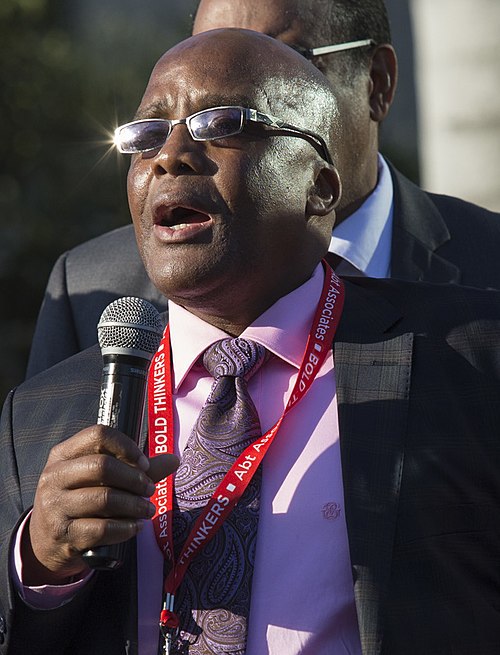
Aaron Motsoaledi
LP; Minister of Home Affairs
Abane Ramdane†
FLN Leader & Strategist
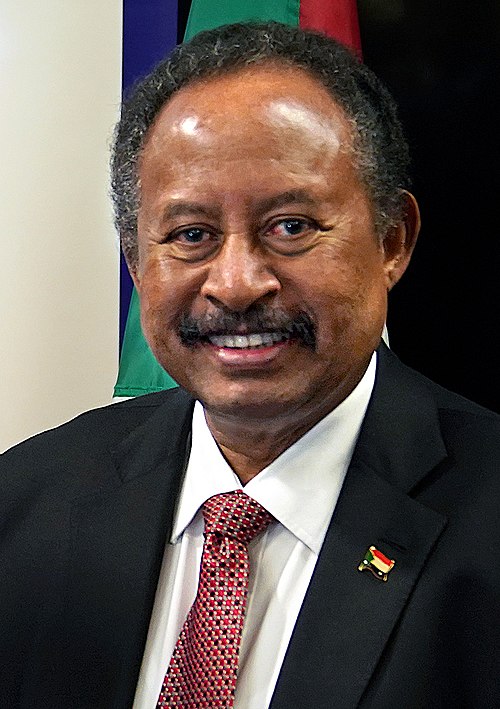
Abdalla Hamdok
Ex-Prime Minister
Abdallah Kigoda
Ex-Minister of Natural Resources