Biography
Introduction: The Voice of a New Dawn
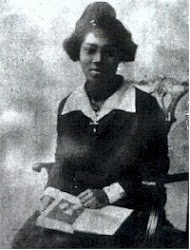
Gladys Casely-Hayford†, often hailed as the first truly modern poet of Sierra Leone, stands as a monumental figure in the landscape of African literature. Born in 1904 in the vibrant coastal city of Freetown, she carved a unique path as a Poet & Short Story Writer whose work celebrated her Creole (Krio) heritage while engaging with Pan-African ideals. Her significance lies not only in her creative output but in her role as a cultural bridge-builder. Gladys Casely-Hayford† was a foundational voice who wrote with pride about African identity, folklore, and womanhood during a period of colonial dominance. Her key achievement was pioneering the use of the Krio language in published poetry, thereby validating her native tongue as a legitimate and powerful medium for artistic expression. Her life and work remain a cornerstone of Sierra Leone's Arts & Culture, inspiring generations of writers to explore their authentic voices.
Early Life & Education: A Legacy of Activism and Refinement
The early life of Gladys Casely-Hayford† was steeped in an environment of intellectual rigor and political activism. She was born into the esteemed Creole elite of Freetown, a community known as the "Sierra Leone Creole people." Her mother was the renowned Adelaide Casely-Hayford, a formidable educator, feminist, and cultural nationalist. Her father was Joseph Ephraim Casely Hayford, a celebrated lawyer, author, and politician from the Gold Coast (modern-day Ghana). This unique heritage positioned Gladys Casely-Hayford† at the crossroads of West African intellectual thought.
Her formal education began at the prestigious Annie Walsh Memorial School in Freetown, an institution that emphasized both academic excellence and Christian values. For her secondary education, she was sent to Penrhos College in Colwyn Bay, Wales. This experience in the United Kingdom exposed her to European literary traditions but also likely sharpened her sense of cultural difference and identity. Upon returning to Sierra Leone, she immersed herself in the cultural and educational projects championed by her mother, particularly at the Girls' Vocational and Industrial Training School in Freetown. Here, she taught and developed her artistic talents, absorbing the rich tapestry of Krio folklore, music, and tradition that would become the lifeblood of her writing.
Career & Major Achievements: Weaving Words and Culture
The career of Gladys Casely-Hayford† was multifaceted, encompassing teaching, performance, and, most lastingly, writing. She taught at her mother's school and later at a school in Ghana, where she also studied traditional African dance and drumming. This deep engagement with performance arts profoundly influenced her poetry, which was often rhythmic and suited for recitation.
Literary Innovation and The Krio Voice
Her most groundbreaking achievement was her bold incorporation of the Krio language into her poetry. At a time when literary prestige was almost exclusively tied to English, her decision to write in Krio was a radical act of cultural affirmation. Poems like "Rainy Season Love Song" and "Nativity" blend vivid imagery of the Sierra Leonean landscape with the melodic, proverbial quality of Krio speech. She did not abandon English but became a master of both, using each language to explore different facets of her experience. Her work was published in influential journals of the day, including The Atlantic Monthly and West Africa, bringing a distinctly African feminine perspective to an international audience.
Themes and Lasting Contributions
Thematically, the work of Gladys Casely-Hayford† is celebrated for its:
- Celebration of African Identity: Her poetry is a proud declaration of Black beauty and heritage, challenging colonial stereotypes.
- Exploration of Womanhood: She wrote intimately about the experiences, joys, and struggles of African women.
- Connection to Nature: The Sierra Leonean environment—its rains, rivers, and forests—features prominently as a living character in her work.
- Cultural Synthesis: She adeptly wove Christian themes with African spiritual sensibilities and folklore.
Although a single, comprehensive collection was not published in her lifetime, her poems were widely anthologized. Her legacy as a pioneer is cemented by her role in paving the way for later literary giants of Sierra Leone and the broader African continent, proving that authentic local expression held universal power.
Personal Life & Legacy: The Unfinished Symphony
Gladys Casely-Hayford†'s personal life was marked by a passionate dedication to her art and her culture, but also by personal challenges and ill health. She never married and devoted her energy to teaching, writing, and performing. She was known for her charismatic personality and deep commitment to the cultural development of young people in Freetown. Tragically, her prolific potential was cut short when she died in 1950 at the age of 46. Despite her relatively short life, her impact was profound.
The legacy of Gladys Casely-Hayford† is one of foundational importance. She is remembered as:
- The first major Sierra Leonean poet to gain international recognition.
- A key figure in the development of a national literary consciousness.
- A champion of the Krio language as a literary medium.
- An inspiration for future West African writers, particularly women.
Her work continues to be studied in universities and is a point of reference for discussions on African literature, postcolonial identity, and the power of indigenous languages. In this way, Gladys Casely-Hayford† lives on as a vital voice in the story of Arts & Culture in Sierra Leone and beyond.
Net Worth & Historical Context
In the context of early 20th-century Sierra Leone, particularly for a woman of her social standing, traditional measures of net worth and business ventures are not the primary lens through which her life is understood. The wealth of Gladys Casely-Hayford† was cultural and intellectual. Her "capital" was her elite education, her familial connections to two of West Africa's most prominent intellectual families, and her formidable talent. Her career was in teaching and the arts—fields not associated with vast financial accumulation but immense social contribution. Any financial stability she had would have been derived from her family's status and her teaching positions. Therefore, her true value lies in her immeasurable contribution to the literary heritage of her nation. She invested in language and culture, yielding a dividend that continues to enrich the canon of African literature, a legacy far surpassing material valuation.
Sources: The biography of Gladys Casely-Hayford† is documented in historical studies of African literature, including works like "The Cambridge History of African and Caribbean Literature" and "A New Reader's Guide to African Literature." Her poetry is featured in seminal anthologies such as "The Penguin Book of Modern African Poetry" and "Daughters of Africa," edited by Margaret Busby. Further academic and historical context can be found through resources dedicated to Sierra Leonean history and Creole culture.
Frequently Asked Questions
What is Gladys Casely-Hayford†'s estimated net worth?
Gladys Casely-Hayford† has an estimated net worth of $1.0 Million.
What is Gladys Casely-Hayford†'s role and nationality?
Gladys Casely-Hayford† is a Poet & Short Story Writer from Sierra Leone.
How did Gladys Casely-Hayford† make their money?
Gladys Casely-Hayford† built their fortune primarily through Gladys Casely-Hayford (1904-1950) was a pioneering poet and educator, not a business figure, and her legacy is cultural rather than financial..
How old is Gladys Casely-Hayford†?
Gladys Casely-Hayford† was born in 1904 (122 years old).
Which category is Gladys Casely-Hayford† listed under?
Gladys Casely-Hayford† is featured under the Arts & Culture category on NetWorth Africa.
How is Gladys Casely-Hayford†'s net worth calculated?
NetWorth Africa estimates financial valuations using publicly available stock equity holdings, company ownership records, real estate assets, and verified market data.
Net Worth Analysis
Gladys Casely-Hayford (1904-1950) was a pioneering poet and educator, not a business figure, and her legacy is cultural rather than financial.
Quick Stats

Related People
Abasse Ndione
Novelist & Playwright • Senegal
Abdel Rahman al-Abnudi†
Poet (Egypt-Sudan) • Sudan
Abdelkrim Ghallab†
Novelist & Journalist • Morocco
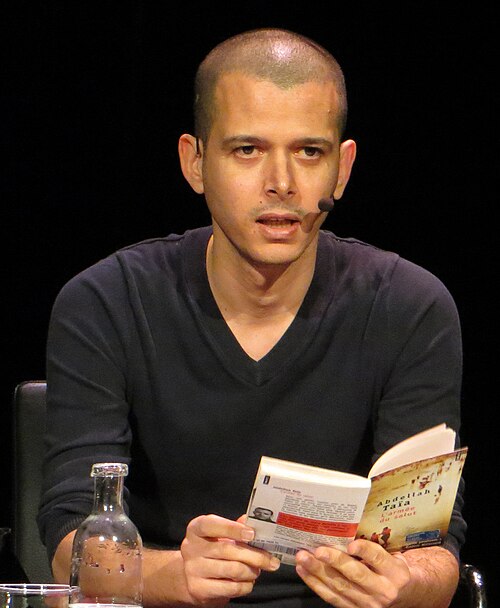
Abdellah Taïa
Novelist & Filmmaker • Morocco