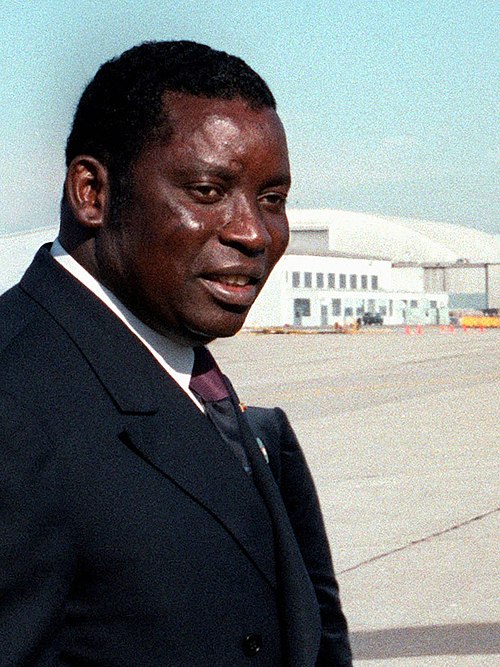
$4.5B
Estimated Net Worth
As of 2002 • medium confidence
Financial Breakdown
Asset Distribution
Assets vs Liabilities
Assets
Disclaimer: These financial estimates are based on publicly available information and should be considered approximate. Last updated: 12/29/2025
Biography
Introduction: The Patriarch of Togolese Politics
General Gnassingbé Eyadéma† stands as one of post-colonial Africa's most enduring and controversial political figures. As the Ex-President (1967-2005) of the West African nation of Togo, he ruled for 38 years, making him the longest-serving head of state in African history at the time of his death. Rising to power through a military coup, Gnassingbé Eyadéma† transformed himself into a political patriarch, navigating Cold War geopolitics and domestic opposition to maintain an unbroken grip on power. His tenure, marked by claims of stability and accusations of severe authoritarianism, left an indelible and complex mark on the political landscape of Togo and the wider region of Politics & Government.
Early Life & Education: From Colonial Soldier to Military Officer
Born Étienne Eyadéma Gnassingbé on December 26, 1935, in the northern Togolese village of Pya, he belonged to the Kabye ethnic group. His early life was shaped by the realities of French colonial rule. Unlike many contemporary African leaders, Gnassingbé Eyadéma† did not pursue a formal university education. Instead, his formative experiences came through military service. In 1953, he voluntarily enlisted in the French colonial army, a common path for young men from the northern regions of French Togoland.
His military career saw him deployed to fight for France in its colonial wars in Indochina (Vietnam) and later in Algeria. These experiences were crucial, hardening him as a soldier and exposing him to both the mechanics of warfare and the weakening grip of colonial powers. He rose to the rank of sergeant and earned French medals for his service. Following Togo's independence in 1960, he joined the new nation's armed forces, bringing with him the combat experience and discipline that would soon propel him to the center of national Politics & Government.
Career & Major Achievements: The Path to Power and Prolonged Rule
The career of Gnassingbé Eyadéma† is a defining chapter in Togolese history, characterized by a swift military ascent and a decades-long political consolidation.
Military Coup and Seizure of Power
On January 13, 1963, Eyadéma participated in the military coup that overthrew Togo's first president, Sylvanus Olympio. Olympio was assassinated during the takeover, an act Eyadéma later claimed to have carried out personally. This event marked the first military coup in post-independence Francophone Africa. After a brief civilian interlude, Eyadéma, now a lieutenant colonel, led a second coup on January 13, 1967, citing political chaos and economic mismanagement. He installed himself as president, a position he would hold for the next 38 years.
Consolidation of Authority and Single-Party State
President Gnassingbé Eyadéma† moved quickly to solidify his control. He banned opposition parties and established the Rally of the Togolese People (RPT) as the sole legal political organization in 1969. His rule was underpinned by a strong Military Leadership ethos, with key positions held by trusted officers, often from his own Kabye ethnic group. He survived multiple assassination and coup attempts, most notably a 1974 airplane sabotage which he used to strengthen his cult of personality, portraying himself as miraculously protected by divine and ancestral forces.
Economic Policies and International Relations
Politically, Eyadéma was a shrewd operator. During the Cold War, he positioned Togo as a pro-Western, capitalist ally, receiving significant support from France, the United States, and Germany. He promoted a form of "authenticity," encouraging Togolese names and traditions, even changing his own first name from Étienne to Gnassingbé. Economically, his early years saw some growth through phosphate mining, agricultural exports, and the development of infrastructure. The Port of Lomé became a regional hub. However, economic decline in the 1980s, coupled with allegations of corruption and nepotism, fueled widespread discontent.
Transition to Multiparty Politics and Contested Elections
The wave of democratization that swept Africa in the early 1990s posed the greatest challenge to Eyadéma's rule. Massive protests and a national conference in 1991 stripped him of most powers and appointed an interim prime minister. However, leveraging his control of the military, Eyadéma staged a political comeback. A transition to a multiparty system was enacted, but subsequent elections in 1993, 1998, and 2003 were widely criticized by international observers as fraudulent and marred by violence and intimidation. Despite the formal democratic framework, the reality of Military Leadership and one-party dominance persisted under Gnassingbé Eyadéma†.
Personal Life & Legacy: The Man and the Myth
Beyond the political arena, Gnassingbé Eyadéma† cultivated an image of a strong, traditional African patriarch. He was a father to many children and was known for his interest in traditional wrestling and symbolic public appearances. His personal resilience was a central part of his mythos; he frequently referenced surviving the 1974 plane crash and various coup attempts as evidence of a destined leadership.
The legacy of Gnassingbé Eyadéma† is profoundly dualistic. Supporters credit him with maintaining stability in a volatile region, fostering a sense of national identity, and keeping Togo relatively peaceful. Critics, however, define his rule by severe human rights abuses, political repression, the stifling of dissent, and the establishment of a dynastic autocracy. His death on February 5, 2005, while en route to emergency medical treatment abroad, triggered a constitutional crisis. The military immediately installed his son, Faure Gnassingbé, as president, ensuring the continuation of family rule—a powerful testament to Eyadéma's enduring systemic control. Today, Togo continues to grapple with the political structures and divisions solidified during his 38-year reign.
Net Worth & Business Interests
While precise figures are unverifiable due to state secrecy, Gnassingbé Eyadéma† and his family were widely believed to have amassed considerable personal wealth during his presidency. His lengthy control over the state apparatus and key sectors of the economy, particularly the lucrative phosphate mining industry, led to frequent allegations of systemic corruption and the blurring of lines between state finances and personal fortune. International organizations like Transparency International frequently cited Togo under his rule as among the most corrupt nations. The family's business interests were reported to extend into various sectors, including:
- Phosphate mining and exports
- Real estate and property holdings
- Telecommunications
- Transportation and the Port of Lomé
This concentration of economic power within the presidential circle was a source of significant opposition criticism and contributed to the patron-client political system that defined his era. The financial legacy, much like the political one, remains a subject of scrutiny and debate in Togolese society.
Net Worth Analysis
The articles alleged that the money was amassed illegally by Eyadema... at an estimated $4.5 billion.
Quick Stats
Related People
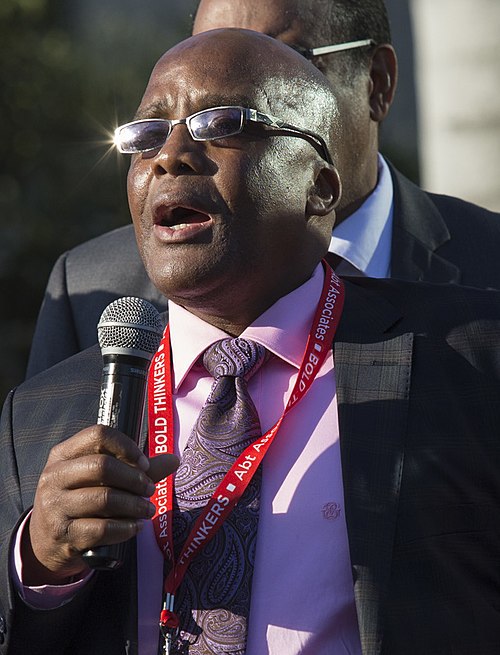
Aaron Motsoaledi
LP; Minister of Home Affairs
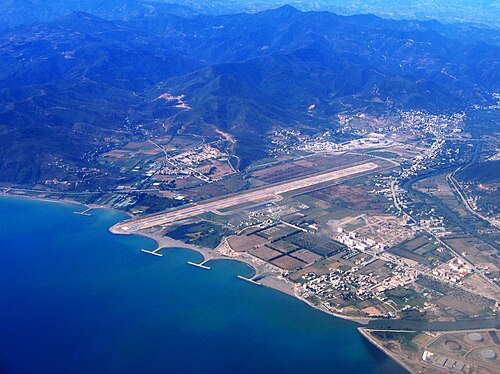
Abane Ramdane†
FLN Leader & Strategist
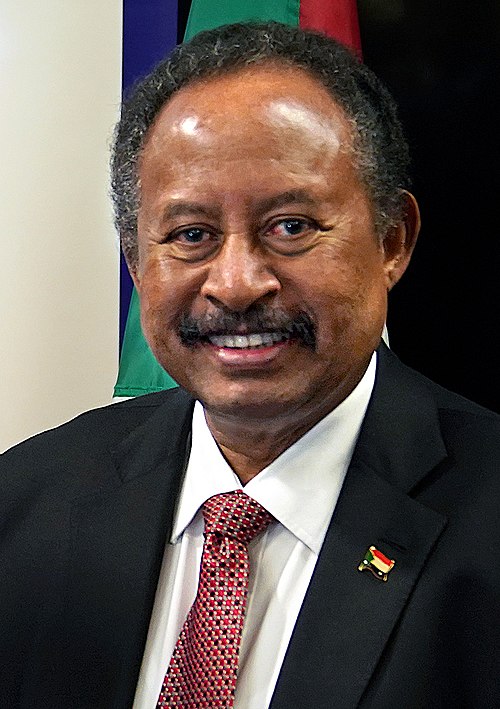
Abdalla Hamdok
Ex-Prime Minister
Abdallah Kigoda
Ex-Minister of Natural Resources