$50M
Estimated Net Worth
As of 2024 • low confidence
Financial Breakdown
Asset Distribution
Assets vs Liabilities
Assets
Liabilities
Disclaimer: These financial estimates are based on publicly available information and should be considered approximate. Last updated: 12/30/2025
Biography
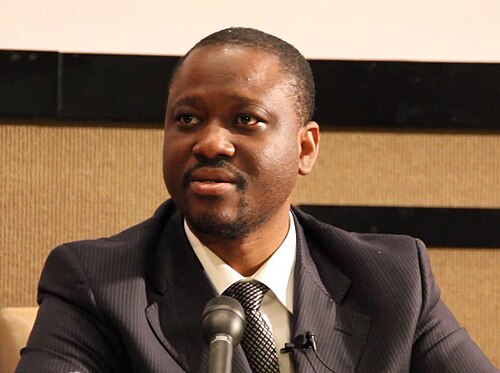
In the turbulent political landscape of Ivory Coast, few figures have embodied the nation's dramatic shifts from conflict to tenuous peace and back to controversy as starkly as Guillaume Soro. A central character in the Ivorian political drama for over two decades, Soro's journey from student union leader to feared rebel commander, and ultimately to the nation's Prime Minister, is a story of ambition, rebellion, and the complex pursuit of power. His most notable achievement was transitioning from a military leader of the Forces Nouvelles de Côte d'Ivoire to a key political figure who served as Prime Minister under two presidents, helping to steer the country out of a prolonged civil war. However, his legacy remains deeply contested, marking him as one of the most influential and polarizing figures in modern Ivorian Politics & Government.
Early Life and Education: The Making of a Leader
Guillaume Soro was born on May 8, 1972, in the town of Diawala, in the northern region of Ivory Coast, then under the presidency of Félix Houphouët-Boigny. His early life in the predominantly Muslim north shaped his identity in a country where geographic and religious divisions would later become politically charged. From a young age, Soro exhibited a keen interest in leadership and activism, traits that would define his future path.
Academic Foundations and Political Awakening
Soro pursued his higher education at the University of Abidjan-Cocody, a hotbed of political thought and student activism in the 1990s. It was here that his political consciousness fully awakened. He immersed himself in student union politics, rising rapidly through the ranks due to his charisma and organizational skills. By 1995, he had been elected President of the Fédération Estudiantine et Scolaire de Côte d'Ivoire (FESCI), the country's powerful and often militant student union. Under his leadership, FESCI transformed into a potent political force, frequently clashing with the government of President Henri Konan Bédié. This period was crucial, as it provided Soro with a platform, a loyal following, and his first taste of direct confrontation with state power—a formative experience that foreshadowed his later role as a Rebel Leader.
Career and Major Achievements: Rebellion, Peace, and Power
The career of Guillaume Soro is a chronicle of Ivory Coast's most volatile years. His trajectory is marked by three distinct phases: revolutionary insurgent, peacemaker and statesman, and exiled opposition figure.
The Rise of the Forces Nouvelles
Following a failed coup attempt against President Laurent Gbagbo in September 2002, a rebellion erupted that effectively split Ivory Coast in two. The northern half of the country fell under the control of the Patriotic Movement of Ivory Coast (MPCI), which later evolved into the Forces Nouvelles de Côte d'Ivoire. Guillaume Soro, leveraging his network and organizational prowess from his student days, emerged as the Secretary-General and the public political face of the rebellion, while military command lay with others. For nearly five years, he led the political wing of the rebel administration in the north, engaging in sporadic peace talks and maintaining a steadfast opposition to Gbagbo's government in Abidjan.
From Rebel to Prime Minister: The Ouagadougou Political Agreement
Soro's most significant political achievement came in 2007. After years of stalled peace agreements, he personally negotiated the landmark Ouagadougou Political Agreement with President Laurent Gbagbo, brokered by Burkinabè President Blaise Compaoré. Signed on March 4, 2007, this accord was a breakthrough. Its most immediate consequence was the appointment of Guillaume Soro as Prime Minister of a unity government on March 29, 2007—a stunning transition from rebel leader to the nation's head of government. His key responsibilities included:
- Disarming rebel and pro-government militias.
- Organizing long-delayed national identification and voter registration processes.
- Preparing for presidential elections to reunify the country.
He survived an assassination attempt in Bouaké in 2007 but remained in office, overseeing the fragile peace process.
Steering the Post-Election Crisis and Alassane Ouattara's Presidency
When the 2010 presidential election resulted in a crisis—with incumbent Laurent Gbagbo refusing to cede to internationally recognized winner Alassane Ouattara—Guillaume Soro played a pivotal military and political role. He resigned as Prime Minister to lead the Republican Forces of Ivory Coast (FRCI), the pro-Ouattara military coalition that included his former rebel forces. Their offensive in early 2011 culminated in Gbagbo's capture in Abidjan. Following Ouattara's installation as president, Soro was reappointed as Prime Minister in 2011, a position he held until 2012, tasked with national reconstruction. He later served as President of the National Assembly from 2012 to 2019, a role of significant constitutional importance in Ivory Coast.
Personal Life, Legal Challenges, and Legacy
Outside of the political arena, Guillaume Soro is known to be a devout Catholic, which often surprises those who associate him with the Muslim north. He is married and has children. His interests, largely overshadowed by his political life, include a noted affinity for literature and public speaking.
A Contested Legacy and Exile
The legacy of Guillaume Soro is one of profound contradiction and ongoing debate. To his supporters, he is a liberation figure who fought against exclusionary politics (the concept of Ivoirité) and helped usher in a new political era under Alassane Ouattara. They credit the Ouagadougou Political Agreement as his masterstroke, which paved the way for eventual peace.
To his detractors, he is an opportunist whose rebellion plunged the country into deeper violence and whose tenure was marred by allegations of corruption and human rights abuses by forces under his command. His relationship with President Ouattara soured dramatically after 2019. As he positioned himself as a presidential successor, he was accused of plotting a coup and sentenced in absentia to life imprisonment in 2021. Guillaume Soro now lives in exile, primarily in Europe, from where he leads his political movement, Generations and People in Solidarity (GPS), and remains a vocal, though distant, critic of the Ivorian government. His lasting impact is the indelible mark he left on the nation's journey through civil war, fragile unity, and the ongoing struggle for political succession.
Net Worth and Business Ventures
While precise figures are not publicly verified and often subject to political speculation, Guillaume Soro is widely believed to have accumulated significant wealth during his years in high office. His financial success is frequently cited by political opponents who allege corruption, though formal convictions on such charges are separate from his life sentence for alleged state security crimes. His known business interests and assets are not extensively documented in independent public records. However, reports and allegations have occasionally linked him to ventures in sectors like cocoa, telecommunications, and media within Ivory Coast and other parts of West Africa. The true extent of his net worth remains a topic of rumor and investigation, complicated by his exile and the politically charged nature of all information surrounding his finances. His ability to fund his political activities and maintain a lifestyle abroad suggests access to considerable resources, the origins of which continue to be debated in Ivorian political discourse.
Net Worth Analysis
Estimates based on his political career and alleged involvement in resource-related activities, but no verified public financial disclosures or inclusion on major wealth lists exist.
Quick Stats
Related People
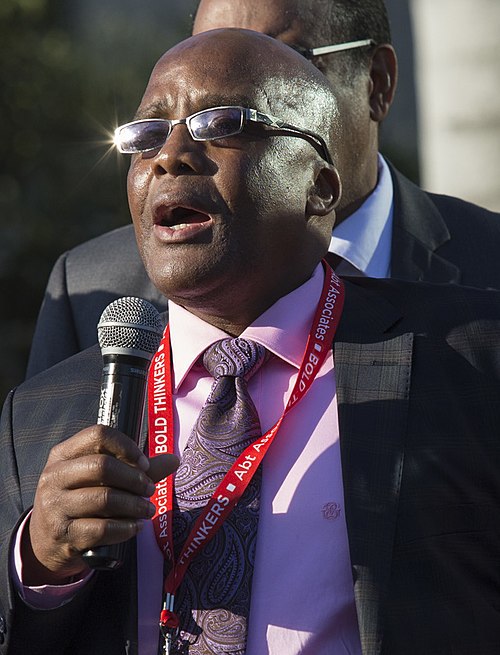
Aaron Motsoaledi
LP; Minister of Home Affairs
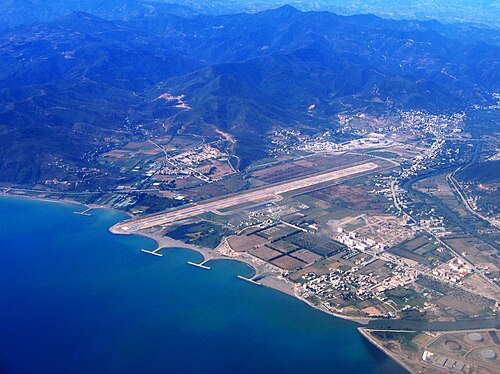
Abane Ramdane†
FLN Leader & Strategist
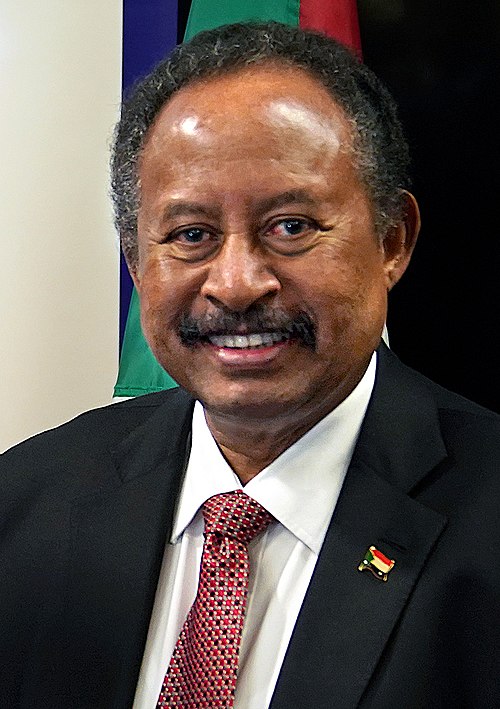
Abdalla Hamdok
Ex-Prime Minister
Abdallah Kigoda
Ex-Minister of Natural Resources