Financial Breakdown
Asset Distribution
Assets vs Liabilities
Assets
Disclaimer: These financial estimates are based on publicly available information and should be considered approximate. Last updated: 12/29/2025
Biography
Introduction: The Father of the Nation
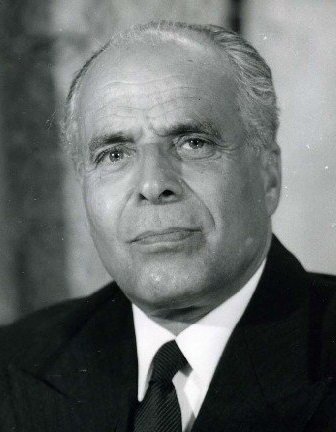
Habib Bourguiba† stands as the defining colossus of modern Tunisian history, universally revered as the "Father of Independence" and the nation's First President. His life's work was the singular, unwavering pursuit of Tunisia's sovereignty and modernization. A master strategist and charismatic orator, Bourguiba led the Tunisian struggle for emancipation from French colonial rule, achieving independence on March 20, 1956. He then presided over the nascent republic for three decades (1957-1987), implementing a sweeping series of progressive, and often controversial, reforms aimed at catapulting Tunisia into the modern world. His legacy, a complex tapestry of monumental achievement and authoritarian rule, continues to shape the Politics & Government and national identity of Tunisia to this day.
Early Life & Education: Forging a Nationalist Consciousness
Habib Bourguiba† was born on August 3, 1903, in the small coastal town of Monastir, into a modest family. His upbringing in a country under the French protectorate (established in 1881) exposed him early to the realities of colonial subjugation. A brilliant student, he pursued his education in the capital, Tunis, at the prestigious Collège Sadiki and then the Lycée Carnot. This French-style education equipped him with a deep understanding of Western political thought and republican values, which he would later wield against the colonizer itself.
In 1924, he secured a scholarship to study in Paris, earning a degree in law and a diploma in political science from the Sorbonne. His years in France were formative; he observed the mechanics of a modern state, engaged with socialist and nationalist ideas, and married a French woman, Mathilde Lorrain. Upon returning to Tunisia in 1927, he practiced law but was quickly drawn into the burgeoning nationalist movement. He became a prominent journalist, using newspapers like L'Action Tunisienne to articulate a bold, uncompromising vision for Tunisian self-rule, distinguishing himself from the more cautious old guard of the time.
Career & Major Achievements: The Path to Independence and the Bourguiba Era
The Struggle for Liberation
Dissatisfied with the incrementalist approach, Habib Bourguiba† founded the Neo-Destour Party in 1934, a modern political machine that mobilized the masses beyond the elite. His strategy, which he termed "gradualism," involved calculated phases of negotiation and confrontation. This path was perilous; Bourguiba endured repeated imprisonment and exile by French authorities between 1934 and 1955. His imprisonment during key periods, such as World War II, only amplified his mythic status as the "Supreme Combatant." His adept diplomacy, including appeals to the United Nations and leveraging international pressure during the Cold War, ultimately forced France's hand. The negotiations led to the internal autonomy agreements of 1955 and finally to full independence in 1956.
Building the Modern Republic
With independence secured, Bourguiba moved decisively to dismantle the monarchy. On July 25, 1957, the Constituent Assembly abolished the Husainid dynasty and proclaimed the Republic, electing Habib Bourguiba† as its first President. He then embarked on a revolutionary project of state-building and social engineering:
- The Code of Personal Status (1956): His most celebrated domestic achievement. This groundbreaking legislation abolished polygamy, instituted judicial divorce, raised the minimum age for marriage, and established legal equality between men and women in crucial areas, making Tunisia a pioneer in the Arab-Muslim world.
- Secularization & Education: He pursued a staunchly secular (laïc) policy, marginalizing religious institutions in public life and promoting a national education system focused on modern sciences and Arab nationalism.
- Economic "Destourian Socialism": He implemented a state-led development model, emphasizing industrialization, agricultural cooperatives, and public investment in health and infrastructure, which yielded significant progress in literacy and life expectancy.
- Foreign Policy of Non-Alignment: He maintained a pragmatic, Western-leaning but non-aligned foreign policy, advocating for Palestinian rights while maintaining unique, if tense, relations with Israel in the 1990s.
However, his rule grew increasingly autocratic. The Neo-Destour Party (later the PSD) became the sole political organ, dissent was suppressed, and in 1975 he was proclaimed President for Life, consolidating a personality cult that stifled political pluralism.
Personal Life & Legacy: The Man and the Myth
Habib Bourguiba† was known for his meticulous oratory, symbolic gestures—like his famous horn-rimmed glasses and cane—and a paternalistic style of governance where he presented himself as the nation's wise father ("Zaim"). He was married twice: first to Mathilde Lorrain (who took the name Moufida), mother of his son Habib Jr., and later to Wassila Ben Ammar, a influential figure in her own right. His later years were marked by declining health and political stagnation. On November 7, 1987, his Prime Minister, Zine El Abidine Ben Ali, declared him medically incapable of ruling and assumed power in a bloodless, constitutional coup. Habib Bourguiba† lived under house arrest in Monastir until his death on April 6, 2000.
His legacy is profoundly ambivalent. He is rightly hailed as the indispensable liberator and modernizer who built a cohesive, forward-looking national state. The principles of his Personal Status Code remain a bedrock of Tunisian identity. Yet, his authoritarian tendencies and the one-party state he created left a difficult political inheritance. The 2011 Tunisian Revolution, which began the Arab Spring, was in part a rejection of the Ben Ali system, a direct descendant of the later Bourguiba era. Nevertheless, as the founder of the republic, his image endures on currency, in public squares, and in the collective memory as the central figure of 20th-century Tunisia.
Net Worth & Business: The Assets of a Statesman
Unlike many autocratic leaders, Habib Bourguiba† was not primarily known for amassing vast personal wealth through corruption or business ventures. His financial context was that of a career politician and statesman. His primary assets were official, tied to his role as President. He resided in the presidential palace in Carthage and had the use of official residences. Upon his removal from power, his personal wealth and properties, including the family home in Monastir, were subject to state management. While he and his family lived comfortably under state provision, there are no widespread accounts or credible sources suggesting he engaged in significant private business accumulation or left a substantial private fortune. His perceived "wealth" was intrinsically linked to the state he led, and his legacy is measured in political and social capital, not monetary terms. His will reportedly emphasized leaving his modest personal possessions to the nation, consistent with his constructed image as the selfless father of the country.
For further reading on the life and impact of Habib Bourguiba†, credible historical resources can be found through academic publishers and institutions like Encyclopedia Britannica and archives dedicated to modern Tunisian history.
Frequently Asked Questions
What is Habib Bourguiba†'s estimated net worth?
Net worth details for Habib Bourguiba† are currently being updated.
What is Habib Bourguiba†'s role and nationality?
Habib Bourguiba† is a First President & Father of Independence from Tunisia.
How did Habib Bourguiba† make their money?
Habib Bourguiba† built their fortune primarily through Habib Bourguiba was a political leader, not a business figure, and died in 2000. His wealth was not comparable to modern business billionaires..
How old is Habib Bourguiba†?
Habib Bourguiba† was born in 1903 (123 years old).
Which category is Habib Bourguiba† listed under?
Habib Bourguiba† is featured under the Politics & Government category on NetWorth Africa.
How is Habib Bourguiba†'s net worth calculated?
NetWorth Africa estimates financial valuations using publicly available stock equity holdings, company ownership records, real estate assets, and verified market data.
Net Worth Analysis
Habib Bourguiba was a political leader, not a business figure, and died in 2000. His wealth was not comparable to modern business billionaires.
Quick Stats
Related People

Aaron Motsoaledi
LP; Minister of Home Affairs • South Africa

Abane Ramdane†
FLN Leader & Strategist • Algeria

Abdalla Hamdok
Ex-Prime Minister • Sudan

Abdallah Kigoda
Ex-Minister of Natural Resources • Tanzania