Financial Breakdown
Asset Distribution
Assets vs Liabilities
Assets
Disclaimer: These financial estimates are based on publicly available information and should be considered approximate. Last updated: 12/31/2025
Biography
Introduction: The Bard of Somalia
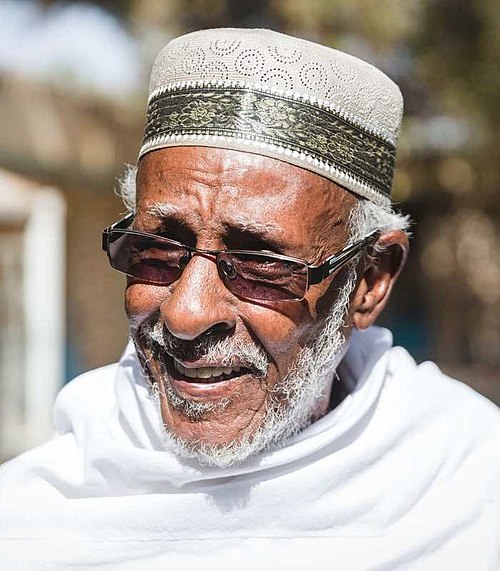
Mohamed Ibrahim Warsame, universally known as Hadraawi†, is celebrated as the greatest Somali poet of the modern era and a cultural icon whose words shaped the consciousness of a nation. Revered as "Poet Laureate" and often called "the Somali Shakespeare," his work transcended mere artistry to become a vital force in Arts & Culture, social commentary, and political discourse. Born in 1943 in the Togdheer region of Somalia, Hadraawi's life and career spanned the country's tumultuous journey from independence through civil war, serving as a unifying thread of wisdom, critique, and hope. His key achievement lies in his mastery of the Somali oral tradition, composing thousands of poems, dozens of plays, and iconic maanso (poems) that addressed love, tyranny, peace, and the very soul of the Somali people, securing his legacy as an indispensable pillar of Somali Literature.
Early Life & Education: Forging a Voice
Hadraawi† was born into a nomadic pastoralist family in 1943, an experience that deeply rooted him in the rhythms, landscapes, and oral traditions of Somali life. His early education was in the Qur'anic school system, where he honed his memory and linguistic precision. A pivotal moment came in the late 1950s when he moved to the city of Aden (in present-day Yemen) to live with his merchant father. There, he attended formal Western-style schooling, a rare opportunity that exposed him to a broader world of ideas while simultaneously strengthening his connection to his Somali heritage from a distance.
This dual experience—the deep well of nomadic oral culture and the structured, modern education in Aden—forged the unique voice of Hadraawi†. He began composing poetry in his teens, quickly gaining recognition for his eloquence and depth. The nickname "Hadraawi," meaning "the one who speaks well" or "the master of speech," was bestowed upon him during this period, a title that would eclipse his birth name. His formative years were marked by the wave of Somali nationalism leading to independence in 1960, an event that would deeply influence his early patriotic works.
Career & Major Achievements: The Pen as a Nation's Compass
Hadraawi's career blossomed in the 1970s after he returned to Somalia. He initially worked for the state-run Radio Mogadishu and the Ministry of Information, where his poems reached millions. His early work often celebrated Somali culture and unity. However, his art soon evolved into a powerful instrument of social and political critique, especially during the military dictatorship of Siad Barre (1969-1991).
Master of the *Maanso* and Political Dissent
Hadraawi's most significant contributions are his maanso (poems), composed in the complex and rich Somali meter. His famous 1973 poem, "Siinley" (The Chain), is a seminal work critiquing the failures of post-independence leadership. His courage peaked in 1973 with the clandestine composition and distribution of "Hablaahay, Hablahaas waa kuwaa? Sirta Qaranka maxaa geystay?" ("Dear Daughter, whose girls are these? What has happened to the nation's secret?"), a scathing indictment of the Barre regime's corruption and abuse of power. This act of defiance led to his arrest in 1973. Hadraawi† spent five years in the notorious Mandera prison without trial, a period where he continued to write secretly, his spirit unbroken.
Exile and the Epic *Hal-Karaan*
Following his release, he fled into exile, living across the Horn of Africa and in Europe. From this distance, his role as the nation's moral conscience intensified. Between 1991 and 1999, he composed his magnum opus: Hal-Karaan (The Timeline). This epic poem, spanning 217 modules and over 14,000 lines, is a monumental philosophical and historical meditation on the causes and tragedies of the Somali civil war. It stands as one of the longest single-authored poems in African history and a cornerstone of Somali Literature.
Advocate for Peace and Reconciliation
In the 2000s, Hadraawi† transformed from critic to peacemaker. He led the "Hal-Karaan Peace March" in 2009, a grassroots initiative where he and a group of poets and activists walked over 1,000 kilometers through conflict-ridden regions of Somaliland and Puntland, using poetry and dialogue to promote reconciliation. This unprecedented fusion of art and activism cemented his status as a beloved, unifying father figure. His major achievements include:
- Composing an estimated 3,000+ poems and several plays.
- Creating the epic Hal-Karaan, a defining work of post-colonial African poetry.
- Leading the influential Hal-Karaan Peace March in 2009.
- Being widely anthologized and studied globally, with his work translated into English, French, Italian, and Arabic.
Personal Life & Legacy: The Man Behind the Verse
Despite his towering public stature, Hadraawi† was known for his humility, gentle demeanor, and deep connection to ordinary people. He was a devout Muslim whose faith informed his ethical worldview. His personal life was marked by the sacrifices of exile and imprisonment, yet he remained dedicated to his family and his art. He was not merely a poet but a philanthropist of wisdom, offering guidance and solace to generations.
The legacy of Hadraawi† is immeasurable. He passed away in August 2022 in Hargeisa, prompting national mourning across Somali territories. His funeral was a state event, attended by tens of thousands, a testament to his role as a national treasure. His legacy lives on:
- As the standard-bearer of the Somali language and its poetic potential.
- As a symbol of courageous intellectual resistance against oppression.
- As a practical advocate for peace and community healing.
- Through the Hadraawi Foundation, which works to preserve and promote his work and Somali literary heritage.
Net Worth & Cultural Capital
While the concept of net worth is difficult to apply to a figure like Hadraawi†, his wealth was measured not in financial capital but in profound cultural and social capital. He was not a commercial poet and lived a modest life. His primary "business" was the preservation and advancement of Somali language and culture. Any financial proceeds from his published works, international lectures (including at prestigious universities like Oxford and Cambridge), and awards were likely reinvested into his life's work and family. His true value lies in his intellectual property—the vast, priceless corpus of poetry that forms a critical part of Somalia's national heritage. Awards like the Prince Claus Award (2004) and the Pen Award (2007) recognized this non-material contribution. In essence, Hadraawi's† "net worth" is the enduring inspiration and moral framework he provided to millions, an asset beyond monetary quantification.
Sources and Further Reading: Biographical information is synthesized from reputable sources including the BBC Somali Service, The Guardian obituaries, the African Books Collective, and academic publications on Somali literature such as "Sweet and Sour Milk" by Said S. Samatar. For translations of his work, see "The Poetry of Hadraawi" published by the Poetry Translation Centre.
Frequently Asked Questions
What is Hadraawi†'s estimated net worth?
Hadraawi† has an estimated net worth of £370,220.
What is Hadraawi†'s role and nationality?
Hadraawi† is a Poet Laureate from Somalia.
How did Hadraawi† make their money?
Hadraawi† built their fortune primarily through Hadraawi was a revered poet and cultural icon, not a business figure; his wealth derived from cultural work and likely modest by global standards..
How old is Hadraawi†?
Hadraawi† was born in 1943 (83 years old).
Which category is Hadraawi† listed under?
Hadraawi† is featured under the Arts & Culture category on NetWorth Africa.
How is Hadraawi†'s net worth calculated?
NetWorth Africa estimates financial valuations using publicly available stock equity holdings, company ownership records, real estate assets, and verified market data.
Net Worth Analysis
Hadraawi was a revered poet and cultural icon, not a business figure; his wealth derived from cultural work and likely modest by global standards.
Quick Stats

Related People
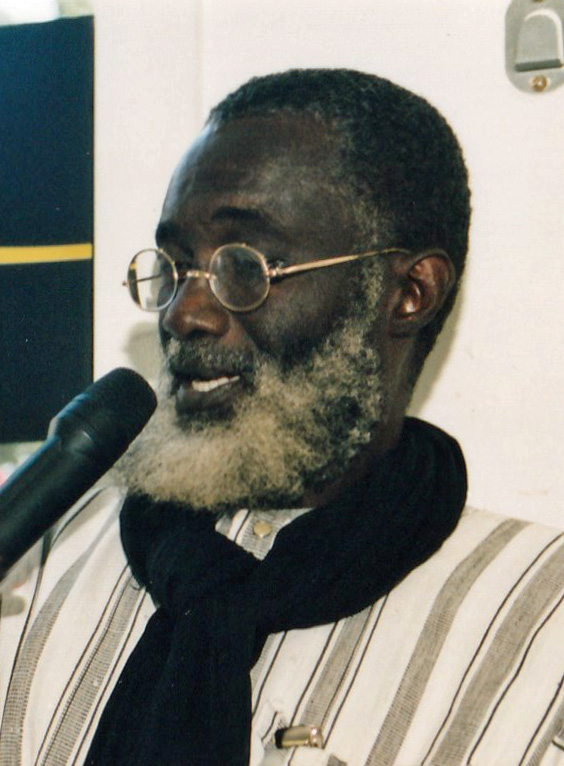
Abasse Ndione
Novelist & Playwright • Senegal
Abdel Rahman al-Abnudi†
Poet (Egypt-Sudan) • Sudan
Abdelkrim Ghallab†
Novelist & Journalist • Morocco
Abdellah Taïa
Novelist & Filmmaker • Morocco