Financial Breakdown
Asset Distribution
Assets vs Liabilities
Assets
Disclaimer: These financial estimates are based on publicly available information and should be considered approximate. Last updated: 12/30/2025
Biography
Introduction: The Steady Hand at the Helm
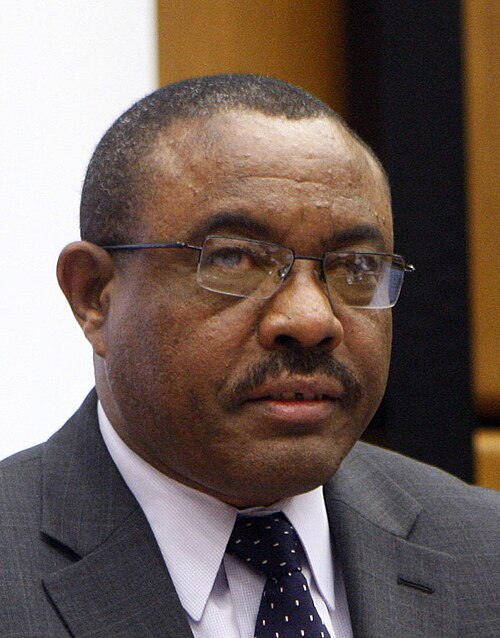
Hailemariam Desalegn Boshe is a prominent Ethiopian politician who served as the Prime Minister of Ethiopia from 2012 to 2018. His tenure marked a significant period of transition, as he became the first person from the southern regions of Ethiopia and from a Protestant Christian background to hold the nation's highest executive office. Hailemariam Desalegn rose to power following the sudden death of the long-serving and influential Prime Minister Meles Zenawi. His leadership was characterized by a commitment to continuity in economic policy, a focus on large-scale infrastructure development, and navigating complex regional dynamics. However, his time in office was ultimately defined by the challenge of managing widespread public protests, which led to his historic and unexpected resignation in 2018—a first for an Ethiopian head of government. This biography explores the life and career of a leader who steered Ethiopia during a pivotal chapter in its modern history.
Early Life and Education: Formative Years in Southern Ethiopia
Hailemariam Desalegn was born on July 19, 1965, in the town of Boloso Sore, located in the Wolayita Zone of the Southern Nations, Nationalities, and Peoples' Region (SNNPR). His early life in southern Ethiopia provided a perspective distinct from the traditionally dominant political elites of the country. He pursued higher education in the field of engineering, demonstrating an early aptitude for technical and structured thinking.
He earned his first degree in Civil Engineering from the Addis Ababa University in 1988. Following this, Hailemariam Desalegn secured a scholarship to continue his studies abroad. He attended Tampere University of Technology in Finland, where he obtained a Master of Science degree in Sanitary Engineering in 1993. This advanced education in Finland exposed him to international standards and governance models. Upon returning to Ethiopia, he transitioned into academia, joining the Arba Minch Water Technology Institute (now Arba Minch University) as a lecturer and gradually ascending to the position of Dean of the Faculty of Technology. This academic foundation, rooted in problem-solving and systems management, would later inform his methodical approach to Politics & Government.
Career and Major Achievements: From Academia to the Premiership
Hailemariam Desalegn's entry into politics was somewhat unconventional. His technical expertise led to his appointment as Vice-President of the SNNPR in 2000, where he oversaw key development projects. His competence and calm demeanor caught the attention of the federal leadership. In 2006, he was brought into the federal government as the Minister of Foreign Affairs, a role that significantly raised his national and international profile.
Rise to Deputy Prime Minister and Foreign Minister
In 2010, his responsibilities expanded further when Prime Minister Meles Zenawi appointed him as both Deputy Prime Minister and Minister of Foreign Affairs. This dual role positioned Hailemariam Desalegn as a clear successor. During this period, he played a crucial part in Ethiopia's active foreign policy, including its military involvement in Somalia under the African Union Mission (AMISOM) and mediating regional conflicts.
Tenure as Prime Minister (2012-2018)
Following Meles Zenawi's passing in August 2012, Hailemariam Desalegn was unanimously selected as the Chairman of the ruling Ethiopian People's Revolutionary Democratic Front (EPRDF) and subsequently sworn in as Prime Minister on September 21, 2012. His administration prioritized the continuation of the ambitious Growth and Transformation Plans (GTP), which focused on infrastructure. Major achievements under his leadership included:
- The completion and inauguration of the Addis Ababa Light Rail Transit system in 2015.
- Significant progress on the Grand Ethiopian Renaissance Dam (GERD), a monumental national project.
- Maintaining average economic growth rates above 8% during much of his tenure.
- Playing a key diplomatic role in the Intergovernmental Authority on Development (IGAD), particularly in the South Sudan peace process.
However, from 2015 onwards, his government faced immense challenges. Widespread anti-government protests, initially sparked by land and political rights issues in the Oromia and Amhara regions, grew into a national crisis. Despite initial reforms and a sweeping cabinet reshuffle, the unrest persisted. In a move that shocked the nation, Hailemariam Desalegn announced his resignation as both Prime Minister and EPRDF Chairman on February 15, 2018. He stated his hope that his resignation would pave the way for political reforms and end the deadly unrest. His peaceful departure was noted as a potential step towards political normalization in Ethiopia.
Personal Life, Legacy, and Lasting Impact
Hailemariam Desalegn is known for his low-key and consensus-seeking personality, often described in contrast to his more charismatic predecessor. He is a devout Protestant Christian, married to Roman Tesfaye, who served as First Lady and is an advocate for women's and children's issues. Together they have three children. His personal interests have remained largely private, consistent with his reserved public persona.
The legacy of Hailemariam Desalegn is complex. He is credited with ensuring a stable transition of power after Meles Zenawi's death, upholding Ethiopia's economic growth trajectory, and managing a peaceful exit from office—an act that set a new precedent in Ethiopian Executive Presidency traditions. His resignation directly led to the ascent of Abiy Ahmed, who initiated a wave of dramatic political reforms. Conversely, his tenure is also associated with the declaration of a state of emergency in 2016 and the government's heavy-handed response to protests, which drew international criticism. Historians may view him as a transitional figure who managed the end of the EPRDF's tight control and inadvertently opened the door for a new, more turbulent, yet reformist political era in Ethiopia.
Post-Premiership and Net Worth
Since resigning, Hailemariam Desalegn has maintained a relatively low public profile. He has taken on roles in international diplomacy and peacebuilding. Notably, in 2019, he was appointed by the United Nations as a member of the High-Level Advisory Board on Mediation, leveraging his experience in African regional politics. He has also been involved with the African Union on various peace and security initiatives.
Regarding his personal finances, Hailemariam Desalegn has not publicly disclosed his net worth, and reliable figures are not available. Unlike some political figures in the region, he has not been associated with significant private business ventures or allegations of substantial personal wealth accumulation. His career trajectory—from academia to public service—suggests his primary source of wealth has been his government salary. In the context of Ethiopian politics, he is generally perceived as a leader who did not engage in overt corruption for personal gain, with his financial profile aligning with his reputation for personal integrity and a modest lifestyle.
For further reading on his policies and tenure, credible sources include archives from the BBC, Reuters, and African Union press releases detailing his post-premiership diplomatic work.
Frequently Asked Questions
What is Hailemariam Desalegn's estimated net worth?
Hailemariam Desalegn has an estimated net worth of $5.0 Million.
What is Hailemariam Desalegn's role and nationality?
Hailemariam Desalegn is a Ex-Prime Minister from Ethiopia.
How did Hailemariam Desalegn make their money?
Hailemariam Desalegn built their fortune primarily through As a former public servant and not a business figure, his wealth is not comparable to African billionaires; estimates for former Ethiopian officials are typically in the low millions..
How old is Hailemariam Desalegn?
Hailemariam Desalegn was born in 1965 (61 years old).
Which category is Hailemariam Desalegn listed under?
Hailemariam Desalegn is featured under the Politics & Government category on NetWorth Africa.
How is Hailemariam Desalegn's net worth calculated?
NetWorth Africa estimates financial valuations using publicly available stock equity holdings, company ownership records, real estate assets, and verified market data.
Net Worth Analysis
As a former public servant and not a business figure, his wealth is not comparable to African billionaires; estimates for former Ethiopian officials are typically in the low millions.
Quick Stats
Related People

Aaron Motsoaledi
LP; Minister of Home Affairs • South Africa

Abane Ramdane†
FLN Leader & Strategist • Algeria

Abdalla Hamdok
Ex-Prime Minister • Sudan

Abdallah Kigoda
Ex-Minister of Natural Resources • Tanzania