Biography
Introduction: The Founding Father of a Nation
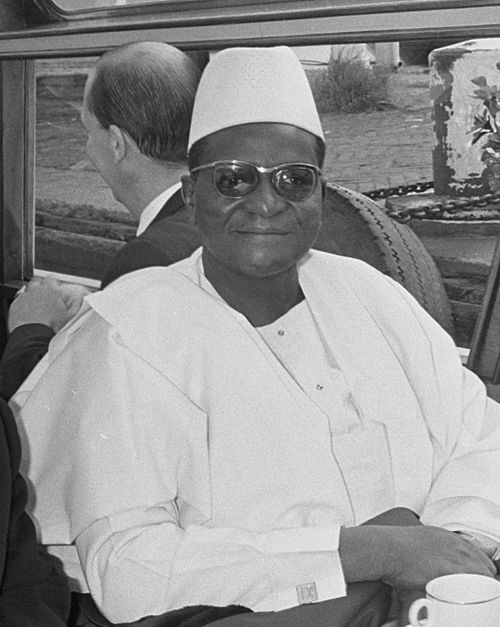
Hamani Diori† stands as a monumental figure in the modern history of Niger. As the nation's First President of Niger, he led the country to independence from French colonial rule in 1960 and presided over its first 14 years as a sovereign republic. A teacher turned statesman, Hamani Diori was a key leader during the pivotal Liberation Era in West Africa, navigating the complex transition from colony to self-governance. His tenure, marked by initial stability and international acclaim, ultimately ended in a military coup in 1974. Despite this conclusion, his role in shaping Niger's early national identity and his advocacy for African unity on the world stage cement his place as a foundational leader in the annals of Politics & Government.
Early Life & Education: The Making of a Statesman
Hamani Diori was born on June 6, 1916, in Soudouré, a village near the capital city of Niamey. He was born into the Zarma (Djerma) ethnic group, a community that would play a significant role in Niger's political landscape. His early education took place in Niger before he pursued advanced studies in Senegal, then the seat of French West Africa. Demonstrating academic prowess, Diori earned a scholarship to the prestigious William Ponty Teacher Training College in Dakar, one of the few institutions of higher learning in the region that produced many of Francophone Africa's future elites.
Graduating as a teacher, Diori returned to Niger and began his career in the colonial education system. This profession was formative, exposing him to the realities of colonial administration and fostering a deep understanding of his country's diverse peoples and cultures. His work took him to different parts of Niger, including a stint in Paris, where he studied at the École Nationale de la France d'Outre-Mer. These experiences were crucial; they equipped him with the intellectual tools and the network necessary to engage in political discourse. Fluent in French and well-versed in Western political thought, yet deeply rooted in his own culture, Diori emerged as a compelling voice for Nigerien aspirations within the framework of the French colonial system.
Career & Major Achievements: The Path to Presidency
Hamani Diori's political career began in the post-World War II period, as France reorganized its colonial empire. In 1946, he was elected to the French National Assembly as one of Niger's representatives, a position he held until 1951. During this time, he co-founded the Nigerien Progressive Party (PPN), which became the local branch of the African Democratic Rally (RDA), a pan-African political movement led by Félix Houphouët-Boigny of Côte d'Ivoire. Diori's political philosophy favored a gradual, negotiated path to autonomy, maintaining close ties with France—a stance that sometimes put him at odds with more radical independence movements.
The Struggle for Independence
The late 1950s were a period of rapid constitutional change. Diori skillfully navigated this era, becoming President of the provisional government of the Republic of Niger in 1958 after a referendum that created the French Community. When full independence was achieved on August 3, 1960, Hamani Diori was unanimously elected as the country's first President by the National Assembly. His election was seen as a unifying moment, bringing together Niger's diverse ethnic and regional groups under a single national banner.
Achievements in Office and Foreign Policy
President Diori's administration focused on nation-building and economic development. Key achievements included:
- Political Stability: For over a decade, he maintained a rare degree of peace and stability in a region often fraught with coups and conflict.
- International Diplomacy: Diori became a respected voice in Africa. He served as a mediator in regional disputes, including the Nigeria-Biafra war, and was a founding member of the Organization of African Unity (OAU).
- Cultural Promotion: He championed Niger's cultural heritage, establishing institutions to preserve and promote national history and arts.
- Economic Foundations: His government oversaw the development of key infrastructure and managed the initial exploitation of Niger's uranium deposits, discovered in the late 1960s, which promised future economic transformation.
However, his rule also faced criticism. The PPN became the sole legal political party, consolidating power. A devastating drought and famine in the Sahel from 1968-1974 crippled the agrarian economy, causing widespread suffering and eroding public confidence. Accusations of corruption and the government's perceived inability to effectively manage the famine crisis created fertile ground for dissent.
The 1974 Coup and Imprisonment
On April 15, 1974, Lieutenant Colonel Seyni Kountché led a bloodless military coup that overthrew President Diori while he was presiding over a cabinet meeting. Diori was imprisoned for several years before being released to house arrest. This event ended the First Republic and marked a dramatic close to Diori's 14-year presidency. The coup was largely justified by the military citing the government's failure to address the famine and allegations of graft.
Personal Life & Legacy: The Man Behind the Office
Hamani Diori was known for his dignified, calm, and intellectual demeanor. He was married to Aïssa Diori, who served as Niger's First Lady and was an advocate for women's and children's welfare. A deeply religious man, Diori's personal integrity and commitment to public service were often highlighted by his contemporaries. Following his release from detention in the 1980s, he lived a relatively quiet life, largely removed from the political scene. Hamani Diori passed away on April 23, 1989, in Rabat, Morocco, from natural causes.
The legacy of Hamani Diori is complex and evolving. For many years after his overthrow, his contributions were downplayed. However, in contemporary Niger, there is a growing historical reassessment. He is increasingly recognized as the father of Nigerien independence, the leader who shepherded the nation onto the world stage. Streets and institutions bear his name, symbolizing a renewed acknowledgment of his foundational role. His legacy is one of a diplomat and a unifier who, despite the eventual downfall of his government, provided Niger with its first sustained experience of sovereign statehood during the challenging Liberation Era.
Net Worth & Business Ventures
As a career public servant and politician, Hamani Diori's life was not defined by personal business ventures or commercial wealth in the modern sense. His economic context was that of a newly independent, largely agrarian nation with limited private industry. During his presidency, the state controlled key sectors, including the nascent mining industry. While his administration was later accused of corruption and mismanagement of funds, particularly during the famine years, specific details about President Diori's personal net worth remain undocumented and are subject to historical debate. Unlike leaders who amassed vast personal fortunes from state resources, Diori's post-coup life and the circumstances of his death did not suggest significant personal wealth. His primary "venture" was the nation-state of Niger itself, and his capital was political, built on international respect and the authority of his office. Any assessment of his finances is intrinsically linked to the broader economic management and challenges of his government from 1960 to 1974.
For further reading on Hamani Diori and the history of Niger, credible sources include the Encyclopædia Britannica, academic publications on post-colonial African history, and archives from the Organization for the Harmonization of Business Law in Africa (OHADA) region which provide context on the era.
Net Worth Analysis
Hamani Diori was a political leader, not a business figure, and his presidency ended in 1974; he died in 1989 with no significant personal wealth reported.
Quick Stats
Related People
Aaron Motsoaledi
LP; Minister of Home Affairs
Abane Ramdane†
FLN Leader & Strategist
Abdalla Hamdok
Ex-Prime Minister
Abdallah Kigoda
Ex-Minister of Natural Resources