Biography
Introduction: The Architect of Sudan's Islamist Project
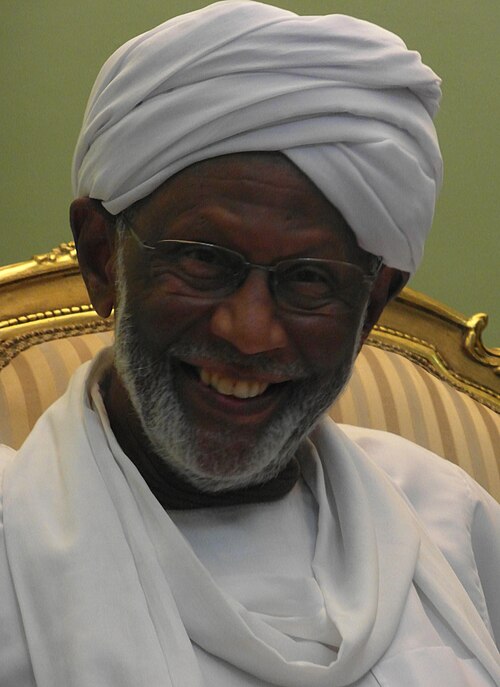
Hassan al-Turabi† (1932–2016) stands as one of the most consequential and controversial figures in modern Sudanese and Arab-Islamic history. A polymath who blended deep Islamic scholarship with sharp political acumen, al-Turabi was the chief ideologue and strategist behind the rise of political Islam in Sudan. His most notable achievement was engineering the 1989 military coup that brought General Omar al-Bashir to power, establishing a comprehensive Islamist regime in Africa's largest country. For over four decades, Hassan al-Turabi† oscillated between roles as a revolutionary leader, a government insider, a political prisoner, and an opposition figure, profoundly impacting Sudan's trajectory, its civil wars, and its international relations. His intellectual influence extended far beyond Sudan's borders, inspiring and connecting Islamist movements worldwide while leaving a legacy of profound political and social transformation marked by both ideological fervor and intense strife.
Early Life & Education: Forging an Islamist Intellectual
Hassan Abdullah al-Turabi was born in 1932 in Kassala, eastern Sudan, into a family of religious judges and scholars. This environment immersed him in Islamic jurisprudence from a young age. He received a traditional religious education, memorizing the Quran, before pursuing modern secular schooling in Khartoum. His academic brilliance was evident early on, leading him to the University of Khartoum where he earned a law degree in 1955. It was during these formative years that Hassan al-Turabi† began to synthesize his religious heritage with modern political thought.
His intellectual journey continued abroad with prestigious scholarships. He earned a Master's degree in Law from the University of London in 1957 and a Doctorate in Constitutional Law from the Sorbonne in Paris in 1964. These experiences in the West were pivotal; they exposed him to European political philosophy and democratic systems, which he would later attempt to reconcile with Islamic principles. Upon returning to Sudan in the mid-1960s, al-Turabi assumed a position as Dean of the University of Khartoum's School of Law. He was not content with academia alone, however. The post-colonial turmoil in Sudan and the broader Arab world, including the rise of Arab nationalism and the Muslim Brotherhood, convinced him of the need for a politically activist Islam. This conviction led him to take leadership of the Sudanese Muslim Brotherhood in the early 1960s, transforming it from a cultural movement into a potent political force.
Career & Major Achievements: From Ideology to Power
The career of Hassan al-Turabi† is a complex tapestry of political maneuvering, ideological innovation, and state-building. His major achievements and phases include:
Building the Islamist Movement (1960s-1980s)
Al-Turabi reorganized the Sudanese Muslim Brotherhood into the Islamic Charter Front and later the National Islamic Front (NIF). He advocated for a gradualist approach to implementing Sharia (Islamic law), focusing on capturing state institutions through infiltration and alliance-building. He served as Attorney General under President Jaafar Nimeiry in the early 1970s, a position he used to influence legal reforms. When Nimeiry implemented Sharia harshly in 1983, al-Turabi was initially supportive but was later imprisoned when he fell out of favor. This period cemented his reputation as a resilient opposition leader.
Engineering the 1989 Coup and the "Salvation Revolution"
Al-Turabi's most direct impact on Politics & Government came on June 30, 1989. He was the intellectual architect behind the bloodless military coup led by Brigadier Omar al-Bashir. While al-Bashir became head of state, al-Turabi operated as the regime's ideological guide and de facto ruler, holding positions like Speaker of Parliament and Secretary-General of the ruling party. He launched a radical social engineering project:
- Implementing a comprehensive version of Sharia law across the country.
- Islamizing the state's institutions, military, and banking system.
- Promoting a controversial foreign policy that hosted Islamist militants like Osama bin Laden (1991-1996) and convened the "Popular Arab and Islamic Conference," making Sudan a pariah state.
Fall from Power and Later Influence
In a dramatic turn, the al-Bashir regime, wary of al-Turabi's growing power and outreach to opposition groups, arrested him in 2000. This began his final phase as a critic from within. He formed his own opposition party, the Popular Congress Party (PCP), and was imprisoned several times throughout the 2000s. Despite his fall from official grace, his ideas continued to shape Sudanese politics. He supported the South's right to secession, which materialized in 2011, and in his later years called for greater democracy and women's rights within an Islamic framework, positions that revealed the evolving and often paradoxical nature of his thought.
Personal Life, Philosophy & Legacy
Personally, Hassan al-Turabi† was known for an ascetic lifestyle, intellectual charm, and fluency in multiple languages. He was married to Wisal al-Mahdi, sister of the former Prime Minister Sadiq al-Mahdi, linking him to one of Sudan's most prominent political families. His philosophy, often termed "Islamic Modernism," was distinctive. He argued for ijtihad (independent reasoning) to reinterpret Islamic texts for the modern era, advocating for democratic principles like popular sovereignty and pluralism within an Islamic state. He controversially promoted a more public role for women, even suggesting they could lead an Islamic government.
Al-Turabi's legacy is intensely polarized. To his supporters, he was a visionary thinker who empowered Islam in governance and challenged Western hegemony. To his critics, he was an authoritarian figure whose policies fueled decades of civil war with the non-Muslim south and marginalized regions like Darfur, entrenched religious intolerance, and isolated Sudan economically. His death in 2016 left a void in Sudanese Islamist thought, but the regime he helped create lasted until the 2019 revolution that ousted Omar al-Bashir. The long-term impact of Hassan al-Turabi† on Sudan's state and society remains a central, and deeply contested, chapter in the nation's history.
Net Worth & Financial Context
Unlike many political figures, Hassan al-Turabi† was not widely known for personal wealth or significant business ventures. His influence was primarily ideological and political rather than financial. He cultivated an image of personal piety and simplicity, often dressing in traditional white robes and avoiding overt displays of luxury. There are no credible public records or estimates of his personal net worth. His financial context is tied to the organizations he led. The National Islamic Front (NIF) and later the Popular Congress Party (PCP) were political entities funded through membership dues and, during his time in power, likely through state-connected resources and patronage networks. After his split with al-Bashir in 1999-2000, his financial and political resources diminished significantly. Any wealth he accumulated was not a defining feature of his public persona, which remained focused on religious scholarship and political activism until his death in 2016.
For further reading on the complex history of Sudan during his era, refer to academic sources and historical analyses of the Politics & Government of Sudan.
Frequently Asked Questions
What is Hassan al-Turabi†'s estimated net worth?
Net worth details for Hassan al-Turabi† are currently being updated.
What is Hassan al-Turabi†'s role and nationality?
Hassan al-Turabi† is a Islamic Scholar & Politician from Sudan.
How did Hassan al-Turabi† make their money?
Hassan al-Turabi† built their fortune primarily through Hassan al-Turabi was an Islamic scholar and political ideologue, not a business figure; his wealth was not publicly documented and he died in 2016..
How old is Hassan al-Turabi†?
Hassan al-Turabi† was born in 1932 (94 years old).
Which category is Hassan al-Turabi† listed under?
Hassan al-Turabi† is featured under the Politics & Government category on NetWorth Africa.
How is Hassan al-Turabi†'s net worth calculated?
NetWorth Africa estimates financial valuations using publicly available stock equity holdings, company ownership records, real estate assets, and verified market data.
Net Worth Analysis
Hassan al-Turabi was an Islamic scholar and political ideologue, not a business figure; his wealth was not publicly documented and he died in 2016.
Quick Stats
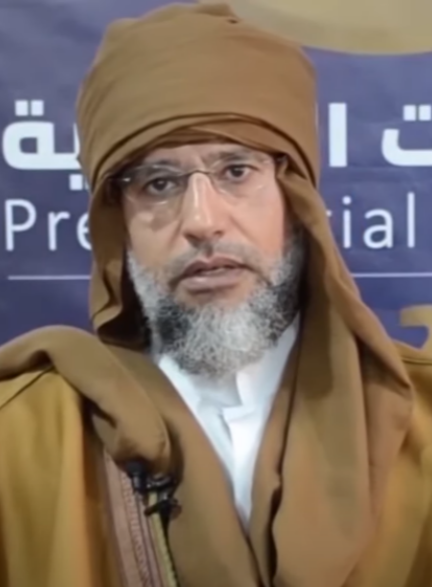
Related People
Aaron Motsoaledi
LP; Minister of Home Affairs • South Africa
Abane Ramdane†
FLN Leader & Strategist • Algeria
Abdalla Hamdok
Ex-Prime Minister • Sudan
Abdallah Kigoda
Ex-Minister of Natural Resources • Tanzania