Financial Breakdown
Asset Distribution
Assets vs Liabilities
Assets
Liabilities
Disclaimer: These financial estimates are based on publicly available information and should be considered approximate. Last updated: 12/29/2025
Biography
Introduction: The Architect of Malawian Independence
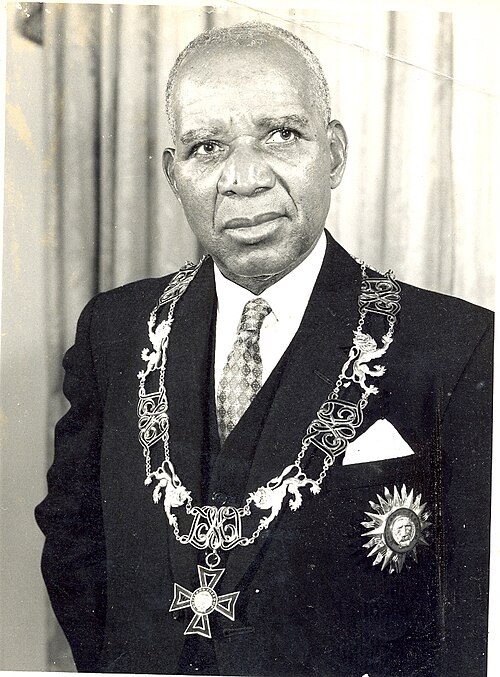
Dr. Hastings Kamuzu Banda† stands as one of the most pivotal and complex figures in the history of southern Africa. As the principal leader of Malawi's independence movement and its first head of state, he is revered as the "Father of the Nation" for his unwavering role in liberating the country from British colonial rule. His key achievement was leading the former British protectorate of Nyasaland to become the independent nation of Malawi on July 6, 1964. Initially celebrated as a liberator, his subsequent 30-year rule, which saw him declared Life President in 1971, evolved into one of Africa's most enduring and authoritarian regimes. The legacy of Hastings Kamuzu Banda† is thus a profound dichotomy: the visionary nationalist who freed his people and the autocratic ruler who later suppressed them, shaping the trajectory of Malawi for decades.
Early Life & Education: A Long Road Home
The early life of Hastings Kamuzu Banda† is shrouded in some mystery, with his birth year often cited as 1898, though some sources suggest it could have been earlier, near Kasungu in central Nyasaland. His quest for education defined his youth. After receiving initial schooling at a Church of Scotland mission, he embarked on an extraordinary journey on foot to Southern Rhodesia (Zimbabwe) and later to South Africa in search of further opportunities. This formative period instilled in him a fierce determination. He worked as a mine clerk in Johannesburg before securing passage to the United States in 1925, where he pursued higher education with relentless drive.
He studied at Wilberforce Institute in Ohio, Indiana University, and the University of Chicago, eventually earning a degree in history and political science. His academic pilgrimage culminated in the United Kingdom, where he studied medicine at the University of Edinburgh and qualified as a doctor in 1941. For over a decade, Hastings Kamuzu Banda† practiced medicine in Liverpool and London, treating a largely working-class community. During this time, he became politically active, associating with other African independence advocates and cautiously supporting the Nyasaland African Congress (NAC). This lengthy, self-imposed exile—spanning nearly 40 years—equipped him with a unique perspective but also distanced him from the day-to-day realities of his homeland.
Career & Major Achievements: From Liberation to Life Presidency
The career of Hastings Kamuzu Banda† can be sharply divided into two phases: the liberation leader and the autocratic president.
The Independence Struggle
In 1958, at the urging of nationalist leaders like Henry Chipembere, Banda returned to Nyasaland to lead the NAC. His arrival electrified the independence movement. He quickly reorganized the party, renamed it the Malawi Congress Party (MCP) in 1959, and spearheaded a vigorous campaign against the Central African Federation, a political union with Northern and Southern Rhodesia deeply unpopular among the African majority. His activism led to his imprisonment by colonial authorities in 1959, cementing his status as a martyr for the cause. Upon his release in 1960, he led his party to a decisive victory in elections and became Prime Minister in 1963, the year the Federation was dissolved. On July 6, 1964, he achieved his life's mission as Nyasaland became the independent nation of Malawi, with Hastings Kamuzu Banda† as its first Prime Minister.
Consolidation of Power and One-Party State
In 1966, Malawi became a republic, and Banda assumed the office of President. His rule quickly turned authoritarian. He faced and brutally suppressed the "Cabinet Crisis" of 1964, exiling or imprisoning former ministers who disagreed with his policies. By 1971, the parliament declared him Life President, a title he held for over two decades. His government was characterized by:
- A pervasive personality cult, with his portrait displayed everywhere and his birth celebrated as a national holiday.
- Strict control over all aspects of society, including dress codes, music, and hairstyles.
- The suppression of all political opposition, with detention without trial common for critics.
- An unconventional but pragmatic foreign policy, maintaining diplomatic and trade relations with apartheid South Africa and Portugal's colonial regime, which brought economic benefits but isolated Malawi within the broader African community.
Despite the political repression, his government was noted for certain economic policies promoting self-sufficiency and infrastructure development, as well as unwavering public order.
Personal Life & Legacy: A Complex Figure
Personally, Hastings Kamuzu Banda† was a study in contrasts. He was a devout Presbyterian, fluent in several languages, and known for his immaculate three-piece suits, fly-whisk, and homburg hat—a carefully crafted image of authority and sophistication. He never married publicly but was often accompanied by an "official hostess," Cecilia Kadzamira. He had a passion for building projects, commissioning the new capital city of Lilongwe and the grandiose Kamuzu Academy, an elite secondary school modeled on British public schools and nicknamed "the Eton of Africa."
The legacy of Hastings Kamuzu Banda† is intensely debated. His lasting impact includes the preservation of national unity and sovereignty in a volatile region. However, his authoritarian rule left a deep scar on Malawi's political culture, stifling democracy and civil liberties. The transition to multi-party politics only occurred after intense domestic and international pressure, culminating in a 1993 referendum where Malawians voted overwhelmingly to end his one-party state. He was defeated in the first democratic presidential election in 1994 by Bakili Muluzi. Banda died in a South African hospital on November 25, 1997. Today, he is officially remembered as the founding father, with his face on currency and monuments, yet the nation continues to grapple with the full complexity of his three-decade reign over Malawi.
Net Worth & Business Ventures
During his presidency, Hastings Kamuzu Banda† amassed significant personal wealth and controlled vast sectors of the Malawian economy through a unique system of holding companies. The most notable of these was the Press Corporation Limited, a sprawling conglomerate with interests in agriculture, manufacturing, transportation, and retail. It was owned by the ruling MCP but effectively operated under Banda's personal direction. Another key entity was Mudi House, which managed his real estate and other assets. Estimates of his personal fortune, often conflated with party and state assets, ranged into the hundreds of millions of dollars. This intertwining of state, party, and personal business created a system of "state capitalism" that concentrated economic power at the very top. Following the democratic transition in 1994, many of these assets were subject to scrutiny and partial privatization, though the full extent of his personal net worth remained opaque, emblematic of the blurred lines between his personal interests and those of the nation he led.
For further reading on the life and times of Hastings Kamuzu Banda†, consider visiting resources like the Encyclopaedia Britannica or the BBC's Africa section for historical context.
Frequently Asked Questions
What is Hastings Kamuzu Banda†'s estimated net worth?
Net worth details for Hastings Kamuzu Banda† are currently being updated.
What is Hastings Kamuzu Banda†'s role and nationality?
Hastings Kamuzu Banda† is a First President & Life President from Malawi.
How did Hastings Kamuzu Banda† make their money?
Hastings Kamuzu Banda† built their fortune primarily through Hastings Kamuzu Banda died in 1997, and his personal wealth was never publicly quantified to a reliable standard; any estate would have been subject to distribution or state claims long before 2024..
How old is Hastings Kamuzu Banda†?
Hastings Kamuzu Banda† was born in 1898 (128 years old).
Which category is Hastings Kamuzu Banda† listed under?
Hastings Kamuzu Banda† is featured under the Politics & Government category on NetWorth Africa.
How is Hastings Kamuzu Banda†'s net worth calculated?
NetWorth Africa estimates financial valuations using publicly available stock equity holdings, company ownership records, real estate assets, and verified market data.
Net Worth Analysis
Hastings Kamuzu Banda died in 1997, and his personal wealth was never publicly quantified to a reliable standard; any estate would have been subject to distribution or state claims long before 2024.
Quick Stats
Related People
Aaron Motsoaledi
LP; Minister of Home Affairs • South Africa
Abane Ramdane†
FLN Leader & Strategist • Algeria
Abdalla Hamdok
Ex-Prime Minister • Sudan
Abdallah Kigoda
Ex-Minister of Natural Resources • Tanzania