Financial Breakdown
Asset Distribution
Assets vs Liabilities
Assets
Disclaimer: These financial estimates are based on publicly available information and should be considered approximate. Last updated: 12/29/2025
Biography
Introduction
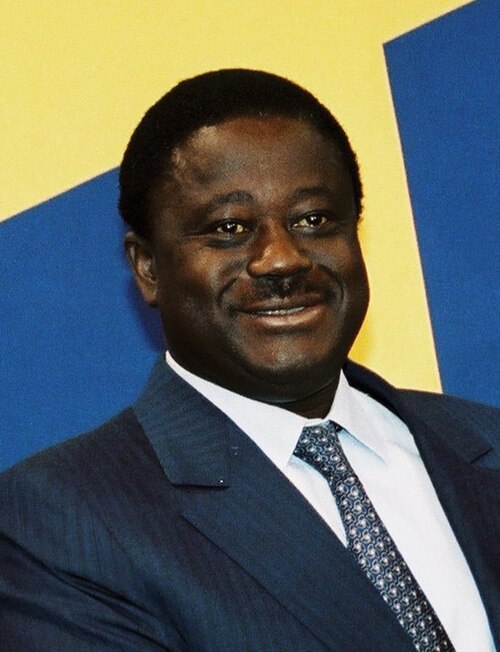
Henri Konan Bédié is a defining figure in the modern political history of Côte d'Ivoire. Serving as the nation's second President from 1993 to 1999, his tenure was a pivotal, yet deeply controversial, chapter that shaped the country's trajectory for decades. A founding member of the single-party state under Félix Houphouët-Boigny, Bédié ascended to the highest office following the first president's death. He is most notably associated with the ideological construct of "Ivoirité" (Ivorian identity), a concept that began as a cultural reaffirmation but morphed into a potent political tool with exclusionary consequences. His legacy is a complex tapestry of economic ambition, political consolidation, and the sowing of divisions that would later erupt into conflict. This biography explores the life, career, and enduring influence of one of Ivory Coast's most significant statesmen in the realm of Politics & Government.
Early Life & Education
Henri Konan Bédié was born on May 5, 1934, in Dadiekro, a town in the central region of what was then French West Africa. Hailing from the Baoule ethnic group, the same as the future first president Félix Houphouët-Boigny, Bédié's early life was rooted in the colonial context. He demonstrated academic promise from a young age, which set him on a path distinct from many of his contemporaries.
His pursuit of higher education led him to France, a common trajectory for the West African elite of his generation. Bédié studied at the University of Poitiers, where he earned a degree in law and economics. His academic prowess was further solidified when he became the first Ivorian to obtain a doctorate in economic sciences from the same institution. This formidable educational background in economics would become a cornerstone of his early political identity and policy focus. Before fully diving into politics, he briefly served as a diplomat, representing Côte d'Ivoire in the United States and Canada. These formative experiences—grounding in traditional society, elite French education, and early diplomatic service—forged a leader who was both deeply Ivorian and internationally oriented, preparing him for a central role in the nation's post-independence administration.
Career & Major Achievements
Henri Konan Bédié's political career is inextricably linked to the rise and reign of the Parti Démocratique de Côte d'Ivoire (PDCI). Upon returning to the newly independent Ivory Coast, his expertise was quickly recognized by President Houphouët-Boigny.
Rise Under Houphouët-Boigny
Bédié's ascent was meteoric. In 1966, at just 32 years old, he was appointed Minister of Economic and Financial Affairs. His most notable early achievement was his instrumental role as the founding President of the International Cocoa Organization (ICCO) in 1973, advocating for stabilizing cocoa prices on the global market—a crucial issue for the Ivorian economy. From 1980 to 1993, he served as President of the National Assembly, solidifying his position as the constitutional successor to the aging Houphouët-Boigny.
Presidency (1993-1999) and Ivoirité
On December 7, 1993, following Houphouët-Boigny's death, Henri Konan Bédié assumed the presidency as per the constitutional line of succession. He later won a presidential election in 1995, an election boycotted by major opposition figures. His presidency focused on economic austerity and a drive towards "industrialization." However, his tenure is overwhelmingly defined by the promotion of Ivoirité. Initially framed as a celebration of national cultural identity, Bédié and his government codified it into law, using it to disqualify political rivals—most notably Alassane Ouattara—on the basis of their alleged foreign parentage. This exclusionary policy deeply fractured the national fabric along ethnic and religious lines.
The 1999 Coup and Political Return
The political tensions, coupled with allegations of corruption and economic mismanagement, culminated in a military coup on December 24, 1999, led by General Robert Guéï. This ended Bédié's rule, forcing him into exile. He returned in 2001 and remained a significant opposition figure. Following the 2010-2011 post-election crisis, Bédié and his PDCI entered a strategic alliance with his former rival, Alassane Ouattara, and the RHDP coalition, serving as a key political kingmaker. This alliance, though fraught, brought a period of relative stability. He was the PDCI candidate in the 2020 presidential election, finishing third.
Key Achievements and Impacts:
- Architect of the "Ivoirité" doctrine, the most impactful and controversial ideological policy in modern Ivorian politics.
- Presided over a period of intended economic liberalization and infrastructure development.
- Maintained the dominance of the PDCI after Houphouët-Boigny's death, ensuring party continuity.
- Played a decisive role as an elder statesman in the post-2011 political reconciliation, albeit from a coalition position.
Personal Life & Legacy
Outside the political arena, Henri Konan Bédié was known as a man of refined tastes, with a known appreciation for fine arts, music, and French culture—a reflection of his educational background. He was married to Henriette Bédié and was a father. His personal demeanor, often described as calm and calculated, contrasted with the turbulent politics he both navigated and helped create.
The legacy of Henri Konan Bédié is profoundly dualistic. On one hand, he is remembered as the economic technocrat and legitimate successor who sought to steer the Ivorian "economic miracle" into a new era. On the other, his name is synonymous with the divisive politics of identity that fueled a decade of instability and conflict. The concept of Ivoirité remains his most enduring and contentious contribution to the nation's political discourse. While he eventually participated in a coalition government aimed at healing national divisions, many historians argue the seeds of those divisions were sown during his presidency. He passed away on August 1, 2023, leaving behind a nation still grappling with the complex political realities he helped shape. His life story is essential to understanding the evolution of executive power and ethnic politics in Ivory Coast.
Net Worth & Business
While precise figures are not publicly verified, Henri Konan Bédié was widely considered one of the wealthiest individuals in Côte d'Ivoire. His financial success was built over decades at the apex of political power within a single-party state where the lines between public office and private enterprise were often blurred. His wealth was believed to be derived from extensive holdings in the Ivorian agricultural sector, particularly in cocoa and coffee, the nation's historic cash crops. Additionally, he had reported interests in real estate and other ventures. Like many long-serving officials of his era, his wealth attracted significant scrutiny and allegations of corruption, especially following his ouster in 1999. His economic standing remained a point of reference in Ivorian politics, symbolizing the entrenched connection between political influence and commercial fortune in the country's modern history.
For further reading on the political history of Côte d'Ivoire and the presidency of Henri Konan Bédié, credible sources include the Encyclopædia Britannica, academic publications on West African politics, and historical archives from news organizations like BBC News and Le Monde covering Ivorian affairs.
Frequently Asked Questions
What is Henri Konan Bédié's estimated net worth?
Henri Konan Bédié has an estimated net worth of $50.0 Million.
What is Henri Konan Bédié's role and nationality?
Henri Konan Bédié is a Ex-President of Côte d'Ivoire from Ivory Coast.
How did Henri Konan Bédié make their money?
Henri Konan Bédié built their fortune primarily through As a career politician and former president, his wealth is significant but not on the scale of major African business billionaires; no credible source lists him as a billionaire..
How old is Henri Konan Bédié?
Henri Konan Bédié was born in 1934 (92 years old).
Which category is Henri Konan Bédié listed under?
Henri Konan Bédié is featured under the Politics & Government category on NetWorth Africa.
How is Henri Konan Bédié's net worth calculated?
NetWorth Africa estimates financial valuations using publicly available stock equity holdings, company ownership records, real estate assets, and verified market data.
Net Worth Analysis
As a career politician and former president, his wealth is significant but not on the scale of major African business billionaires; no credible source lists him as a billionaire.
Quick Stats

Related People
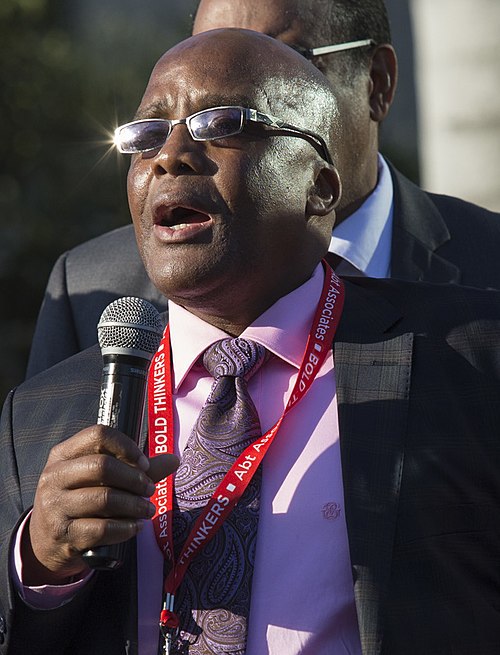
Aaron Motsoaledi
LP; Minister of Home Affairs • South Africa
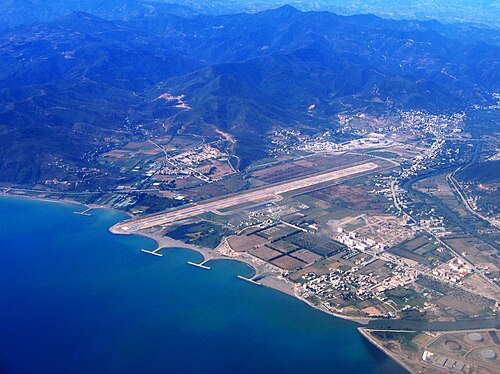
Abane Ramdane†
FLN Leader & Strategist • Algeria
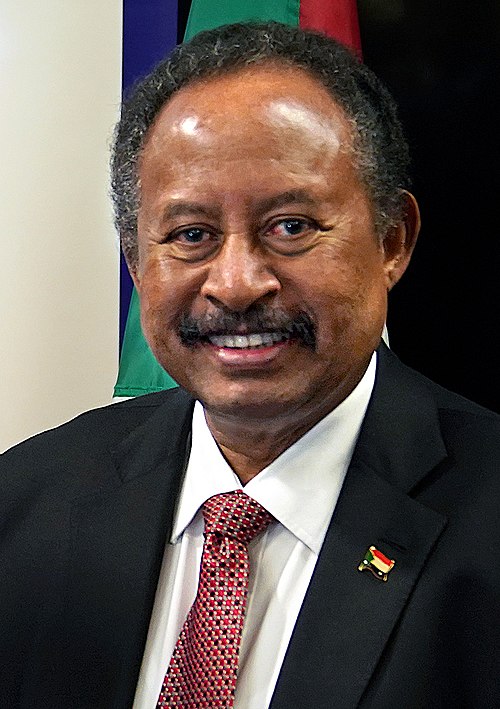
Abdalla Hamdok
Ex-Prime Minister • Sudan
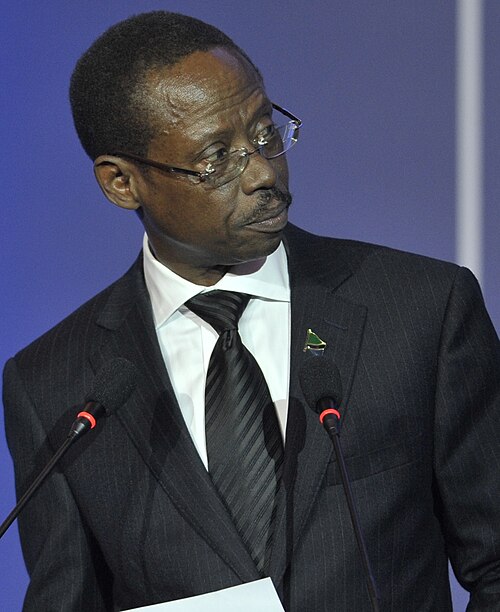
Abdallah Kigoda
Ex-Minister of Natural Resources • Tanzania