Financial Breakdown
Asset Distribution
Assets vs Liabilities
Assets
Liabilities
Disclaimer: These financial estimates are based on publicly available information and should be considered approximate. Last updated: 12/29/2025
Biography
Introduction: The Dictator and His Trial
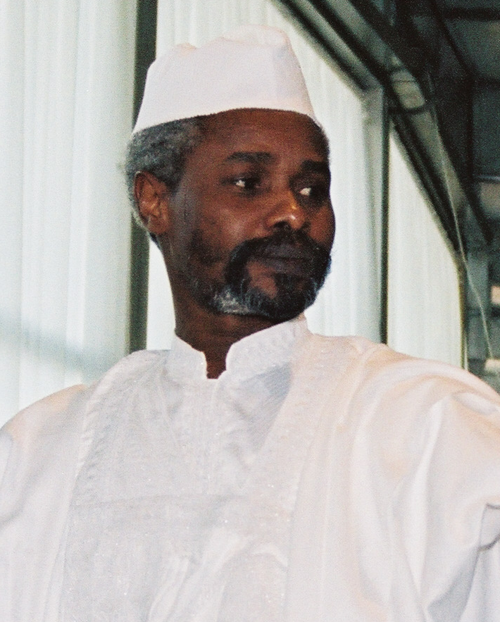
Hissène Habré† was the Ex-President of Chad whose legacy is defined not by nation-building, but by brutal repression and a groundbreaking conviction for crimes against humanity. Ruling from 1982 until his overthrow in 1990, Habré's regime in the heart of Africa was marked by systematic violence against perceived opponents. His notoriety stems from the sheer scale of human rights abuses committed under his command, which led to his historic prosecution. Decades after his fall, Hissène Habré† became the first former head of state to be convicted for crimes against humanity by the national courts of another country, setting a monumental precedent in international justice. This biography explores the life, rule, and legal reckoning of one of Africa's most feared autocrats.
Early Life and Education: From Herder to Guerrilla Leader
Hissène Habré was born in 1942 into an ethnic Toubou family in the northern desert region of Chad, then part of French Equatorial Africa. His early life was spent in a nomadic pastoral community, an experience that ingrained in him the harsh realities of the Sahel. Displaying academic promise, he was selected for a colonial administration school in the capital, N'Djamena. His education continued in France, where he studied political science and law, earning degrees from the Institute of Overseas Higher Studies and the University of Paris.
This French education exposed him to Western political thought but also to the ferment of anti-colonial ideas circulating in 1960s Paris. Returning to a newly independent Chad embroiled in civil conflict, Habré's worldview was shaped by a combination of his nomadic roots, legal training, and burgeoning nationalist fervor. He initially worked as a sub-prefect but soon turned to rebellion, finding his calling not in bureaucracy but in armed struggle. His formative years culminated in his leadership of the Armed Forces of the North (FAN), a guerrilla movement drawn from northern ethnic groups, which he used as a springboard to national power.
Career and Major Achievements: The Path to Power and Atrocity
Habré's rise in Chadian Politics & Government was inextricably linked to the nation's complex civil war and Cold War geopolitics. After leading his FAN rebels in a fight against President Félix Malloum, he was appointed Prime Minister in 1978. This uneasy coalition collapsed, leading to further conflict. With crucial support from the United States (who saw him as a bulwark against Libya's Muammar Gaddafi) and France, Habré's forces captured N'Djamena on June 7, 1982. He declared himself President and swiftly consolidated absolute power.
Consolidation of Power and Repressive Apparatus
Upon seizing the presidency, Hissène Habré† established a one-party state dominated by his Executive Presidency. He created a vast and ruthless secret police force, the Documentation and Security Directorate (DDS), which became the primary instrument of state terror. The DDS operated a network of prisons where arbitrary detention, torture, and extrajudicial killings were routine. Key achievements cited by his regime, such as military victories against Libyan forces in the 1987 "Toyota War," were overshadowed by the internal war he waged on his own people. His rule was characterized by targeted campaigns against ethnic groups he deemed disloyal, particularly the Sara, Hadjerai, and Zaghawa.
International Context and Fall from Power
Habré's regime coincided with the final decade of the Cold War. His staunch opposition to Gaddafi earned him continuous military and financial aid from the United States and France, who largely turned a blind eye to his domestic atrocities. However, as the Cold War ended, his strategic value diminished. Growing internal dissent and a rebellion led by his former military chief, Idriss Déby Itno, culminated in Habré's overthrow on December 1, 1990. He fled into exile in Senegal, where he lived for over two decades, seemingly beyond the reach of justice.
Personal Life, Legacy, and Historic Trial
In his personal life, Hissène Habré† was known as a reclusive and austere figure, deeply influenced by his nomadic upbringing. He was married with children. His personal interests were largely subsumed by politics and security. The legacy of Hissène Habré† is one of profound trauma for Chad. Truth commissions estimate that his regime was responsible for approximately 40,000 political killings and the systematic torture of thousands more. The scale of the atrocities left deep scars on the nation's social fabric.
Habré's most significant legacy, however, may be his unprecedented legal conviction. After years of campaigning by victims and human rights groups, he was arrested in Senegal in 2013. In a landmark trial before the Extraordinary African Chambers in the Senegalese judicial system—a tribunal created by the African Union—Hissène Habré† was found guilty. On May 30, 2016, he was convicted of crimes against humanity, war crimes, and torture, including sexual violence. Key facts from the trial include:
- Conviction: Guilty on all counts.
- Sentence: Life imprisonment.
- Reparations: The court also ordered the creation of a $150 million trust fund for victims.
- Precedent: The first time a former head of state was convicted for human rights crimes in the courts of another country.
He died in custody in Senegal on August 24, 2021, at the age of 79.
Net Worth and Financial Affairs
While precise figures for the net worth of Hissène Habré† are not publicly verified, his financial dealings were a subject of investigation and allegation. During his eight-year rule, he was accused of amassing personal wealth through state control and embezzlement. After his overthrow, the new government in Chad claimed to have discovered significant assets, though these were never fully detailed in public records. His regime was noted for its financial opacity. In exile, he lived a relatively modest life in Dakar, Senegal, supported by his family and, allegedly, by funds moved out of Chad during his flight. The 2016 trial also addressed economic crimes, with the court ordering collective reparations for victims, acknowledging the systemic plunder that occurred under his Executive Presidency. His financial legacy remains intertwined with the broader criminality of his regime rather than documented personal business ventures.
Net Worth Analysis
Hissène Habré was a former dictator convicted of crimes against humanity and died in prison in 2021; there are no credible reports of significant personal wealth, and his assets were subject to legal claims for victim reparations.
Quick Stats
Related People
Aaron Motsoaledi
LP; Minister of Home Affairs
Abane Ramdane†
FLN Leader & Strategist
Abdalla Hamdok
Ex-Prime Minister
Abdallah Kigoda
Ex-Minister of Natural Resources