$700B
Estimated Net Worth
As of 2011 • low confidence
Financial Breakdown
Asset Distribution
Assets vs Liabilities
Assets
Disclaimer: These financial estimates are based on publicly available information and should be considered approximate. Last updated: 12/29/2025
Biography
Introduction: The Pillar of Stability
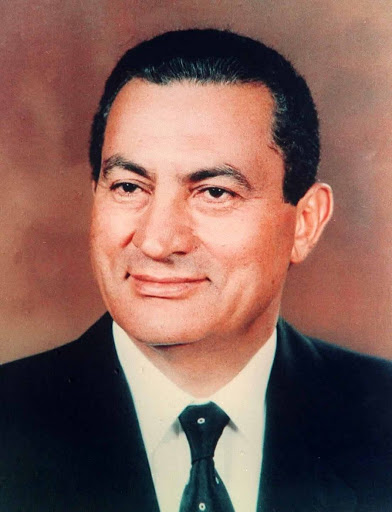
Hosni Mubarak† was the fourth President of the Arab Republic of Egypt, ruling for nearly three decades from October 14, 1981, until February 11, 2011. His presidency, one of the longest in modern Egyptian history, defined an era of significant regional and domestic politics. Mubarak ascended to power following the assassination of his predecessor, Anwar Sadat, and quickly positioned himself as a steadfast leader focused on maintaining stability. His tenure was marked by a commitment to the Camp David Accords with Israel, a strong alliance with the United States, and a firm, often authoritarian, grip on domestic affairs. While credited by some with providing economic growth and regional mediation, his rule was ultimately challenged by widespread allegations of corruption, political repression, and economic disparity, culminating in his overthrow during the Arab Spring uprisings. The legacy of Hosni Mubarak† remains a deeply polarizing subject in Politics & Government discussions about the Modern Era of the Middle East.
Early Life & Military Education
Muhammad Hosni El Sayed Mubarak was born on May 4, 1928, in Kafr El-Meselha, Monufia Governorate, Egypt. He was the son of a minor government official and grew up in a lower-middle-class family, an experience that shaped his pragmatic outlook. Demonstrating academic and athletic promise from a young age, Mubarak's path was set when he joined the Egyptian Military Academy, graduating in 1949. His exceptional performance earned him a commission in the Egyptian Air Force, where he quickly distinguished himself as a skilled pilot and a dedicated officer.
Mubarak's formative experiences were heavily influenced by his military career. He underwent further training in the Soviet Union, attending the Frunze Military Academy, which was a common practice for Egyptian officers during the period of Soviet-Egyptian cooperation. He rose steadily through the ranks, demonstrating strong administrative capabilities. A pivotal moment in his early career was his appointment as the Director of the Egyptian Air Force Academy in 1967, followed by Chief of Staff for the Air Force in 1969. His leadership was crucial during the October War of 1973 (Yom Kippur War), where the Egyptian Air Force executed successful initial operations. This military success catapulted him to national hero status and caught the attention of President Anwar Sadat, who appointed him as Vice President in 1975.
Career & Major Achievements as President
Following the assassination of President Sadat on October 6, 1981, Hosni Mubarak† assumed the presidency. He moved quickly to consolidate power, declaring a state of emergency—a law that would remain in effect for virtually his entire 30-year rule, granting sweeping powers to security forces. His early years were focused on combating Islamic extremism and restoring state control while presenting a more modest public image compared to Sadat.
Foreign Policy and Regional Stature
In foreign policy, Mubarak maintained Egypt's peace treaty with Israel, making him a key partner for the United States and a recipient of substantial American military and economic aid—averaging about $1.5 billion annually. He positioned Egypt as a central mediator in the Israeli-Palestinian conflict, hosting numerous summits and negotiations. Regionally, he led Arab opposition to Iraq's 1990 invasion of Kuwait, committing Egyptian troops to the US-led coalition during the Gulf War. This move restored Egypt's standing in the Arab world after its isolation following the peace with Israel.
Domestic Governance and Economic Challenges
Domestically, Mubarak's rule was characterized by a lack of political pluralism. His National Democratic Party (NDP) dominated all aspects of political life. While his government implemented several infrastructure megaprojects, such as the expansion of road networks and the construction of the Sadat City development, the economy struggled with bureaucracy, corruption, and a growing gap between rich and poor. In the 2000s, under pressure from the Bush administration, Mubarak allowed the first multi-candidate presidential election in 2005, which he won amid allegations of fraud and the imprisonment of his main rival, Ayman Nour.
Major projects like the Toshka Project, an ambitious irrigation plan to expand arable land, and economic reforms in the mid-2000s spurred GDP growth, but benefits were unevenly distributed. Youth unemployment remained high, and political frustration simmered beneath the surface of apparent stability.
Personal Life, Downfall, and Legacy
Hosni Mubarak† was married to Suzanne Mubarak (née Thabet), a prominent advocate for literacy and children's issues in her own right. They had two sons: Alaa, a businessman who largely stayed out of politics, and Gamal, a banker whose rapid political rise within the NDP fueled speculation about a hereditary succession—a deeply unpopular notion that galvanized opposition. The family's perceived wealth and influence became a focal point for public anger.
Mubarak's downfall was swift and historic. Inspired by the Tunisian revolution, mass protests erupted across Egypt on January 25, 2011. Millions demanded "bread, freedom, and social justice" and an end to Mubarak's rule. After 18 days of unprecedented demonstrations and deadly clashes, Mubarak resigned on February 11, 2011, handing power to the Supreme Council of the Armed Forces. His resignation marked the end of an era. In the years that followed, he faced a series of trials on charges of corruption and complicity in the killing of protesters. He was initially convicted and sentenced to life imprisonment in 2012, but later rulings saw many charges overturned. He was finally acquitted in 2017 and released from custody.
Hosni Mubarak† died on February 25, 2020, at the age of 91. His legacy is profoundly contested. To some, he was the "pharaoh" who stifled democracy and plundered the nation's wealth. To others, he was a symbol of stability in a volatile region, a bulwark against Islamist extremism, and a reliable international partner. His three-decade rule remains a central, complex chapter in the story of modern Egypt.
Net Worth & Business Interests
The exact net worth of Hosni Mubarak† and his family was a subject of intense speculation and investigation, especially after the 2011 revolution. While no official figure was ever conclusively verified, estimates by international media and analysts during the uprising ranged wildly from several billion to tens of billions of dollars, allegedly accumulated through corrupt business dealings, kickbacks, and the leveraging of political power. Following his ouster, Egyptian authorities froze the assets of the Mubarak family and launched probes into their wealth.
His sons, Alaa and Gamal, were deeply involved in business and finance. Gamal Mubarak, as a senior executive at Bank of America and later as a key figure in the NDP's policies committee, was seen as the architect of economic reforms that critics argued benefited a small circle of connected businessmen. The family's reported holdings were said to include real estate in Egypt, London, and New York, as well as shares in major companies. In 2020, an Egyptian court ordered the confiscation of funds and assets belonging to Mubarak and his sons, valued at nearly 125 million Egyptian pounds (approx. $8 million at the time), as part of a final settlement for profiting from the misuse of state funds—a fraction of the earlier estimates. The true scale of their wealth remains obscured, emblematic of the crony capitalism that defined the later years of his presidency.
Key Facts & Timeline
- Full Name: Muhammad Hosni El Sayed Mubarak
- Born: May 4, 1928, Kafr El-Meselha, Kingdom of Egypt
- Died: February 25, 2020, Cairo, Egypt
- Presidential Term: October 14, 1981 – February 11, 2011
- Preceded by: Sufi Abu Taleb (Acting, after Sadat's assassination)
- Succeeded by: Mohamed Hussein Tantawi (as head of SCAF)
- Political Party: National Democratic Party (NDP)
- Spouse: Suzanne Mubarak (m. 1959)
- Key Policy: Upholding the 1979 Camp David Peace Treaty with Israel.
- Major Event: Ousted during the Egyptian Revolution of 2011, part of the Arab Spring.
Net Worth Analysis
The article states: 'Egyptian Estimate Of Mubarak's Wealth Soars To $700 Billion' and 'the former president's clan may have squirreled away $700 billion in "cash, gold and other state-owned valuables."'
Quick Stats
Related People

Aaron Motsoaledi
LP; Minister of Home Affairs

Abane Ramdane†
FLN Leader & Strategist

Abdalla Hamdok
Ex-Prime Minister

Abdallah Kigoda
Ex-Minister of Natural Resources