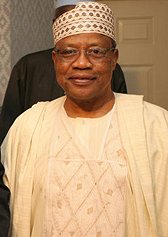
$12B
Estimated Net Worth
As of 2024 • medium confidence
Financial Breakdown
Asset Distribution
Assets vs Liabilities
Assets
Disclaimer: These financial estimates are based on publicly available information and should be considered approximate. Last updated: 12/29/2025
Biography
Introduction: The Enigmatic Military Strategist
General Ibrahim Babangida, often referred to as IBB, is one of the most consequential and controversial figures in Nigerian history. As the country's Military President from August 1985 to August 1993, he presided over a pivotal era marked by profound economic restructuring, complex political engineering, and intense national debate. His tenure fundamentally reshaped Nigeria's political economy and social fabric. A master political tactician, Ibrahim Babangida earned the nickname "Maradona" for his deft, often unpredictable, maneuvering through the turbulent landscape of Nigerian Politics & Government. His most notable, yet contentious, achievement was the orchestration of a prolonged transition to civilian rule, which culminated in the annulled June 12, 1993, presidential election—a watershed moment that continues to echo in Nigeria's democratic journey.
Early Life & Military Education
Ibrahim Babangida was born on August 17, 1941, in Minna, present-day Niger State, Nigeria. Hailing from the Gwari ethnic group, his early life was shaped in the modest setting of a middle-class family. His father, Muhammad Babangida, was a police officer, instilling early discipline. Young Ibrahim's educational journey began at the Native Authority Primary School in Minna and continued at the Provincial Secondary School in Bida.
His path toward a military career was cemented in 1962 when he enlisted in the Nigerian Army. He underwent initial training at the prestigious Nigerian Military Training College (NMTC) in Kaduna. Demonstrating promise, he was selected for further officer cadet training abroad at the Royal Armoured Centre in the United Kingdom. This formative period coincided with Nigeria's early post-independence years and the brewing tensions that would later erupt into civil war. Ibrahim Babangida further honed his military expertise at the Indian Military Academy and the prestigious U.S. Army Armor School at Fort Knox, developing into a skilled armored warfare specialist. These experiences during a volatile period in Nigeria's history equipped him not only with military prowess but also with a keen understanding of power dynamics, which would later define his approach to national leadership.
Career & Major Achievements: Rule, Reforms, and Controversy
Ibrahim Babangida rose through the military ranks, playing significant roles during the Nigerian Civil War (1967-1970). His career trajectory saw him hold several command and staff positions, including Director of Army Staff Duties and Plans. He was a key player in the military coup of July 1975 that brought General Murtala Mohammed to power and was later instrumental in the coup of December 31, 1983, that ousted President Shehu Shagari, bringing Major General Muhammadu Buhari to power, with Babangida as Chief of Army Staff.
The August 1985 Coup and Ascension to Power
On August 27, 1985, Ibrahim Babangida led a palace coup that overthrew the Buhari regime, citing economic stagnation and authoritarian tendencies. He assumed the title of President, Commander-in-Chief of the Armed Forces, and positioned himself as a "military president" with a populist, corrective agenda.
Economic Restructuring: The Structural Adjustment Program (SAP)
His administration's most far-reaching policy was the introduction of the Structural Adjustment Program (SAP) in 1986, under the guidance of the International Monetary Fund (IMF) and World Bank. Key elements included:
- Currency Devaluation: The Naira was devalued to boost exports.
- Privatization and Commercialization: State-owned enterprises were sold or restructured.
- Trade Liberalization: Reduction of tariffs and import licenses.
- Subsidy Removal: Gradual withdrawal of government subsidies on petroleum and agriculture.
Political Engineering and the Annulled Election
Babangida's political transition program was an elaborate, eight-year process. He banned and unbanned politicians, created two government-engineered political parties—the Social Democratic Party (SDP) and the National Republican Convention (NRC)—and repeatedly postponed the handover date. The program climaxed with the presidential election on June 12, 1993, widely regarded as the freest and fairest in Nigerian history. The election, apparently won by business mogul Moshood Kashimawo Olawale (MKO) Abiola, was annulled by the Babangida regime in June 1993, plunging the nation into crisis. Under immense pressure, Ibrahim Babangida "stepped aside" in August 1993, handing over to an Interim National Government.
Other Notable Policies and Events
His regime also established:
- The Directorate of Food, Roads, and Rural Infrastructure (DFRRI) to develop rural areas.
- The National Directorate of Employment (NDE) to combat unemployment.
- The People's Bank and Community Banks to provide micro-credit.
Personal Life, Philanthropy, and Lasting Legacy
Ibrahim Babangida is married to Maryam King Babangida (1948-2009), who was a highly influential First Lady. She pioneered the pet project "Better Life for Rural Women" and redefined the office of the First Lady in Nigeria. Together, they have children. Since leaving office, Babangida has maintained a significant presence in Nigerian Politics & Government as a behind-the-scenes power broker and elder statesman, often consulted by political actors. He resides in his sprawling hilltop mansion in Minna, Niger State, which remains a pilgrimage site for politicians. His philanthropic endeavors are often channeled through the Ibrahim Babangida Foundation and other private means, focusing on education and health initiatives, though these are sometimes viewed through the lens of his controversial past.
The legacy of Ibrahim Babangida is profoundly dualistic. To some, he is a visionary reformer who attempted to structurally modernize Nigeria's economy and create a unique two-party system. To many others, he is the architect of economic policies that impoverished millions and the leader who truncated Nigeria's most credible democratic experiment, setting back democratic consolidation for years. His annulment of the June 12 election remains an indelible stain on his record and a defining trauma in the nation's political consciousness. This complex legacy ensures that Ibrahim Babangida continues to be a subject of intense study, debate, and fascination in the annals of Nigerian history.
Net Worth & Business Ventures
While no official figures exist, General Ibrahim Babangida is widely believed to be among the wealthiest former heads of state in Africa. His estimated net worth, often speculated to run into hundreds of millions of dollars, is attributed to vast business interests accumulated during and after his rule. His business portfolio is diversified and includes:
- Agriculture: Extensive farmland and agro-allied investments.
- Real Estate: Prime property holdings across Nigeria, including his famous Minna hilltop estate.
- Media: Ownership stakes in broadcast and print media organizations.
- Consultancy: He is believed to run a high-level political and business consultancy.
Net Worth Analysis
"The 70 year-old former military ruler governed Nigeria from 1985 to 1993 and is widely believed to have laundered some $12 billion earned from an oil windfall during the 1992 Gulf War."
Quick Stats
Related People
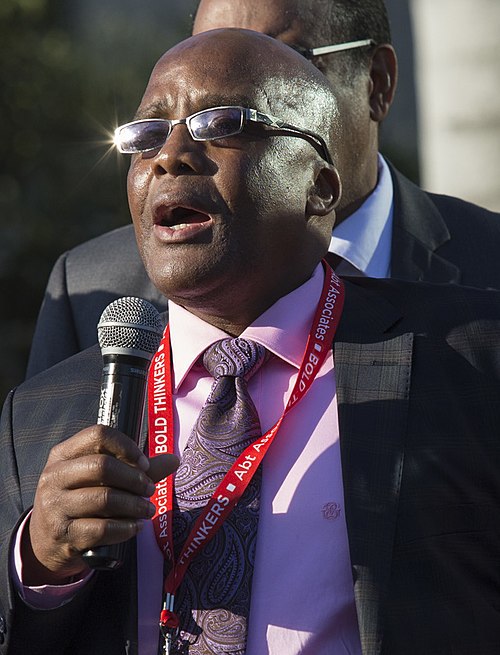
Aaron Motsoaledi
LP; Minister of Home Affairs
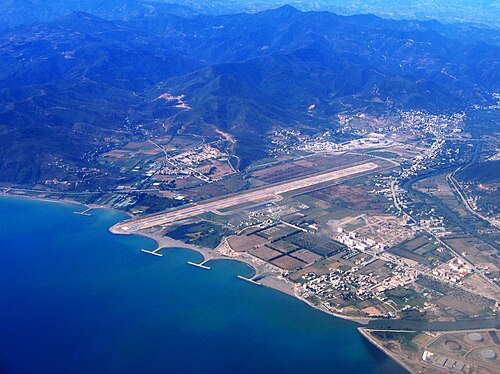
Abane Ramdane†
FLN Leader & Strategist
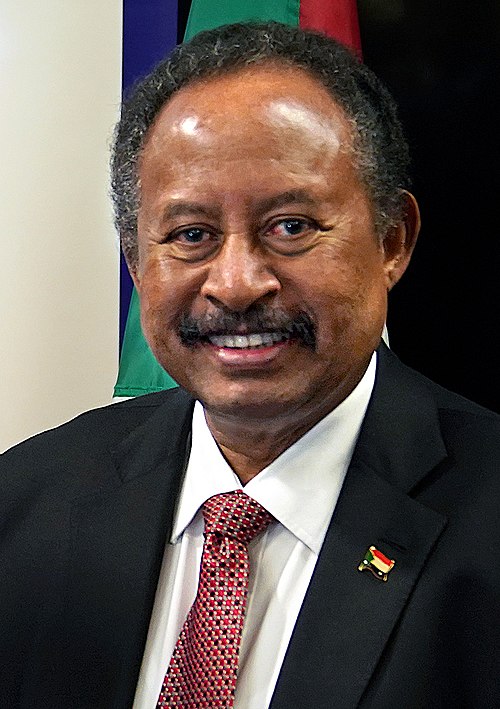
Abdalla Hamdok
Ex-Prime Minister
Abdallah Kigoda
Ex-Minister of Natural Resources