Financial Breakdown
Asset Distribution
Assets vs Liabilities
Assets
Disclaimer: These financial estimates are based on publicly available information and should be considered approximate. Last updated: 12/29/2025
Biography
Introduction: The Statesman of Mali
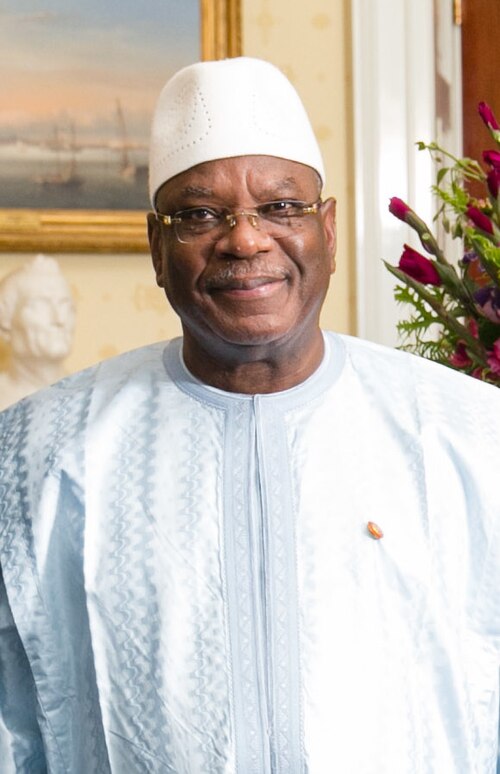
Ibrahim Boubacar Keïta, widely known by his initials IBK, was a pivotal figure in the Politics & Government landscape of West Africa. Serving as the Ex-President of Mali from 2013 until his removal in a 2020 military coup, his tenure was defined by efforts to stabilize a nation fractured by conflict and political upheaval. Born in 1945, Keïta rose to prominence as a seasoned diplomat and political leader, ultimately becoming the nation's fourth president following the democratic elections that aimed to restore constitutional order after the 2012 crisis. His key achievement was arguably his initial election itself, which marked a critical step in Mali's attempted return to civilian rule. However, his presidency became increasingly challenged by persistent jihadist insurgencies, ethnic violence, and widespread public discontent, culminating in his dramatic ouster. This biography explores the life, career, and complex legacy of one of Mali's most prominent contemporary leaders.
Early Life and Education: Formative Years
Ibrahim Boubacar Keïta was born on January 29, 1945, in Koutiala, a city in what was then French Sudan. His early years were steeped in the region's rich cultural and political history, which would later influence his worldview. Keïta pursued an ambitious academic path, first at the Lycée Janson-de-Sailly in Paris and later at the University of Dakar in Senegal and the University of Paris I Panthéon-Sorbonne. He earned a master's degree in history and additional diplomas in political science and international relations. This robust academic foundation in history and political theory equipped him with a deep understanding of statecraft and international dynamics.
His formative experiences in France during a period of global decolonization and African independence movements were crucial. Before entering Politics & Government directly, Keïta worked as a researcher and project manager for organizations like the European Development Fund and the non-governmental organization Africare. This early career exposed him to the mechanics of international development aid and diplomacy, skills he would later deploy on the national stage. These experiences abroad shaped his pragmatic, yet often firm, approach to leadership and his initial reputation as an intellectual in Malian political circles.
Career and Major Achievements: The Path to the Presidency
Ibrahim Boubacar Keïta's political career began in earnest upon his return to Mali. He served as a diplomatic advisor to President Moussa Traoré and later as the Director of the European Development Fund's operations in Mali. His big break came after the democratic revolution of 1991. Under President Alpha Oumar Konaré, Keïta was appointed as Mali's Ambassador to Côte d'Ivoire, Gabon, Burkina Faso, and Niger, showcasing his diplomatic acumen.
Rise in Domestic Politics
In 1994, his domestic political ascent accelerated when President Konaré appointed him as Prime Minister. As Prime Minister until 2000, Ibrahim Boubacar Keïta earned a reputation as a tough, no-nonsense leader. He was credited with implementing structural adjustment programs and managing a delicate political transition. His firm stance during a period of teacher strikes earned him both respect and criticism, cementing his image as a strongman. Following his term as PM, he served as President of the National Assembly from 2002 to 2007, further consolidating his influence within the political system.
The Presidential Quest and First Term
After founding his own party, the Rally for Mali (RPM), Keïta ran for president in 2002 and 2007, losing both times. His moment finally arrived in the aftermath of Mali's profound crisis. In 2012, a Tuareg rebellion and subsequent military coup plunged the country into chaos, allowing jihadist groups to seize control of the northern two-thirds of the nation. A French-led military intervention in early 2013 pushed back the insurgents, setting the stage for crucial elections.
In August 2013, Ibrahim Boubacar Keïta won the presidential runoff election with over 77% of the vote, becoming the Ex-President of Mali tasked with national reconciliation and recovery. His major achievements during his first term included:
- Overseeing the signing of the Algiers Peace Accord in 2015 between the government, pro-government militias, and former Tuareg rebels, aiming to decentralize power and integrate combatants.
- Restoring a measure of constitutional order and international legitimacy after the 2012 coup.
- Maintaining a strategic security partnership with France (Operation Barkhane) and supporting the formation of the G5 Sahel joint force to combat terrorism.
Second Term and Mounting Challenges
Re-elected in 2018, his second term was marked by escalating difficulties. The security situation deteriorated significantly, with jihadist violence spreading to central and southern Mali. Ethnic massacres, often involving militias, became frequent. Public frustration grew over economic stagnation, perceived government corruption, and his administration's inability to protect civilians. A controversial legislative election in early 2020 sparked mass protests led by the M5-RFP opposition movement. This political crisis created the conditions for a military coup d'état on August 18, 2020, led by Colonel Assimi Goïta, which removed Ibrahim Boubacar Keïta from power. He resigned and dissolved the parliament while in detention, bringing his 7-year presidency to an abrupt end.
Personal Life, Legacy, and Later Years
Outside the intense realm of Politics & Government, Ibrahim Boubacar Keïta was known as an avid reader and a connoisseur of literature and music. He was married to Keïta Aminata Maïga, a former Malian first lady known for her charitable work. Together they had four children. Keïta was often characterized by his eloquent, sometimes grandiloquent, speaking style and his signature spectacles and suit, projecting an image of the elder statesman.
The legacy of Ibrahim Boubacar Keïta is deeply complex and subject to ongoing debate. To some, he was a committed democrat who steered Mali through a fragile post-crisis period and sought peace through the Algiers Accord. To others, his presidency symbolized a failing political class that could not address the root causes of Mali's instability—corruption, poor governance, and a disconnect from the populace. His ouster in 2020 reflected a deep national malaise and opened a new, uncertain chapter of military-led transition. IBK passed away on January 16, 2022, in Bamako at the age of 76. His death closed the book on a life dedicated to Malian public service, leaving behind a nation still grappling with the immense challenges he faced during his presidency.
Net Worth and Business Ventures
As with many high-ranking officials in Politics & Government, the precise net worth of Ibrahim Boubacar Keïta was not publicly transparent and often a subject of speculation. He entered politics after a career in international development and diplomacy, which provided a stable income. While in office, Malian presidents receive a state salary and benefits. There were no major, publicly documented private business ventures attributed to him that would indicate significant independent wealth generation. However, allegations of corruption and nepotism within his administration were frequent themes used by his political opponents and protest movements, particularly during the M5-RFP demonstrations in 2020. These allegations, never legally proven against him personally, contributed to the public perception of a governing elite out of touch with the economic struggles of ordinary Malians. His financial standing remained officially undisclosed, fitting a pattern common among political figures in the region.
Frequently Asked Questions
What is Ibrahim Boubacar Keïta's estimated net worth?
Ibrahim Boubacar Keïta has an estimated net worth of $5.0 Million.
What is Ibrahim Boubacar Keïta's role and nationality?
Ibrahim Boubacar Keïta is a Ex-President of Mali from Mali.
How did Ibrahim Boubacar Keïta make their money?
Ibrahim Boubacar Keïta built their fortune primarily through As a former public official from Mali, a lower-income country, his wealth is not comparable to major African business billionaires and no credible public net worth figures exist..
How old is Ibrahim Boubacar Keïta?
Ibrahim Boubacar Keïta was born in 1945 (81 years old).
Which category is Ibrahim Boubacar Keïta listed under?
Ibrahim Boubacar Keïta is featured under the Politics & Government category on NetWorth Africa.
How is Ibrahim Boubacar Keïta's net worth calculated?
NetWorth Africa estimates financial valuations using publicly available stock equity holdings, company ownership records, real estate assets, and verified market data.
Net Worth Analysis
As a former public official from Mali, a lower-income country, his wealth is not comparable to major African business billionaires and no credible public net worth figures exist.
Quick Stats
Related People
Aaron Motsoaledi
LP; Minister of Home Affairs • South Africa
Abane Ramdane†
FLN Leader & Strategist • Algeria
Abdalla Hamdok
Ex-Prime Minister • Sudan
Abdallah Kigoda
Ex-Minister of Natural Resources • Tanzania