$50M
Estimated Net Worth
As of 2024 • medium confidence
Financial Breakdown
Asset Distribution
Assets vs Liabilities
Assets
Liabilities
Disclaimer: These financial estimates are based on publicly available information and should be considered approximate. Last updated: 12/29/2025
Biography
Introduction: The Soldier-President of the Sahel
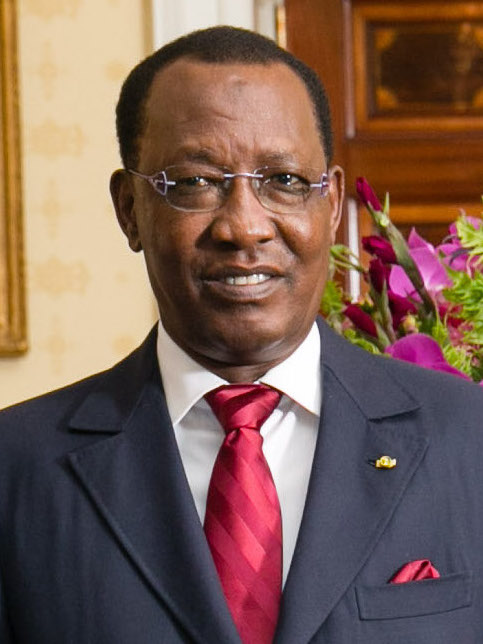
Marshal Idriss Déby Itno, known to the world as Idriss Déby†, was a defining figure in modern African Politics & Government, ruling the landlocked nation of Chad for over three tumultuous decades. Ascending to power through a military coup in 1990, his tenure as the Ex-President of Chad was marked by a paradoxical blend of authoritarian stability, regional military prowess, and persistent internal conflict. A former army commander-in-chief, Déby's rule was characterized by his adept navigation of international alliances, particularly with France and the United States in the post-9/11 war on terror, which cemented his regime's survival. His most notable achievement was transforming Chad's military into one of the most effective counter-insurgency forces in the Sahel, a feat that brought both international leverage and domestic controversy. The life and reign of Idriss Déby† remain central to understanding the political dynamics of not only Chad but the entire volatile Sahel region.
Early Life & Education: From Herder to Cadet
Idriss Déby was born in 1952 in the small village of Berdoba, within the arid region of Ennedi, northeast Chad. He hailed from the Zaghawa ethnic group, a community spanning the Chad-Sudan border known for its warrior traditions. His early life was rooted in the nomadic pastoralist lifestyle of his people, an experience that ingrained in him a deep understanding of the Sahara's harsh terrain—a knowledge he would later use to great military effect. For his formal education, Déby was sent to the capital, N'Djamena. His academic path took a decisive turn when he pursued a career in the armed forces, a common route for upward mobility in post-colonial Chad.
He received his military training abroad, a privilege afforded to promising cadets. Déby attended the École d’Officiers d’Infanterie de Montpellier in France and later graduated from the prestigious Institut Aéronautique de Salon-de-Provence in 1976, earning his wings as a pilot. This Franco-African military education was formative, connecting him to the networks of power and patronage that would shape Chadian Politics & Government. Upon returning to Chad, he quickly rose through the ranks during the chaotic civil war against the regime of President Félix Malloum and later, the rule of Hissène Habré, whose brutal security apparatus Déby would eventually help lead before turning against him.
Career & Major Achievements: Seizing Power and Holding the State
The career of Idriss Déby† is a chronicle of military and political maneuvering. He served as a key military advisor and commander-in-chief under President Hissène Habré after helping him seize power in 1982. However, by the late 1980s, relations soured. Fearing for his life, Déby fled to Sudan in 1989, where he assembled the Patriotic Salvation Movement (MPS) rebel group. In a dramatic blitzkrieg campaign in November and December 1990, his forces overthrew Habré. On December 2, 1990, Idriss Déby declared himself President of the Republic of Chad, a title he would hold until his death.
Consolidation and "Managed Democracy"
Déby's early years were spent fending off rebellions, often launched from Sudan by factions loyal to Habré or disaffected Zaghawa rivals. To legitimize his rule, he introduced a multi-party constitution in 1996 and won a series of presidential elections in 1996, 2001, 2006, 2011, 2016, and 2021. These polls were consistently criticized by international observers and opposition groups as being marred by fraud, intimidation, and the constitutional manipulation of term limits. In 2005, he removed the two-term limit from the constitution, and in 2018, he reinstated it but in a way that reset the term count, allowing him to stay in power until 2033.
Regional Power Broker and Counter-Terrorism Ally
Perhaps the most significant dimension of Déby's rule was his transformation into a indispensable Western ally in the Sahel's counter-terrorism operations. Following the 2001 US invasion of Afghanistan, intelligence revealed Chadian fighters were in Al-Qaeda training camps. Déby swiftly positioned Chad as a partner in the "War on Terror." This strategic pivot brought significant military and financial aid. His military, the Chadian Armed Forces, renowned for their desert warfare skills, became a regional powerhouse. Déby deployed troops to:
- Mali in 2013 to help French forces oust Islamist militants from the north.
- The Lake Chad basin as a leading member of the Multinational Joint Task Force against Boko Haram.
- Peacekeeping missions in the Central African Republic and Sudan's Darfur region.
Economic Management and the Oil Era
A major economic milestone during Déby's presidency was the commencement of oil production in 2003 via a World Bank-backed pipeline through Cameroon. This promised to transform Chad's destitute economy. However, despite initial revenue management agreements, much of the wealth was diverted to military spending and patronage. While the capital, N'Djamena, saw some infrastructural development, Chad consistently ranked near the bottom of the UN Human Development Index, with widespread poverty persisting throughout his rule.
Personal Life & Legacy: The Marshal's Enduring Shadow
Idriss Déby was a quintessential "strongman" leader, known for his imposing presence, military fatigues, and a reputation for political cunning. He was a devout Muslim who performed the Hajj pilgrimage. He married multiple times and fostered a vast network of familial and ethnic ties that formed the core of his regime's security apparatus. Several of his sons held high-ranking military and intelligence positions. Beyond politics, he was known to be an avid fan of horseback riding, a nod to his nomadic heritage.
The legacy of Idriss Déby† is profoundly complex and contested. On one hand, he is credited with maintaining the unity of a fractious state, building a formidable military, and giving Chad an outsized voice in regional security matters. On the other, his reign was marked by:
- Authoritarian governance and human rights abuses.
- Corruption and the mismanagement of oil wealth.
- The perpetuation of a political system centered on his personal rule.
Net Worth & Financial Influence
As with many long-serving leaders in resource-rich but impoverished nations, the personal wealth of Idriss Déby† was a subject of much speculation but little transparent documentation. He was never listed among the world's publicly known billionaires, but his family's control over key sectors of the Chadian state and economy suggested significant financial influence. During his presidency, his family acquired substantial assets, including media outlets and interests in the lucrative oil and telecommunications sectors. Reports from organizations like Global Witness have highlighted concerns over the opacity of oil revenue flows and systemic corruption. While no official net worth was ever verified, it is widely acknowledged within the context of Chad's Politics & Government that Déby and his inner circle commanded vast economic resources, which were instrumental in maintaining the patronage networks essential to his regime's longevity. His death has led to increased scrutiny of these assets and the financial structures of his rule.
Net Worth Analysis
His network stands at $50 million.
Quick Stats
Related People

Aaron Motsoaledi
LP; Minister of Home Affairs

Abane Ramdane†
FLN Leader & Strategist

Abdalla Hamdok
Ex-Prime Minister

Abdallah Kigoda
Ex-Minister of Natural Resources