Financial Breakdown
Asset Distribution
Assets vs Liabilities
Assets
Liabilities
Disclaimer: These financial estimates are based on publicly available information and should be considered approximate. Last updated: 12/31/2025
Biography
Introduction: A Voice for the Diaspora
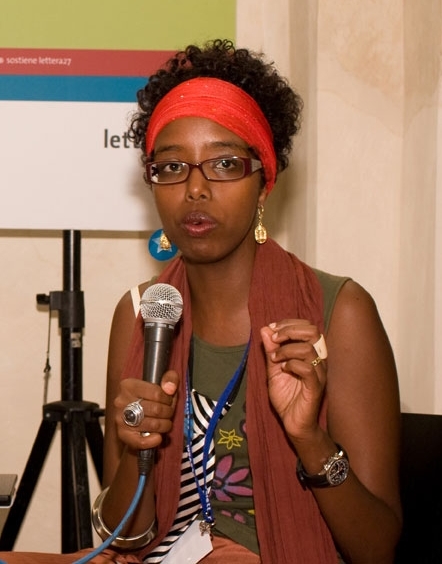
Igiaba Scego stands as one of the most vital and resonant voices in contemporary European literature. An Italian-Somali novelist, essayist, and journalist, Scego has dedicated her career to exploring the complex intersections of migration, identity, colonialism, and cultural hybridity. Born in Rome in 1974 to Somali parents who fled the regime of Siad Barre, her work is deeply rooted in the experience of living between two worlds. Scego's narratives give voice to the often-silenced stories of the diaspora, particularly those of Black Italian women, making her a pivotal figure in Arts & Culture discussions in Italy and beyond. Her key achievement lies in her powerful ability to weave together the painful legacy of Italian colonialism in the Horn of Africa with the present-day realities of racism and integration in Europe, creating a unique and essential literary corpus that challenges national narratives and expands the canon of Italian literature.
Early Life & Education: Formative Roots in Rome and Somalia
Igiaba Scego was born in Rome, Italy, in 1974, into a family deeply marked by political exile. Her parents were part of Somalia's educated elite who sought refuge in Italy following the military coup of 1969. Growing up in the Roman neighborhood of Esquilino, Scego was immersed from an early age in a multicultural environment, yet she also grappled with the challenges of being perceived as an outsider in her own country. Her family home was a place where memories of Somalia—its scents, stories, and traumas—were kept alive, fostering a strong sense of connection to a homeland she knew primarily through narrative.
This dual heritage became the bedrock of her intellectual and creative development. Scego pursued higher education in Foreign Literatures at the University of Rome "La Sapienza," where she deepened her academic understanding of post-colonial studies and cross-cultural storytelling. Her formative years were also shaped by the pervasive racism and discrimination in 1980s and 1990s Italy, a period marked by rising xenophobia. These personal experiences of otherness, combined with the inherited memories of her family's past, provided the urgent raw material for her future writing, compelling her to use literature as a tool for historical excavation and social critique.
Career & Major Achievements: Mapping History and Identity
Igiaba Scego's career began in journalism and cultural mediation, but it was her literary debut that firmly established her reputation. Her first novel, La nomade che amava Alfred Hitchcock (The Nomad Who Loved Alfred Hitchcock), published in 2003, immediately signaled the arrival of a distinctive new voice. The novel intertwines the stories of two Somali women from different generations, exploring themes of exile, cinema, and desire.
Literary Breakthroughs and Critical Acclaim
Scego's subsequent works have consistently garnered critical praise and prestigious awards. Oltre Babilonia (Beyond Babylon) (2008) is an ambitious, polyphonic novel following the lives of two daughters and their mothers across Rome, Buenos Aires, and Somalia, dealing with the aftermath of the Somali civil war and Italy's colonial history. Her 2015 novel, Adua, is a particularly powerful work that connects the story of a Somali father forced to act in a 1930s fascist propaganda film with that of his daughter, Adua, in present-day Rome, creating a searing indictment of colonialism's long shadow.
In 2021, Scego achieved widespread recognition with her novel La linea del colore (The Color Line), which won the prestigious Premio Napoli. This novel brilliantly links the struggles of 19th-century African American artist Sarah Forbes Bonetta with those of a contemporary Italian-Somali art historian, offering a transnational perspective on Black resistance and creativity. Beyond fiction, Scego is a prolific essayist and activist. She co-authored the influential Roma Negata (Denied Rome) (2014), a photographic guide exposing the hidden traces of colonialism in Rome's cityscape, and regularly contributes to major Italian newspapers like la Repubblica, addressing issues of race, feminism, and citizenship.
Impact on Italian Literature and Culture
The impact of Igiaba Scego's work is profound. She is a central figure in the "second generation" of Italian migrant literature, but her scope extends far beyond this categorization. She has fundamentally expanded the Italian literary imagination, insisting on the nation's multicultural present and its contested colonial past as essential subjects. Her writing has:
- Provided a foundational narrative for the Black Italian experience.
- Educated a wide audience on Italy's often-obfuscated colonial history in Somalia, Eritrea, Libya, and Ethiopia.
- Championed intersectional feminism within the Italian context.
- Inspired a new generation of writers from diverse backgrounds to tell their stories.
Personal Life & Legacy: Beyond the Written Word
While Scego is a very private individual regarding her personal life, her public persona is deeply intertwined with her activism and community engagement. She is a sought-after speaker at international literary festivals and academic conferences, where she advocates for a more inclusive and historically conscious Europe. Her personal interests in art, cinema, and photography frequently surface in her novels, which are richly intertextual and visual.
Her legacy is being forged not only through her books but also through her tireless work as a cultural mediator and public intellectual. Scego participates in educational projects aimed at combating racism in schools and promotes dialogue between Italy's diverse communities. She is also involved in initiatives that support refugee rights and cultural preservation. The lasting impact of Igiaba Scego lies in her successful creation of a new literary language—one that is distinctly Italian yet globally resonant, one that acknowledges pain but also celebrates resilience and the transformative power of storytelling. She has carved out a space where the histories of Italy and Somalia are understood as irrevocably linked, changing how both nations are seen in the cultural mirror.
Net Worth & Literary Career
As a critically acclaimed and award-winning author, Igiaba Scego has achieved significant success within the literary world. While the exact figures of her net worth are not publicly disclosed, it is derived from multiple, robust income streams characteristic of a leading literary figure. These include:
- Book Sales and Royalties: Revenue from her numerous novels, essays, and edited collections published with major Italian houses like Bompiani and Feltrinelli, and their translations into multiple languages.
- Literary Prizes: Monetary awards from prestigious prizes such as the Premio Napoli (€15,000 for La linea del colore) and others she has won throughout her career.
- Journalism and Contributions: Regular columns and articles for high-profile publications provide a steady income.
- Speaking Engagements and Academic Appointments: Fees from lectures, university talks, and participation in literary festivals across Europe and beyond.
For further reading on Igiaba Scego's work and perspectives, credible sources include interviews and articles in la Repubblica, academic journals on postcolonial studies, and profiles from international literary festivals such as the Hay Festival.
Frequently Asked Questions
What is Igiaba Scego's estimated net worth?
Igiaba Scego has an estimated net worth of R 16.2 Million.
What is Igiaba Scego's role and nationality?
Igiaba Scego is a Novelist (Italy-Somalia) from Somalia.
How did Igiaba Scego make their money?
Igiaba Scego built their fortune primarily through As a critically acclaimed but not commercially blockbuster novelist and academic, her wealth is derived from book sales, literary prizes, and teaching, typical for the literary arts sector..
How old is Igiaba Scego?
Igiaba Scego was born in 1974 (52 years old).
Which category is Igiaba Scego listed under?
Igiaba Scego is featured under the Arts & Culture category on NetWorth Africa.
How is Igiaba Scego's net worth calculated?
NetWorth Africa estimates financial valuations using publicly available stock equity holdings, company ownership records, real estate assets, and verified market data.
Net Worth Analysis
As a critically acclaimed but not commercially blockbuster novelist and academic, her wealth is derived from book sales, literary prizes, and teaching, typical for the literary arts sector.
Quick Stats


Related People
Abasse Ndione
Novelist & Playwright • Senegal
Abdel Rahman al-Abnudi†
Poet (Egypt-Sudan) • Sudan
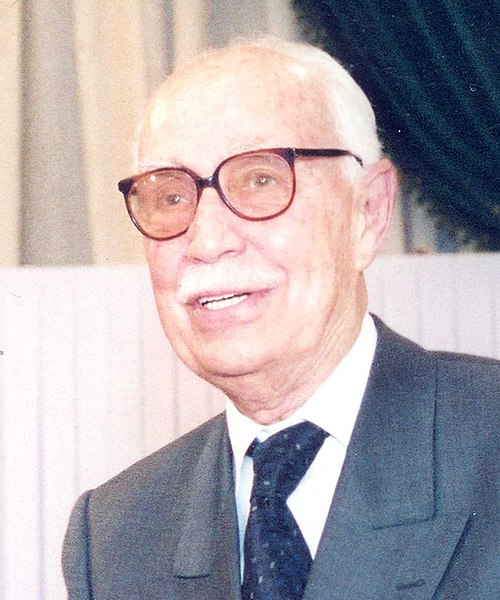
Abdelkrim Ghallab†
Novelist & Journalist • Morocco
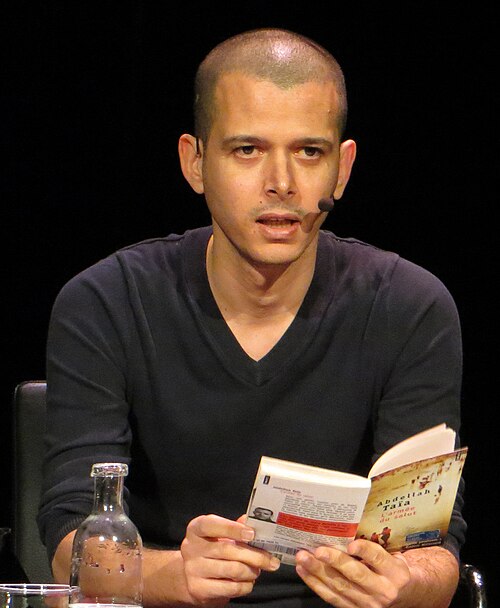
Abdellah Taïa
Novelist & Filmmaker • Morocco