Financial Breakdown
Asset Distribution
Assets vs Liabilities
Assets
Liabilities
Disclaimer: These financial estimates are based on publicly available information and should be considered approximate. Last updated: 12/31/2025
Biography
Introduction: A Pan-African Icon
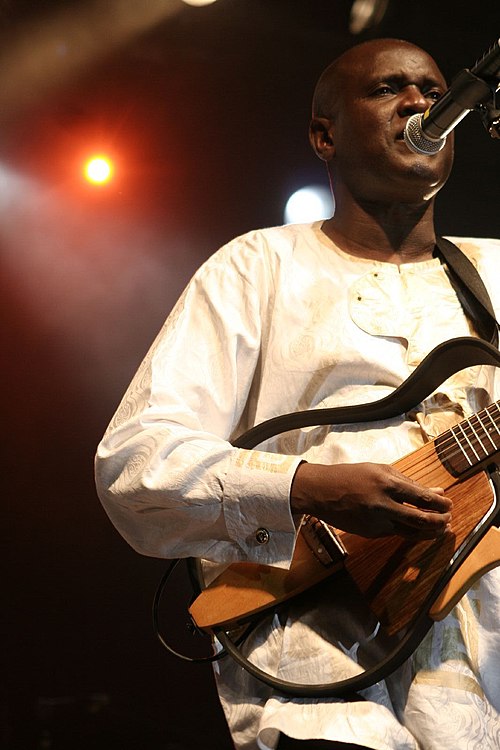
In the vibrant landscape of global entertainment, few artists embody the soul of a continent like Ismaël Lô. Born in 1956 in Senegal, this legendary singer-songwriter has carved a unique and enduring space in world music, earning him the affectionate nickname "the Bob Dylan of Africa." Ismaël Lô is celebrated for his poetic lyricism, gentle vocal delivery, and masterful blending of West African rhythms with Western folk, blues, and pop influences. His signature instrument, the harmonica, became as iconic as his softly worn hat, creating a sound that is instantly recognizable and deeply moving. With a career spanning over four decades, his key achievement lies in his ability to craft universally resonant messages of peace, love, and social justice, sung in multiple languages, making him a true cultural ambassador for Senegal and Africa at large.
Early Life & Education: The Roots of a Musician
Ismaël Lô's story begins on the border between two cultures. He was born in 1956 in the Niger River region, but his family moved to Senegal when he was very young. His father was Senegalese, and his mother was from Niger, giving him a rich, cross-cultural heritage from the start. He spent his formative years in the city of Rufisque, a place that would deeply influence his artistic perspective.
His artistic journey started not with music, but with visual arts. After completing his primary and secondary education in Senegal, Ismaël Lô pursued formal training at the prestigious National School of Arts in Dakar, where he studied fine arts and painting. This visual background is often cited as a key influence on the vivid, imagery-filled narratives in his songwriting. However, music was an ever-present force. He learned to play guitar and harmonica, initially as a hobby, drawing inspiration from a wide range of sounds—from traditional Senegalese mbalax and Fulani melodies to the international folk and rock of artists like Bob Dylan, The Beatles, and James Brown. This dual education in visual and auditory arts laid the unique foundation for his future career as a singer-songwriter.
Career & Major Achievements: From Super Diamono to Solo Stardom
The career of Ismaël Lô can be divided into two distinct, successful phases. His professional music career began in 1979 when he joined the pioneering Senegalese band Super Diamano. As their guitarist and vocalist, he contributed to the band's politically charged sound during a vibrant period in Senegalese music. He spent nearly a decade with the group, honing his skills and gaining a loyal following.
The Solo Breakthrough
In 1984, seeking greater artistic freedom, Ismaël Lô embarked on his solo career. This decision marked the beginning of his ascent to international fame. His early solo albums, like Xalat (1985) and Xiff (1988), established his signature style. However, it was the 1990 album Ismaël Lô (often called "The Tajabone Album") that catapulted him to global recognition. The track "Tajabone" became a monumental hit, not just in West Africa but across Europe and Latin America. Its haunting harmonica melody and spiritual lyrics, traditionally played during Senegalese Muslim festivals, transcended cultural barriers and remains his most iconic song.
International Acclaim and Artistic Evolution
The 1990s solidified Ismaël Lô's status as a world music superstar. Albums like Iso (1994) and Jammu Africa (1996) featured collaborations with international artists and were released on the major label Barclay/PolyGram. His music consistently addressed themes of love, unity, and social issues, such as on the powerful track "Dibi Dibi Rek," which criticized political corruption. His ability to weave social commentary with beautiful melodies earned him critical acclaim and a massive fanbase far beyond Africa.
Key achievements in his illustrious career include:
- Releasing over 10 studio albums, each adding to his rich musical legacy.
- Performing on the world's most prestigious stages, including sold-out concerts at Paris's Olympia and the Montreux Jazz Festival.
- His music being featured in international film soundtracks, broadening his audience.
- Receiving numerous awards and honors for his contribution to music and culture.
- Acting as a UNESCO "Artist for Peace," using his platform for humanitarian causes.
Even with a quieter release schedule in the 2000s and 2010s, Ismaël Lô remains a revered figure, and his classic songs continue to define the sound of African folk-pop for new generations of listeners.
Personal Life & Legacy: The Man Behind the Music
Known for his humility and gentle demeanor, Ismaël Lô has largely kept his personal life out of the spotlight, allowing his music to speak for him. He is a deeply spiritual person, and his Muslim faith often informs the reflective and peaceful nature of his lyrics. His passion for painting never left him, and he has occasionally exhibited his visual art, demonstrating the continued interplay between his two creative outlets.
Beyond entertainment, Ismaël Lô has been actively involved in philanthropy and advocacy. His role as a UNESCO "Artist for Peace" since 2011 is a testament to his commitment to social change. He has lent his voice and influence to campaigns promoting education, peace dialogue, and the fight against poverty, particularly within Africa. This dedication to humanitarian work is a core part of his identity.
The legacy of Ismaël Lô is profound. He is a foundational pillar of modern African music, having shown that songs rooted in local tradition could achieve global popularity without sacrificing their essence. He paved the way for countless African artists on the world stage. More than just a singer-songwriter, he is a poet, a painter, and a peacemaker whose work continues to inspire a message of tolerance and human connection. His music serves as a timeless bridge between cultures, securing his place as one of the most beloved and influential artists ever to emerge from Senegal.
Net Worth & Business Ventures
While Ismaël Lô maintains a private life regarding his finances, his successful career spanning over 40 years in music suggests significant financial success built on a foundation of artistic integrity. His primary source of wealth stems from his prolific work as a recording and performing artist. Revenue streams include:
- Album Sales: With a discography of hit albums since the mid-1980s, both domestically and internationally.
- Concert Tours: As a major draw in Africa and Europe, his live performances have been a consistent and substantial income generator.
- Royalties: The enduring popularity of songs like "Tajabone" ensures ongoing royalty payments from radio play, streaming, and licensing for films and commercials.
Unlike many contemporary artists, Ismaël Lô is not widely known for extensive business ventures outside of music. His brand is intrinsically linked to his artistry. Any business activities are likely managed discreetly or are related to the production and distribution of his music and art. His "business," in essence, has been the cultivation of a sincere and profound musical catalog that has resonated with millions, which remains his most valuable and lasting asset. His financial standing is a reflection of his enduring popularity and the timeless quality of his contributions to world entertainment.
Frequently Asked Questions
What is Ismaël Lô's estimated net worth?
Ismaël Lô has an estimated net worth of R 16.2 Million.
What is Ismaël Lô's role and nationality?
Ismaël Lô is a Singer-Songwriter from Senegal.
How did Ismaël Lô make their money?
Ismaël Lô built their fortune primarily through Ismaël Lô is a highly respected and popular musician, but he is not a business magnate or on any billionaire list; his wealth is estimated based on a successful career in music and entertainment in Senegal..
How old is Ismaël Lô?
Ismaël Lô was born in 1956 (70 years old).
Which category is Ismaël Lô listed under?
Ismaël Lô is featured under the Entertainment category on NetWorth Africa.
How is Ismaël Lô's net worth calculated?
NetWorth Africa estimates financial valuations using publicly available stock equity holdings, company ownership records, real estate assets, and verified market data.
Net Worth Analysis
Ismaël Lô is a highly respected and popular musician, but he is not a business magnate or on any billionaire list; his wealth is estimated based on a successful career in music and entertainment in Senegal.
Quick Stats


Related People

2Baba (Innocent Idibia)
Veteran Artist & Activist • Nigeria

Aar Maanta
Singer & Composer • Somalia

Abdel Aziz al-Mubarak
Oud Master • Sudan
Abdel Halim Hafez†
Legend; “Nightingale”; “The Dark-Skinned Nightingale” • Egypt