$10M
Estimated Net Worth
As of 2024 • medium confidence
Financial Breakdown
Asset Distribution
Assets vs Liabilities
Assets
Disclaimer: These financial estimates are based on publicly available information and should be considered approximate. Last updated: 12/29/2025
Biography
Introduction: The Strategic Leader of the Horn of Africa
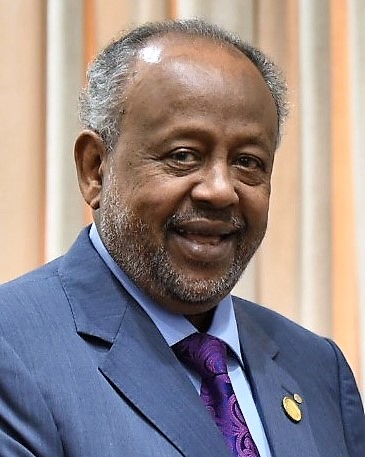
Ismaïl Omar Guelleh, often referred to by his initials IOG, is the current President of Djibouti and one of Africa's most enduring political figures. Ascending to the executive presidency in 1999, he has governed the small but strategically vital nation for over two decades. His tenure is defined by transforming Djibouti from a relatively obscure post-colonial state into a geo-strategic linchpin and a hub of regional economic activity. A master of realpolitik, President Ismaïl Omar Guelleh has skillfully leveraged his country's location at the mouth of the Red Sea, attracting major foreign military bases and massive infrastructure investments. His leadership, while praised for ensuring stability and economic growth, has also faced international scrutiny regarding governance and human rights. Understanding his rule is essential to comprehending the complex Politics & Government dynamics in the Horn of Africa.
Early Life & Education: Foundations of a Political Scion
Ismaïl Omar Guelleh was born on November 27, 1947, in Dire Dawa, Ethiopia. He hails from the Mamassan clan of the Issa Somali ethnic group, a key demographic within Djibouti. His family background was deeply intertwined with the nascent politics of the French Somaliland territory. His uncle, Hassan Gouled Aptidon, was a central figure in the independence movement and would become the first President of the Republic of Djibouti in 1977. This familial connection provided Guelleh with an early and intimate education in statecraft and liberation politics.
Guelleh's formal education was primarily within the French colonial system. He attended primary school in Djibouti City before his family relocated to Ethiopia. His formative years were spent in a region marked by cross-border clan ties and anti-colonial sentiment. Unlike many African leaders of his generation, Guelleh did not pursue extensive university studies abroad. Instead, he joined the French colonial security forces as a young man, serving as a police inspector. This experience granted him practical insights into security apparatuses and administrative control—skills that would prove invaluable in his future career. Following Djibouti's independence in 1977, his uncle President Hassan Gouled Aptidon immediately appointed him as his chief of staff, a role that positioned the young Ismaïl Omar Guelleh at the very heart of power for the next 22 years, effectively grooming him for the presidency.
Career & Major Achievements: Architect of Modern Djibouti
The career of Ismaïl Omar Guelleh is virtually synonymous with the modern history of Djibouti. After serving as the powerful chief of staff and head of the secret service, he was handpicked as the presidential candidate for the ruling People's Rally for Progress (RPP) in 1999 upon his uncle's retirement. He won the election and took office on May 8, 1999, beginning a tenure that continues today.
Economic and Strategic Transformation
President Guelleh's most significant achievement is his economic strategy centered on Djibouti's geography. He recognized that the nation's limited natural resources could be offset by its strategic location along major shipping lanes. Under his leadership, Djibouti pursued a "ports and bases" doctrine:
- Foreign Military Bases: He authorized the establishment of bases for global powers, hosting troops from France (the former colonial power), the United States (Camp Lemonnier, a major counter-terrorism hub), China (its first overseas military base), Japan, Italy, and others. This made Djibouti a unique nexus of international military presence.
- Port Infrastructure: He oversaw massive investments in port facilities, including the Doraleh Multi-Purpose Port and the Doraleh Container Terminal, significantly boosting the country's role as a gateway to landlocked Ethiopia.
- Regional Connectivity: Key projects like the Addis Ababa-Djibouti Railway (modernized and opened in 2017) and numerous pipeline agreements were finalized under his watch, deepening economic integration with Ethiopia.
Political Control and Constitutional Change
Domestically, Guelleh has maintained a firm grip on Politics & Government. He won re-election in 2005, 2011, 2016, and 2021, with each poll criticized by opposition groups and some international observers. A pivotal moment came in 2010 when he oversaw a constitutional amendment that abolished presidential term limits, allowing him to run for a third term. This move cemented his status as a long-term leadership figure but drew criticism from advocates of democratic rotation. His government is often described as an authoritarian state with limited political space, though it has maintained relative peace between the Issa and Afar ethnic groups—a key challenge since independence.
Foreign Policy: Balancing Global Powers
On the international stage, Ismaïl Omar Guelleh has been a pragmatic balancer. While historically close to France and the U.S., he has increasingly deepened ties with China, which has financed and built much of Djibouti's new infrastructure. This delicate act of maintaining strong relations with competing global powers is a hallmark of his foreign policy, ensuring a continuous flow of investment and security guarantees for his nation.
Personal Life & Legacy
Ismaïl Omar Guelleh is married to Kadra Mahamoud Haid, a prominent First Lady involved in social and humanitarian causes. He is known to be an avid reader, with a particular interest in history and politics. While much of his personal life remains private, he is recognized for his deep involvement in clan politics, which remains a fundamental aspect of Djiboutian society. His legacy is complex and dualistic. He will be remembered as the leader who catapulted Djibouti onto the world stage, ensuring its economic survival and relevance through astute strategic positioning. The infrastructure and foreign investment attracted during his presidency have created a foundation for future growth. Conversely, his legacy is also marked by accusations of authoritarianism, suppression of dissent, and the creation of a political system heavily dependent on his personal rule. As President since 1999, his ultimate legacy will be judged by Djibouti's stability and prosperity after his time in office concludes.
Net Worth & Business Interests
As with many sitting heads of state, the precise net worth of Ismaïl Omar Guelleh is not publicly verifiable and is a subject of speculation. He is widely believed to be one of the wealthiest individuals in Djibouti. His financial success is generally attributed to the significant economic growth and foreign investment that has occurred under his presidency, as well as the perceived intertwining of state and business interests within the country's small economy. While there are no officially documented personal business ventures, analysts often point to the influence his family and close associates wield in key sectors such as port operations, logistics, and real estate. The lack of transparency in these matters is frequently cited by governance watchdogs. It is important to note that these claims are difficult to independently substantiate due to the private nature of his finances and the limited financial disclosure requirements for leaders in the region.
For further reading on the political context of Djibouti, credible sources include the Encyclopædia Britannica and reports from institutions like the CIA World Factbook.
Net Worth Analysis
Estimates for President Guelleh's personal wealth are not publicly verified; his wealth is believed to stem from his long political tenure and family connections, with most reports suggesting a figure in the tens of millions, not billions.
Quick Stats
Related People

Aaron Motsoaledi
LP; Minister of Home Affairs

Abane Ramdane†
FLN Leader & Strategist

Abdalla Hamdok
Ex-Prime Minister

Abdallah Kigoda
Ex-Minister of Natural Resources