Biography
Jean Kambanda: The Head of Government Convicted for Genocide
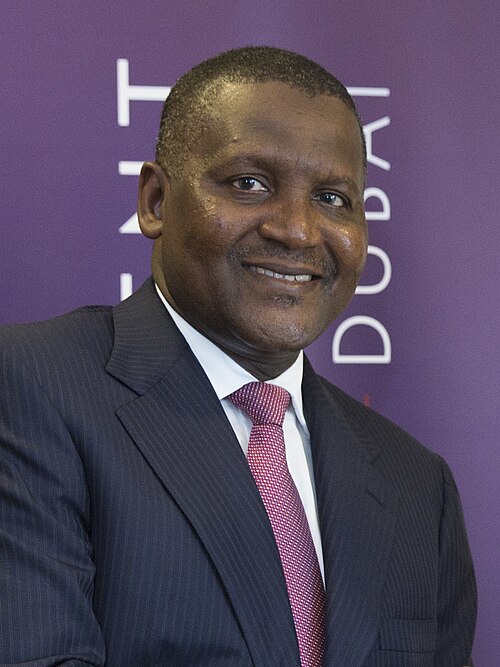
Jean Kambanda is a Rwandan former politician who served as the head of government, holding the office of Prime Minister of Rwanda during the 100-day period of the 1994 Genocide against the Tutsi. While his official role placed him at the helm of the Business & Economics and political administration, his legacy is defined by one of the most significant legal precedents in international criminal law. Kambanda is the only head of government in history to plead guilty to the crime of genocide, marking a watershed moment for international justice. His case remains a cornerstone in the jurisprudence of the International Criminal Tribunal for Rwanda (ICTR). Unlike many figures in banking and finance who are noted for economic growth, Kambanda’s story is one of political power abused to facilitate mass atrocity. His conviction underscores the intersection of government authority and the gravest crimes against humanity, making his biography a critical study in the failure of leadership during Rwanda’s darkest hour.
Early Life & Education
Born in 1955 in Rwanda, Jean Kambanda was raised in a society deeply divided along ethnic lines between the Hutu majority and the Tutsi minority. He is an ethnic Hutu, a demographic fact that would later define his political allegiances and actions. Little has been published about his early childhood, but his formative years occurred during the final decades of Belgian colonial rule and the subsequent establishment of a Hutu-led republic following the 1959 social revolution.
Kambanda pursued higher education in the field of banking and finance, a discipline that would initially steer his career away from the political spotlight. He studied in Rwanda and later obtained professional qualifications in financial management. His educational background equipped him with the technical skills necessary to navigate the complex world of Business & Economics, specifically within the Banking & Finance subcategory. Before entering politics, Kambanda worked as a banker and insurance executive, building a reputation as a competent financial administrator. This professional foundation in finance, rather than law or military service, distinguished him from many of his political contemporaries. His early career was marked by stability and a focus on economic management, which made his later role as a government leader during the genocide all the more jarring to international observers who saw him as a technocrat rather than an extremist.
Career & Major Achievements
Rise to the Prime Minister’s Office
Jean Kambanda’s transition from the banking sector to high-level politics occurred in the chaotic aftermath of the downing of President Juvénal Habyarimana’s plane on April 6, 1994. The assassination triggered a pre-planned campaign of violence against the Tutsi population and moderate Hutus. A caretaker government was hastily assembled under the supervision of the interim leadership. Kambanda, largely because of his untainted reputation as a banker and his perceived neutrality, was appointed Prime Minister of Rwanda on April 8, 1994.
His appointment was intended to present a facade of legitimate governance to the international community while the genocide was being executed. Despite his background in Banking & Finance, Kambanda immediately assumed the role of head of government at a time of national emergency. His primary responsibility was to coordinate the civilian administration and channel resources to local authorities, a role that became instrumental in the execution of the genocide.
Role During the Genocide
As Prime Minister, Kambanda presided over cabinet meetings during which the systematic extermination of the Tutsi was discussed and coordinated. Evidence presented at his trial demonstrated that he distributed weapons to local officials, encouraged the population to kill Tutsi civilians, and rejected any proposals for a ceasefire with the Rwandan Patriotic Front (RPF). His government actively facilitated the murder of approximately 800,000 to 1,000,000 Tutsi and moderate Hutu over 100 days.
Kambanda’s actions as head of government included:
- Direct incitement: He personally toured regions in Rwanda to incite the population to commit genocide, using government radio to broadcast hate speech and orders to kill.
- Administrative coordination: He chaired meetings where the funding and logistics of the killing campaign were discussed, diverting state resources to support the Interahamwe militias.
- Diplomatic isolation: He refused to negotiate with the RPF, choosing to continue the genocide even as the rebels advanced toward Kigali.
His career in Business & Economics had prepared him to manage budgets and logistics, skills he tragically repurposed to oversee the most efficient genocide of the 20th century. This period remains the defining—and only—significant achievement recorded in his political career.
Arrest and Legal Precedent
Following the RPF’s military victory in July 1994, Kambanda fled Rwanda. He was arrested in Kenya in 1997 and transferred to the United Nations detention facility in Arusha, Tanzania. In a historic move, Jean Kambanda became the first (and only) head of government to plead guilty to the charge of genocide. In 1998, he was sentenced to life imprisonment after a plea agreement, a sentence later upheld on appeal. His guilty plea was a major achievement for the ICTR, establishing that sitting heads of government are not immune from prosecution for crimes against humanity. The case set a legal benchmark that continues to influence international tribunals today.
Personal Life & Legacy
Very little public information exists regarding Jean Kambanda’s personal life, including details about his spouse, children, or private affairs. Unlike many public figures in Banking & Finance, Kambanda’s legacy is not measured by philanthropic contributions or business success but by his role in a national tragedy. While serving his life sentence in a Malian prison (after being transferred from Arusha), Kambanda has largely remained out of the public eye.
His legacy is deeply polarized. For survivors of the genocide and the Rwandan government, he is a symbol of the corrupt leadership that enabled the atrocities. For the international legal community, his guilty plea is a landmark achievement, demonstrating that accountability for genocide applies even to the highest office in the land. Some legal scholars argue that his cooperation with the ICTR was a genuine attempt at remorse; however, many Rwandans view him as a manipulative figure who regretted only being caught, not the crimes themselves. There are no known foundations, charities, or honors associated with his name. His impact on the world stage is purely cautionary—a warning that technical expertise in Business & Economics does not guarantee ethical leadership.
Net Worth & Business
Assessing Jean Kambanda’s net worth is challenging due to the confiscation of assets following his conviction. Prior to 1994, Kambanda had a stable career in the banking sector in Rwanda, suggesting he was a salaried professional with moderate wealth. As Prime Minister, he would have had access to government resources and diplomatic funds, though the exact financial holdings during his tenure remain opaque. After his arrest and sentencing, any personal wealth he accumulated was likely seized or abandoned. He does not own known businesses, assets, or investments in the modern Rwandan economy. His financial situation is effectively zero, as he has been incarcerated since 1998. In the context of Business & Economics, Kambanda’s financial narrative serves as a stark reminder that in the face of catastrophic moral failure, net worth becomes a trivial footnote. His current status is that of a convicted prisoner, not a business magnate.
Frequently Asked Questions
What is Jean Kambanda's estimated net worth?
Net worth details for Jean Kambanda are currently being updated.
What is Jean Kambanda's role and nationality?
Jean Kambanda is a head of government from Rwanda.
How did Jean Kambanda make their money?
Jean Kambanda built their fortune primarily through Jean Kambanda is a convicted genocidaire serving a life sentence, with no known assets or legitimate income sources; his net worth is effectively zero..
How old is Jean Kambanda?
Jean Kambanda was born in 1955 (71 years old).
Which category is Jean Kambanda listed under?
Jean Kambanda is featured under the Business & Economics category on NetWorth Africa.
How is Jean Kambanda's net worth calculated?
NetWorth Africa estimates financial valuations using publicly available stock equity holdings, company ownership records, real estate assets, and verified market data.
Net Worth Analysis
Jean Kambanda is a convicted genocidaire serving a life sentence, with no known assets or legitimate income sources; his net worth is effectively zero.
Quick Stats
Related People
Abbas Bonfoh
Governor BEAC Gabon • Gabon
Abdel Kader Taleb Ould Abderrahmane
Governor Central Bank • Mauritania

Abdelmoumen Ould Kaddour
Ex-CEO Sonatrach • Algeria

Abderrahmane Benhamadi
CEO Saidal • Algeria